
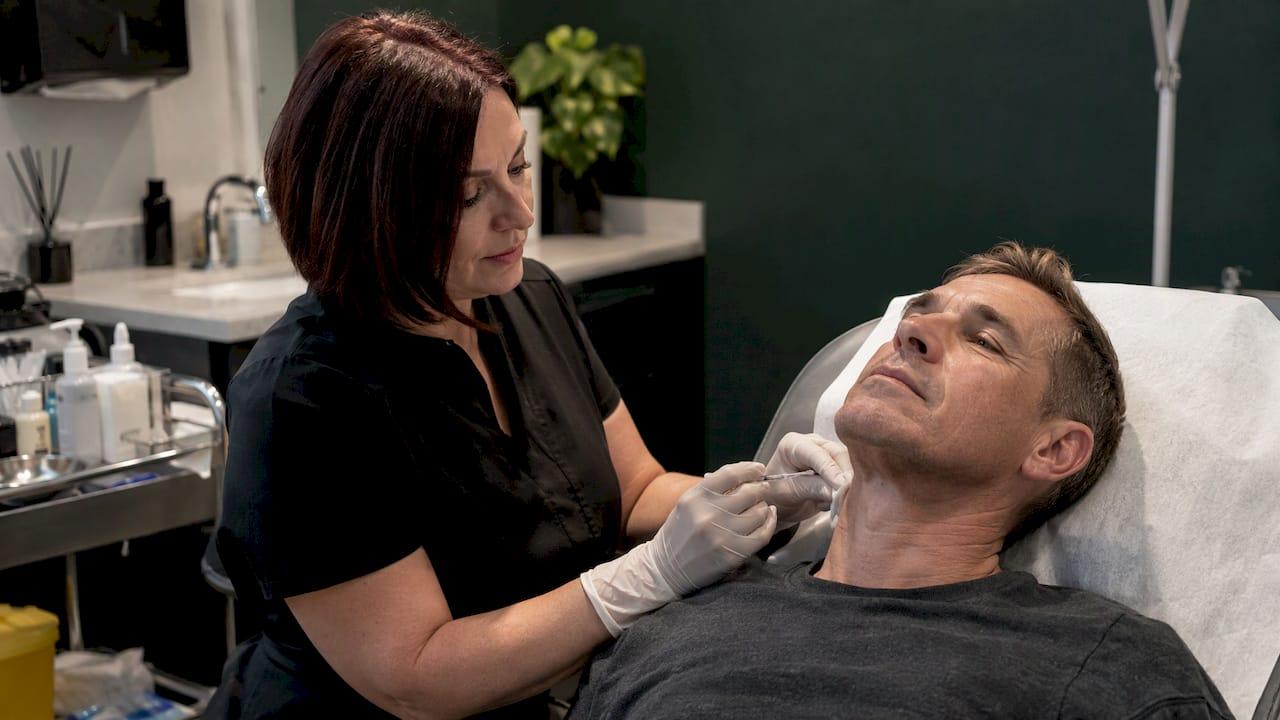
Polynucleotides are injections that improve the quality of neck skin: its hydration, texture and firmness. They do not freeze muscle or add volume. If your neck looks crepey, lined or tired, and you want a gradual, natural change, a short course of sessions is the usual approach. At Rivers Edge Skin Studio, our men-only clinic on Jamaica Street in Liverpool, polynucleotide skin boosters are part of our treatment range, and we can talk you through whether they suit your neck at a consultation.
This guide explains what the treatment is, what the research reports, what a course looks like and what to check before you book.
TL;DR
- Polynucleotides are purified DNA fragments, usually from salmon, injected into the skin to improve its quality. They are not a filler and not a muscle relaxer.
- A 2026 real-world study of three sessions found clinicians rated most neck treatments as a moderate or marked improvement, with no serious adverse events.
- A course is usually 2 to 4 sessions, 2 to 4 weeks apart, with maintenance every 6 to 12 months.
- They should be avoided in pregnancy, with active infection in the area, or with a fish allergy. Injectables at our clinic are 18+ only.
- We are open Monday to Saturday, 10:00 to 17:00, and closed on Sunday.
Table of Contents
- What polynucleotides are
- Why the neck is worth treating
- What the research reports on neck skin
- What a course looks like
- Recovery and aftercare
- Who should avoid neck polynucleotides
- Choosing who treats you
- Treating the neck as part of a wider plan
- Book a consultation in Liverpool
- Our view
- FAQ
- Sources
What polynucleotides are
Polynucleotides (you may also see PN or PDRN) are purified, sterilised DNA fragments. In aesthetic products they are commonly taken from salmon-family fish and injected into the skin to improve skin quality, according to a review of the evidence and UK rules. The idea is regeneration rather than replacement. Instead of filling a line, the treatment supports the skin so it looks and behaves better.
The British Cosmetic Dermatology Group describes them as used to hydrate, firm and brighten skin. Related products are often called skin boosters, and that is how we list them: Skin Boosters with polynucleotides.
The fish origin matters for you as a patient. It is part of informed consent, so ask where the product comes from. If you have any concern, allergy or personal reason to avoid fish-derived ingredients, say so in your consultation.

Why the neck is worth treating
The neck is thin-skinned, constantly moving and rarely protected from the sun. For men there is an extra factor: shaving or beard growth along the jawline and upper neck, which can leave skin dry and irritated. Horizontal lines, a crepey look and a loss of firmness often show up here before the face looks its age.
That is why men often ask about the neck once they have sorted their face. Skin quality is the part polynucleotides address. If your main complaint is vertical cords running down the front of the neck, that is a muscle issue and a different treatment. We cover it in our guide to neck bands and the Nefertiti lift. For horizontal lines, there is a broader overview in neck lines treatment for men.
What the treatment is not
- It is not a filler. It will not build volume or reshape your jawline.
- It is not a muscle treatment. It will not soften platysmal bands.
- It is not an overnight change. Skin quality builds across a course.
Knowing which of these you are after saves money and disappointment, and it is the first thing we sort out in a consultation.
What the research reports on neck skin
Neck results are among the better studied uses of polynucleotides. Here is what the published work says, in plain terms.
A 2026 real-world study. In an observational study published in the Journal of Cosmetic Dermatology, 66 adults had three intradermal sessions of a polynucleotide product. Of 106 questionnaires, 33 related to the neck. Clinicians rated 87.8% of neck treatments as a moderate or marked improvement, and there were no serious adverse events. The manufacturer paid the publication costs, which is worth knowing when you read any single study.
A 2026 prospective study. In a study of 28 people, neck hydration rose from 44.9 to 50.6 at four months, and elasticity rose from 33.1 to 38.3 N/m. Side effects were mild and short-lived. One severe shingles event was judged unrelated to the treatment.

A 2025 review. A peer-reviewed review in the Korean Journal of Medicine reports that a study on ageing neck skin found improved elasticity and firmness and reduced wrinkle depth, with better skin turgor and collagen density in treated patients.
A 2023 case study. A Polish case report compared four sessions at two-week and four-week intervals on one woman's neck. The authors concluded the effect was gentle, and that in mature skin polynucleotides work best as prevention and maintenance rather than as a way to reverse ageing.
What this means for you
Taken together, the picture is consistent. Polynucleotides improve hydration, elasticity and texture over a course, and the changes are gradual and natural-looking. That suits a man who wants his neck to look healthier without anyone noticing he has had anything done. If your neck skin is already crepey, expect improvement in how it looks and feels. If it is still early days, a course helps keep it that way.
These are measurements on small groups of patients, so individual results differ with age, sun history, skin condition and how closely you follow aftercare.
What a course looks like
The British Cosmetic Dermatology Group sets out the typical pattern:
- Consultation. You discuss your skin, goals and medical history before anything is injected.
- The session. It takes around 20 to 30 minutes. Small injections go just under the skin with a fine needle or a cannula, often after numbing cream.
- The course. Usually 2 to 4 treatments, 2 to 4 weeks apart.
- Maintenance. Typically every 6 to 12 months.
A worked example: you start in January with three sessions at four-week intervals, finishing in March. You would then expect to be reviewing maintenance somewhere between September and March of the following year. Your plan may differ, and we tailor treatment plans to the individual.
Results build as the course progresses. The 2026 prospective study above measured at four months, so judge your neck after the full course rather than after the first session.
Recovery and aftercare
Expect mild redness, small bumps or swelling that settles within 24 to 72 hours, according to the British Cosmetic Dermatology Group. For the first 24 hours, avoid:
- rubbing or massaging the area
- strenuous exercise
- alcohol
- heat, such as saunas, steam rooms and hot showers
Plan sessions around your diary rather than a big event. A Friday-evening appointment leaves the weekend for the bumps to settle. If you are shaving the neck, be gentle that evening and use a clean blade. We cover what is normal afterwards in more detail in our guide to polynucleotide side effects.
When to seek urgent help
Severe or escalating pain, skin that turns white or mottled, visual changes, difficulty breathing, widespread hives, rapidly increasing swelling, signs of infection or any neurological symptoms need urgent medical assessment, as UK guidance on polynucleotides sets out. Call 999 for breathing difficulty or vision changes, or contact your treating clinic straight away for anything else on this list. These reactions are uncommon, and the point of knowing them is that you can act quickly.
Who should avoid neck polynucleotides
The British Cosmetic Dermatology Group says polynucleotide injections should not be given if you:
- are pregnant or breastfeeding
- have an active skin infection in the treatment area
- have a known allergy to any component of the product, including fish-derived ingredients
It also advises caution with autoimmune conditions or bleeding disorders. Tell your practitioner about any medication, especially blood thinners, and about any condition you manage. At Rivers Edge, injectables are 18+ only.
Choosing who treats you
In the UK, cosmetic polynucleotide injections should only be carried out by qualified, registered healthcare professionals, meaning doctors, dentists or nurses with appropriate aesthetic training, in a regulated clinical environment. A face-to-face consultation beforehand is essential, according to the British Cosmetic Dermatology Group.
A neck is a sensitive area, so these are fair things to expect from any clinic:
- a proper consultation before treatment, not a quick chat at the chair
- a clear explanation of the product, including its origin
- a plan for the number of sessions and the gap between them
- clear aftercare and a way to reach the clinic if something worries you
A clinic that treats only men also understands the practical side: facial hair, shaving routines and skin that has had years of razor wear.
Treating the neck as part of a wider plan
Many men find the neck is one piece of a larger skin plan. Our range covers men's facials, chemical peels, microneedling, skin boosters, anti-wrinkle injections, sweat (hyperhidrosis) injections, polynucleotides, vitamin injections and hair-loss treatments. Some pair well with a neck course:
- Chemical peels and microneedling work on surface texture and tone. See our pages on chemical peels and microneedling.
- Anti-wrinkle injections relax the muscles behind expression lines and neck bands. Details are on our anti-wrinkle injections page.
- Facials keep the skin clean and comfortable, particularly useful for bearded men.
If you are comparing polynucleotides with anti-wrinkle injections, the question is what you want to change. Anti-wrinkle injections work on muscle movement. Polynucleotides work on skin quality. Some men use both, each for its own job.
If you are also curious about the scalp, the same ingredient is used there. We explain it in polynucleotides for hair loss, and our guide to polynucleotides under the eyes shows how a course builds over time.
Book a consultation in Liverpool
Rivers Edge Skin Studio is a men-only skin and aesthetics clinic at Unit 6, 10-14 Jamaica St, Liverpool L1 0AF. We offer skin boosters with polynucleotides, along with the rest of our men's range, and every plan is personalised. We are open Monday to Saturday, 10:00 to 17:00, and closed on Sunday. Injectables are 18+ only.
You can see everything we offer on our services page and book online in a few minutes. Prices for injectable treatments are discussed at your consultation.

Our view
Most men who ask us about their neck are not after a dramatic change. They want skin that looks healthy and settled, and they do not want anyone to be able to tell.
That is why we like polynucleotides for this area. They work on the quality of the skin rather than changing how you look, and the research on neck skin points to gradual gains in hydration and elasticity across a course. Our treatments are built around visible, natural-looking results, and a neck plan follows the same logic: start with a consultation, agree a realistic course, then maintain.
We built Rivers Edge for men only. That means a calm, comfortable space where you can ask the straightforward questions, and a plan that takes account of shaving, beards and the way men's skin tends to behave. Looking after your skin should not be complicated.
David
FAQ
How many polynucleotide sessions does a neck need?
A course is usually 2 to 4 treatments, spaced 2 to 4 weeks apart, with maintenance every 6 to 12 months, according to the British Cosmetic Dermatology Group. The exact number depends on your skin and goals, and we agree it with you at consultation.
Are polynucleotides better than anti-wrinkle injections for neck wrinkles?
They do different jobs. Anti-wrinkle injections relax the muscles that create certain lines and bands. Polynucleotides improve skin quality, including hydration, texture and elasticity, which is why they suit the crepey, thin look of neck skin. Many men choose one or combine them depending on what bothers them most.
Does the treatment hurt?
The procedure uses small injections just under the skin, and numbing cream is often applied beforehand. Most people describe it as a series of small pinpricks. Redness, bumps or swelling usually settle within 24 to 72 hours.
Why is DNA called a polynucleotide?
DNA is built from long chains of units called nucleotides, so a chain of many of them is a polynucleotide. In aesthetic products, the DNA is purified and sterilised, and is commonly sourced from salmon-family fish, as described in this UK evidence review.
How long do the results last?
Maintenance is usually suggested every 6 to 12 months, which gives a sense of the timeline. Studies measure change over months, for example hydration and elasticity at four months in a 2026 prospective study. How long you keep your results depends on your skin, sun exposure and aftercare.
Sources
- Polynucleotide Injections, British Cosmetic Dermatology Group
- A Real-Life Assessment of Injectable Polynucleotides, Journal of Cosmetic Dermatology, 2026
- Polynucleotides HPT-Based Dermal Filler for Skin, 2026
- Polydeoxyribonucleotide as a Regenerative Agent, Korean Journal of Medicine, 2025
- A comparison of the efficacy of reducing the signs of ageing, Journal of Face Aesthetics, 2023
- Polynucleotides: evidence, safety and UK rules