
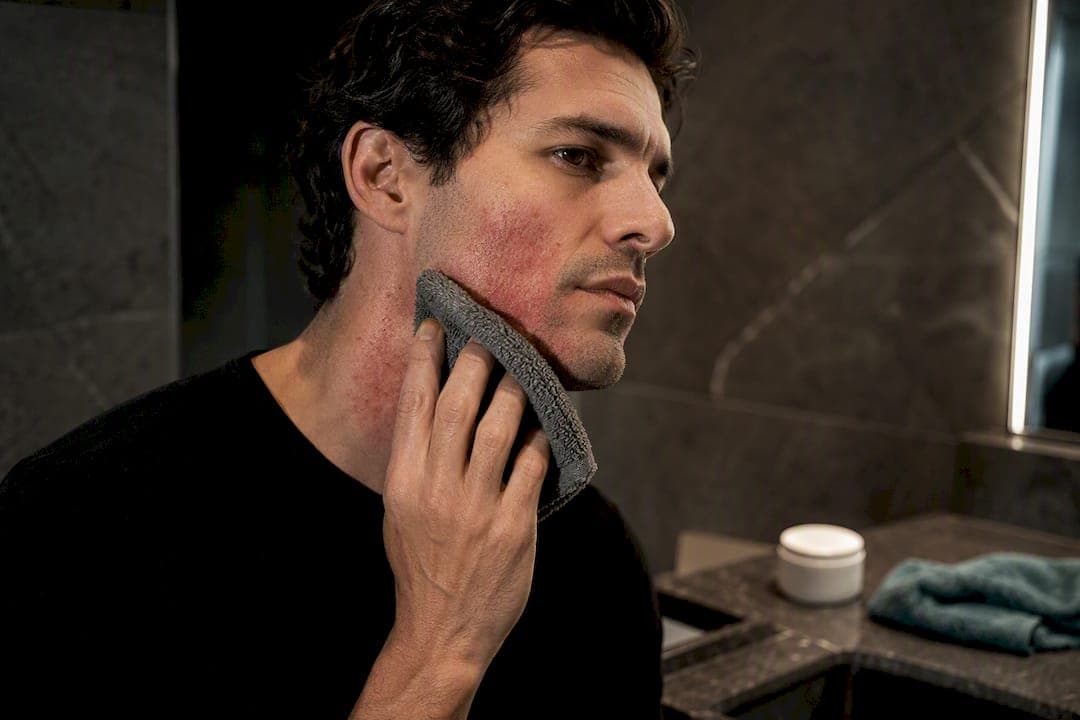
Post-shave irritation is a form of irritant dermatitis, causing redness, burning, and itching that appears within minutes of shaving and usually settles on its own. Cool the area straight away, stop using alcohol-based aftershave, and apply a fragrance-free moisturiser or aloe vera. Skip shaving until the skin has calmed. If the redness spreads, feels increasingly painful, or hasn't improved after a few weeks, that's a signal for proper clinical review rather than another home remedy.
TL;DR:
- Using a fresh, sharp safety razor and shaving with the grain significantly reduces the risk of irritation compared to dull blades and against-the-grain shaving.
- Applying a cool compress and a fragrance-free moisturizer immediately after shaving helps calm irritation and supports skin recovery.
- Fragrance-free balms with ceramides or aloe vera gel are the most effective post-shave products for sensitive skin, avoiding alcohol and menthol-based items.
- Men with curly or coarse hair should consider professional treatment for persistent bumps or scars, especially if signs of infection or scarring appear beyond a few weeks.
- Shaving after exercise or in humid conditions increases irritation risk, so wait until the skin is dry and allow it to breathe before pulling on tight clothing.
Table of Contents
- What razor burn and shaving rash actually look like
- What to do in the first hour after a bad shave
- How to stop razor burn before it starts
- When does shaving rash need a clinician?
- Which post-shave products actually help sensitive skin?
- Does your skin type change how you should treat irritation?
- Do humidity and exercise make shaving irritation worse?
- Clinic perspective: what we see and realistic outcomes
- A discreet option when irritation won't settle
- Sources
- FAQ
What razor burn and shaving rash actually look like
Razor burn shows up fast. Within minutes of putting the blade down, you'll notice redness, a burning or stinging sensation, and skin that feels tight and raw. Some men get scattered bumps; a smaller number develop small pustules where hair follicles have become inflamed. This pattern is a textbook case of irritant contact dermatitis. For most men, it fades within a few hours to a few days with basic care.
The causes are rarely mysterious. A dull blade drags rather than cuts, forcing you to apply more pressure and pass over the same patch of skin repeatedly. Dry shaving strips away the lubrication that lets a blade glide, and alcohol-heavy products compound the damage by dehydrating skin that's already compromised.
Common triggers include:
- Shaving against the direction of hair growth, which increases nicks and follicle trauma
- Using a blunt or old cartridge instead of replacing it regularly
- Dry shaving without water, oil, or shaving cream
- Tight collars or friction from clothing rubbing against freshly shaved skin
- Curly or coarse hair curling back into the follicle, triggering ingrown hairs
Men with tightly curled hair face a meaningfully higher risk of chronic bumps and ingrown hairs, because curved hair shafts are more prone to re-entering the skin after cutting. If that sounds like you, the prevention section below matters more than most.
What to do in the first hour after a bad shave
Speed matters here. The sooner you calm irritated skin, the less likely it is to tip into something more stubborn like folliculitis.
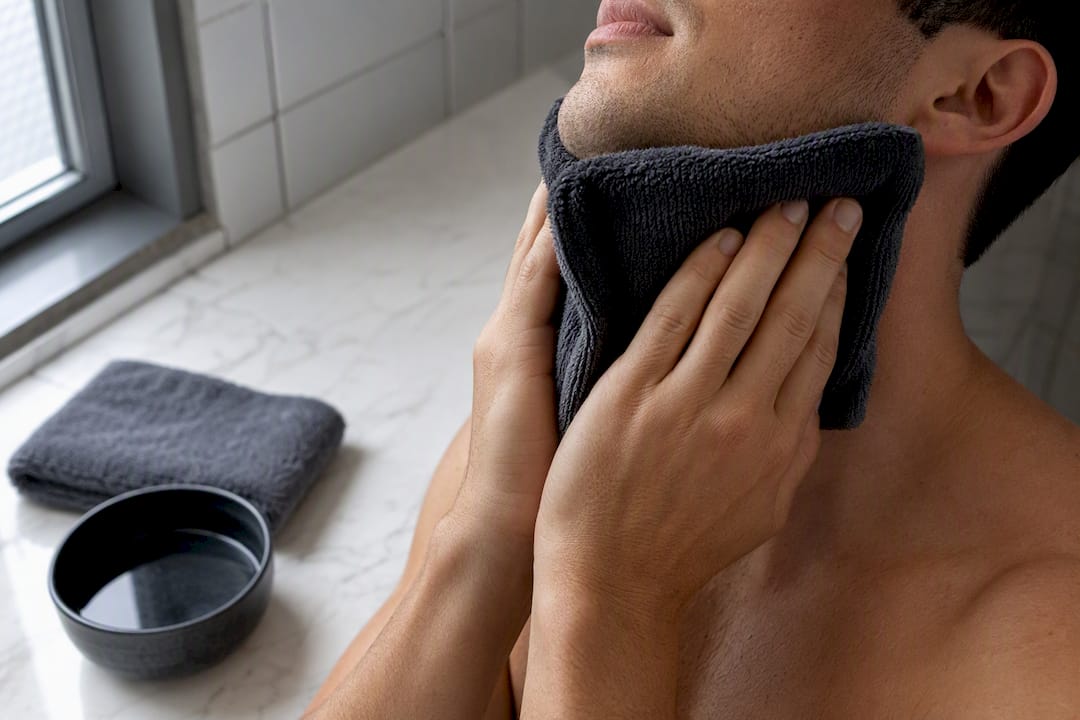
- Apply a cool compress. Hold a clean, damp cloth against the area for five to ten minutes. Repeat once or twice over the next hour if burning persists.
- Cleanse gently. Use lukewarm water and a mild, fragrance-free cleanser. Skip anything with exfoliating beads or acids for now.
- Pat dry, don't rub. Rubbing reactivates the irritation you're trying to settle.
- Apply a fragrance-free emollient. Look for glycerin or ceramide-based creams, which rehydrate and support the skin barrier while it recovers.
- Consider aloe vera. It has a reasonable evidence base for soothing irritated skin quickly and feels notably cooling on contact.
- Use 1% hydrocortisone sparingly, if needed. A short course, no more than a few days, can calm stubborn inflammation, but it isn't meant for daily long-term use.
Avoid alcohol-based aftershaves entirely during this window. They feel astringent, but on already-damaged skin they delay healing rather than assist it. Steer clear of strong fragrances too, and hold off on any exfoliation, physical or chemical, until the redness has fully settled.
Pro Tip: Keep a small tube of fragrance-free ceramide cream in your bathroom cabinet specifically for post-shave use. Reaching for your everyday moisturiser, which often contains fragrance or actives, can undo the calming work you just did.
Watch for warning signs while you wait it out: spreading redness, increasing pain rather than improvement, or pus-filled bumps that grow rather than shrink. Those point towards infection, not simple irritation, and deserve a different response than a cold flannel.
How to stop razor burn before it starts
Most men treat prevention as an afterthought, reaching for better products only after a bad reaction. Flip that order and irritation becomes far less frequent.
Preparation does more heavy lifting than most realise. Shave at the end of a warm shower, or hold a warm compress against the area for a minute first. Warm water softens the hair shaft and opens the follicle, meaning the blade needs far less pressure to do its job. A gentle, non-comedogenic cleanser followed by a proper shaving cream or pre-shave oil gives the blade something to glide on rather than drag against.
Technique is where most damage actually happens. Shave with the grain, not against it, using short strokes rather than long sweeping ones. Resist the urge to go over the same patch twice for a closer finish. That second and third pass is almost always what turns mild redness into full-blown razor burn.
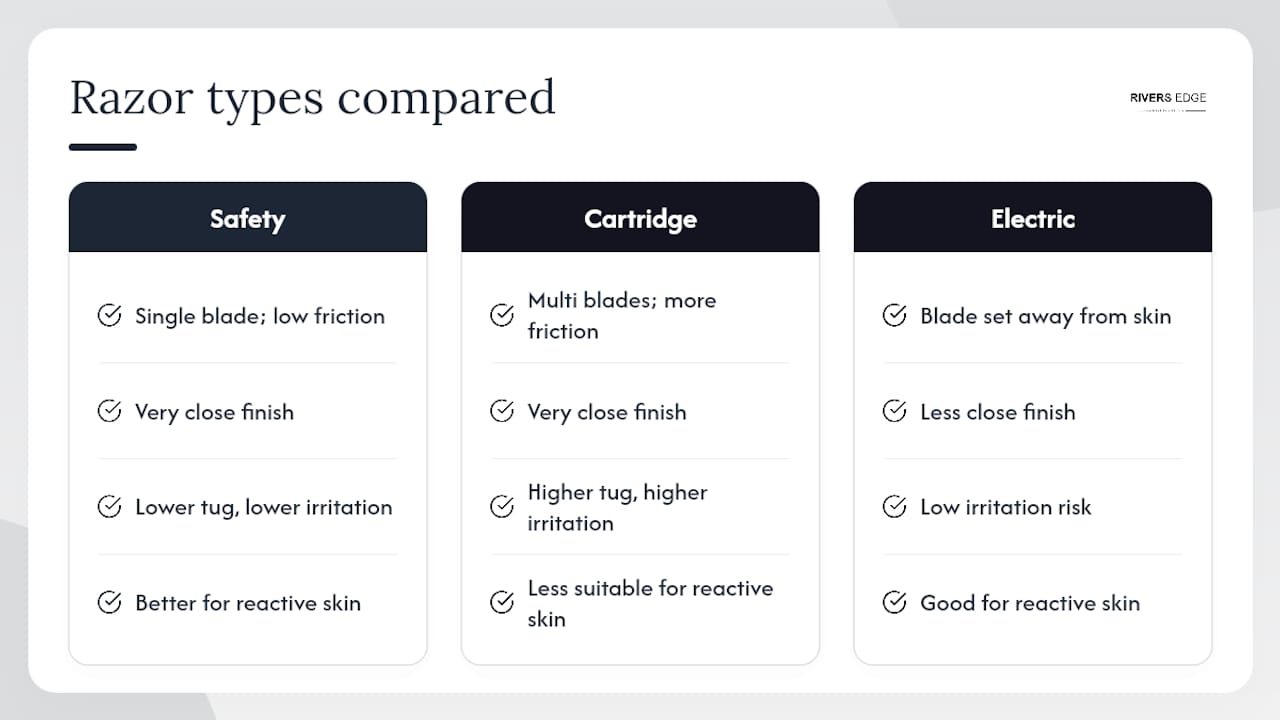
Tool choice matters more for sensitive skin than brand loyalty does. Safety razors offer a single sharp blade and less friction than multi-blade cartridges, which can tug at the skin with every pass. Cartridge razors are convenient but the extra blades increase contact time and irritation risk for reactive skin. Electric shavers sit skin further from the cutting edge, which suits men prone to bumps, though they rarely deliver as close a finish. Whichever you choose, replace blades every five to seven shaves; a dull blade is one of the most common causes of recurring irritation.
Aftercare should become routine, not an emergency measure. Moisturise immediately after every shave, exfoliate gently once or twice a week to prevent trapped hairs, and space out shaves if bumps keep recurring. If you're a stubble-prone man who battles ingrown hairs constantly, leaving more length between shaves genuinely works better than fighting for a closer cut every day. Our guide to men's skincare essentials covers product choices in more depth.
When does shaving rash need a clinician?
Most razor burn is a two-day problem. Persistent bumps, spreading pain, or lumps that won't shrink are a different story entirely.
Book an appointment if you notice:
- Redness that spreads outward rather than fading
- Fever, severe pain, or visibly swollen skin around the follicles
- Pustules or firm nodules that persist beyond two to four weeks
- Any scarring, or bald patches where hair used to grow
- Bumps clustered specifically on the back of the neck that keep recurring
That last point matters more than it sounds. Persistent neck papules, particularly ones that thicken into keloid-like scars, aren't ordinary razor burn. This can be acne keloidalis nuchae (AKN), a chronic inflammatory condition that predominantly affects men with curly or coarse hair and can progress to permanent scarring alopecia if it's left unmanaged. Ordinary shaving rash and pseudofolliculitis barbae look similar in early stages, but AKN needs a different treatment path entirely, and early avoidance of close shaving is the first-line defence.
A noticeable minority of men with curly hair may experience chronic razor bump conditions significant enough to seek treatment, though estimates vary by hair type and shaving habits.
Clinic-level care for these persistent cases typically includes topical prescription treatments for inflammation, intralesional steroid injections for hardened scarring papules, oral antibiotics where infection is confirmed, and procedural options like laser hair removal to reduce recurrence long-term. Before any appointment, stop shaving the area where possible, photograph the affected skin so a clinician can track changes, and note down which products you've been using. Our detailed piece on clearing razor bumps covers the warning signs in more depth.
Which post-shave products actually help sensitive skin?
Ingredient lists matter more than marketing claims on the label. Look for balms and moisturisers built around ceramides, glycerin, and panthenol, which rebuild the skin barrier rather than simply masking discomfort with a cooling sensation. Aloe vera gel is worth keeping close by for its genuine soothing properties, particularly straight after shaving when skin is at its most reactive.
Avoid anything listing alcohol, menthol, or synthetic fragrance near the top of the ingredients panel. These give an immediate tingling sensation that feels like the product is "working", but on compromised skin that sensation is often irritation, not relief.
A short list of what to prioritise:
- Fragrance-free balms with ceramides or squalane
- Aloe vera gel, ideally 90%+ pure
- Non-comedogenic, oil-free moisturisers for men prone to breakouts
- SPF moisturiser for daytime use, since freshly shaved skin burns more easily
Men with genuinely reactive or eczema-prone skin often do better switching their entire routine rather than patching one product. Our roundup of post-treatment skincare steps applies just as well after a rough shave as it does after a clinic procedure, since the underlying goal, calming and rebuilding the barrier, is identical.
Does your skin type change how you should treat irritation?
Oily skin, dry skin, and genuinely sensitive skin each react to shaving in distinct ways, and treating them identically is a common mistake.
Oily skin tends to trap bacteria and debris more readily around freshly cut follicles, which raises the risk of pustules and folliculitis. Non-comedogenic, oil-free aftercare products matter more here than heavy creams, which can clog pores further.
Dry skin loses moisture fast during shaving, since the blade removes a thin layer of surface skin along with the hair. Richer, ceramide-based moisturisers applied immediately after shaving make a noticeably bigger difference for this skin type than for oily skin.
Genuinely sensitive skin, the kind that reacts to most skincare products, needs the simplest possible routine: fragrance-free everything, minimal ingredients, and patch-testing anything new before applying it across the whole face or neck. Sensitive-skinned men are also the group most likely to overreact to well-meaning advice like "exfoliate more", when in fact reducing the number of active steps in a routine tends to help far more.
Knowing your skin type isn't vanity, it changes which products and techniques actually reduce irritation instead of adding another variable to troubleshoot.
Do humidity and exercise make shaving irritation worse?
Yes, and it's rarely discussed. Shaving straight after a workout is one of the most common, and most avoidable, triggers for post-shave breakouts. Sweat sitting on freshly cut skin introduces bacteria directly into open follicles, which is exactly the environment folliculitis needs to take hold.
Humidity plays a similar role. In hot, humid conditions, skin retains more moisture and sweat throughout the day, keeping follicles damp long after the shave itself is finished. Men who shave in the morning and then spend the day in humid heat often see irritation flare hours later, not immediately, which makes the cause harder to spot.
Tight collars, helmets, and sports equipment add mechanical friction on top of that moisture, which is why so many razor bump flare-ups cluster around the neck and jawline in summer months. The fix is straightforward once you know the pattern: shower and shave after exercise rather than before, and let freshly shaved skin breathe for a few minutes before pulling on tight clothing.
Clinic perspective: what we see and realistic outcomes
Most shaving irritation we see resolves within days once the trigger, usually technique or a blunt blade, is corrected. Ingrown hair cycles and AKN behave differently; they need weeks of behaviour change, sometimes longer, and benefit from earlier review rather than repeated home treatment. A consultation typically involves examining the affected area, discussing shaving habits, and outlining realistic options. When bumps are recurring or scarring has started, earlier professional input protects the skin more than persistence does.
— David
A discreet option when irritation won't settle
If you've tried the technique changes and the bumps or scarring keep coming back, that's usually a sign the issue has moved beyond what a change of razor can fix. Treatment plans are built around the specific patterns seen in shaving-related irritation, ingrown hairs, and post-inflammatory marks, rather than adapted from generic facial treatments.

For active irritation and congestion, the Bearded Man Facial or Deep Cleanse Facial (£35 each) work well as a reset for skin that's constantly reacting to shaving. Where irritation has left textural scarring or persistent dark marks, a course of Microneedling (from £70 for a single session, up to £200 for a course of four) or Chemical Peels (from £60, up to £200 for a course of four) can address the marks that home care alone won't shift. Men dealing with chronic razor bumps on the neck are often good candidates for a consultation, particularly if scarring has started to appear. Book online through the services page to find a slot and discuss which option fits your skin.
This article is general information, not a substitute for advice from a qualified doctor. Consult a qualified healthcare professional about your own circumstances before acting on anything here.
Sources
- Remedies to relieve razor burn | WebMD
- Razor burn: Causes & Treatment | Cleveland Clinic
- Razor bump remedies | American Academy of Dermatology (AAD)
- Acne keloidalis nuchae | StatPearls (NCBI Bookshelf)
- Ingrown hair — diagnosis and treatment | Mayo Clinic
FAQ
How do I stop irritation after shaving?
Apply a cool compress immediately, cleanse gently with lukewarm water, then use a fragrance-free moisturiser or aloe vera. Avoid alcohol-based aftershaves and skip shaving that area until the redness settles.
Is hydrocortisone or Sudocrem good for shaving rash?
A short course of 1% hydrocortisone can calm inflammation for a few days, while zinc oxide based creams like Sudocrem can help soothe minor irritation, though neither replaces proper technique changes if bumps keep recurring.
How long does post-shave irritation last?
Simple razor burn typically clears within a few hours to a few days with basic care. If bumps or redness persist beyond two to four weeks, that points towards a condition like folliculitis or acne keloidalis nuchae rather than ordinary irritation.
Why am I irritated after shaving in the groin or neck area?
These areas have thinner skin, denser hair follicles, and more friction from clothing, which makes them more prone to razor burn and ingrown hairs than flatter areas like the cheeks. The same immediate care steps apply, but persistent neck bumps in particular warrant a closer look given the risk of acne keloidalis nuchae.