

UV radiation causes up to 80% of visible skin ageing in men. That single fact reframes every conversation about wrinkles, dark spots, and sagging skin. Preventing premature skin ageing in men is not about expensive serums or elaborate rituals. A daily broad-spectrum SPF 30+, a gentle cleanser, and a basic moisturiser form the foundation that dermatologists consistently endorse. Add a retinoid two or three nights a week and you have a routine that addresses the biology of male skin ageing directly. The science behind this is solid, and the cost is lower than most men expect.
Why does premature skin ageing occur in men?
Men's skin ages differently from women's, and understanding why matters for prevention. Male skin is roughly 25% thicker due to higher androgen levels, which initially masks fine lines. The trade-off is that men historically use far less sun protection, accelerating the very damage that thicker skin temporarily conceals. Men's thicker skin masks early ageing signs, but poor sun protection habits accelerate long-term damage significantly.

Collagen loss is the core biological driver. Collagen declines at roughly 1% per year from the mid-20s onward. That rate sounds slow until you reach 45 and realise you have lost nearly a fifth of your skin's structural support. The result is deeper lines, reduced elasticity, and a duller complexion.
Environmental and lifestyle factors compound the biological process. The main culprits are:
- UV exposure. The leading cause of wrinkles, dark spots, and loss of skin firmness.
- Smoking. Reduces blood flow to the skin and degrades collagen faster than almost any other lifestyle habit.
- Alcohol. Dehydrates skin and depletes antioxidants the body uses for repair.
- Poor sleep. Cuts the overnight repair cycle that keeps skin resilient.
- Diet. Low intake of vitamins C and E removes the antioxidant defence that neutralises UV-triggered free radicals.
The usage gap makes the problem worse. Only around 30% of men use daily SPF, and just 15% use retinoids. Those numbers explain why so many men in their 40s look significantly older than peers who adopted basic routines a decade earlier. The good news is that starting a consistent routine even at 40 or beyond produces measurable improvements over time.
What products and routine steps prevent premature ageing?
A four-step routine covers the vast majority of what men need. The steps are cleanser, moisturiser, sunscreen, and a targeted active. Each plays a distinct role, and none requires more than a few minutes.
-
Cleanser. Use a gentle, pH-balanced cleanser morning and evening. Harsh soaps strip the skin barrier, triggering excess oil production and inflammation. Both accelerate visible ageing. Look for sulphate-free formulas.
-
Moisturiser. Moisturisers with humectants like hyaluronic acid and emollients such as squalane maintain the skin barrier and lock in hydration. A compromised barrier ages faster because it cannot retain water or defend against environmental stressors.
-
Sunscreen. SPF 30 blocks 97% of UVB rays. SPF 50 blocks 98%. The difference is marginal, but daily broad-spectrum SPF 30+ is the single most effective anti-ageing step available. Apply every morning, including overcast days and days spent mostly indoors near windows.
-
Retinoid. Retinoids increase collagen production and accelerate cell turnover. Start with a low-strength retinol two nights per week and build gradually over six to eight weeks. Results take 12 weeks minimum to appear, so patience is non-negotiable.
Two supporting actives are worth adding once the core four are established. Vitamin C serum applied under sunscreen enhances photoprotection significantly when formulated with vitamin E and ferulic acid. Niacinamide reduces redness, tightens pores, and improves uneven skin tone without irritation.
Pro Tip: Ignore packaging that says "for men." The active ingredients are what matter. A retinoid labelled for women works identically on male skin. Focus on the ingredient list, not the branding.
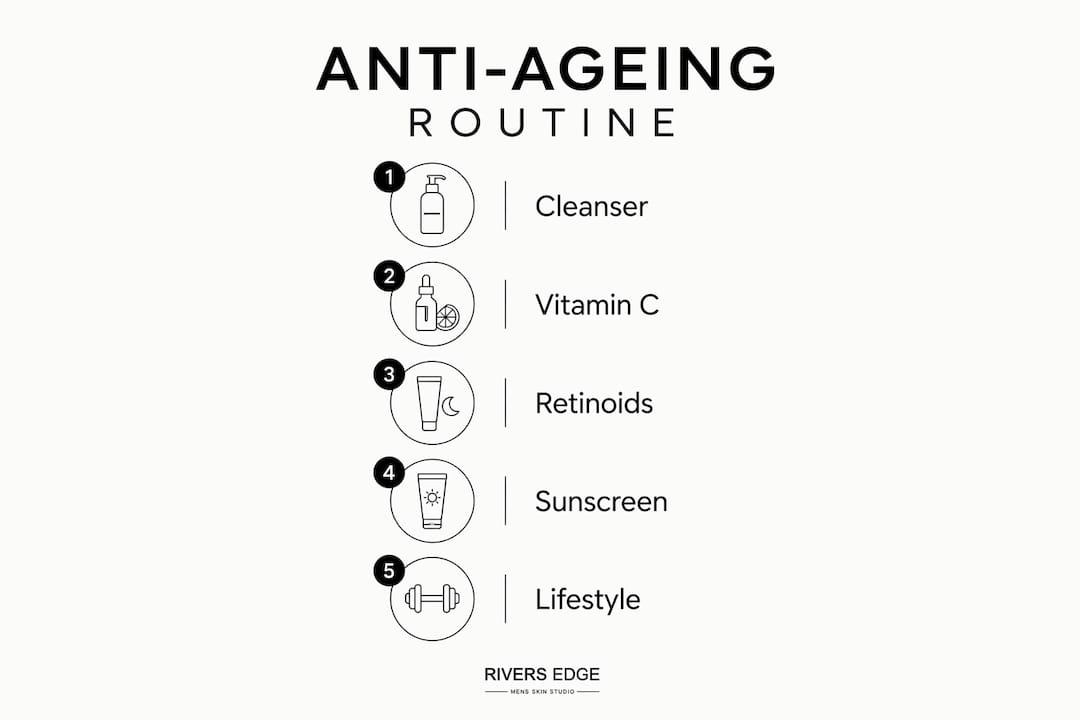
The table below shows what a practical routine looks like in terms of time and cost.
| Step | Frequency | Time | Approximate monthly cost |
|---|---|---|---|
| Cleanser | Twice daily | 30 seconds | Included in basic stack |
| Moisturiser | Twice daily | 30 seconds | Included in basic stack |
| Sunscreen | Every morning | 30 seconds | Included in basic stack |
| Retinoid | 2–3 nights per week | 30 seconds | Included in basic stack |
A basic anti-ageing stack covering all four steps costs approximately £30–£45 per month and takes 3–5 minutes daily. That is the full investment required to address the primary causes of premature skin ageing.
How should men adapt their routine around shaving?
Shaving changes the skin's surface daily. Freshly shaved skin is more permeable, which means active ingredients absorb faster and irritate more easily. Getting the timing right protects the skin barrier and keeps the routine comfortable.
The key adjustments are straightforward:
- Shave in the morning before applying actives. Vitamin C can sting freshly shaved skin; applying it after shaving in the morning, once skin has settled, reduces that risk.
- Never apply retinoids on damp skin. Waiting 10–20 minutes after cleansing before applying a retinoid reduces irritation significantly. Damp skin drives deeper absorption, which tips the balance from effective to uncomfortable.
- Switch to a single-blade or electric razor when using retinoids. Multi-blade razors remove more skin surface per pass. On retinoid nights, the skin is already in a state of accelerated turnover and needs less mechanical stress.
- Avoid applying retinoids on nights after a close shave if skin feels sensitive. Skip one application rather than irritate the barrier. Consistency over weeks matters more than any single night.
- Never skip sunscreen because you are indoors. UVA rays penetrate glass. Sitting near a window for several hours delivers meaningful cumulative UV exposure.
Pro Tip: Build your routine around your shave, not the other way around. Morning shave, then cleanser, vitamin C, moisturiser, SPF. Evening cleanser, wait 15 minutes, retinoid, moisturiser. That sequence keeps irritation low and results consistent.
The science behind men's skincare needs confirms that barrier disruption from shaving is one of the most common reasons men experience stinging and redness from otherwise well-tolerated products. Adjusting timing, not abandoning the product, is the fix.
What lifestyle factors support preventing skin damage in men?
Topical skincare addresses the surface. Lifestyle choices determine how fast the underlying skin structure ages. The two work together, and neglecting one limits the other.
Diet is the most underrated factor. An antioxidant-rich diet with adequate vitamins C, E, and carotenoids supports skin repair and reduces the oxidative damage that UV exposure triggers. Foods like peppers, leafy greens, berries, and oily fish deliver these compounds directly to the skin via the bloodstream.
Sleep is the body's primary repair window. Poor sleep raises cortisol, which breaks down collagen. It also reduces blood flow to the skin, producing the dull, puffy appearance that no serum can fully correct. Seven to nine hours of quality sleep per night is a genuine anti-ageing intervention.
Hydration, sun avoidance during peak UV hours (typically 11AM to 3PM), and wearing a wide-brimmed hat and UV-blocking sunglasses on sunny days reduce cumulative UV exposure more than any topical product can compensate for after the fact.
Smoking and heavy alcohol consumption accelerate skin ageing through separate but compounding mechanisms. Smoking constricts blood vessels and depletes vitamin C. Alcohol disrupts sleep quality and dehydrates skin at the cellular level. Reducing or eliminating both produces visible skin improvements within weeks.
Professional treatments such as chemical peels, LED therapy, and microneedling complement a solid daily routine. They are secondary steps, not replacements. Professional treatments work best when the foundational daily routine is already in place. Without that base, clinical results fade faster.
Key takeaways
Preventing premature skin ageing in men requires daily SPF, a retinoid, and consistent lifestyle habits. Complexity adds nothing; consistency adds everything.
| Point | Details |
|---|---|
| SPF is non-negotiable | Daily broad-spectrum SPF 30+ blocks the UV radiation responsible for up to 80% of visible skin ageing. |
| Retinoids rebuild collagen | Start low, apply to dry skin only, and allow 12 weeks before judging results. |
| Shaving timing matters | Shave before actives in the morning and wait 15 minutes post-cleanse before applying retinoids at night. |
| Lifestyle amplifies topicals | Sleep, diet, and hydration determine how well topical products perform over the long term. |
| Cost is not a barrier | A complete anti-ageing stack costs approximately £30–£45 per month and takes under five minutes daily. |
What I have learnt from watching men's skin change over time
Men who look ten years younger than their age share one habit: they started early and kept it simple. Not the men with the most expensive products or the longest routines. The ones who applied SPF every morning without thinking about it, used a retinoid a few nights a week, and moisturised consistently.
The biggest mistake I see is men abandoning a routine after two or three weeks because they cannot see a difference. Retinoids take 12 weeks. Collagen remodelling takes months. The men who stick with it past that invisible window are the ones who come back and say it changed their skin.
Gendered skincare marketing is largely noise. A product labelled "men's moisturiser" is not biologically different from one without that label. What matters is the ingredient list. Hyaluronic acid, squalane, niacinamide, retinol, and a broad-spectrum SPF work the same way regardless of the packaging. Spending more on branding and less on actives is the most common and most expensive mistake men make.
Start with three products. Cleanser, SPF, moisturiser. Add a retinoid after four weeks. That is the entire foundation. Everything else is optional. The essential products for men's skin are fewer than most people expect, and the results from using them consistently are greater than most men believe possible.
— David
Professional skin treatments for men at Riversedgeskinstudio
A daily home routine prevents the majority of premature ageing. Professional treatments address what topicals cannot reach on their own.

Riversedgeskinstudio specialises in men's skin treatments designed around the specific physiology and concerns of male skin. Services include HydraFacials, chemical peels, microneedling, and anti-wrinkle injections, each delivered in a setting built for men who want results without fuss. Every treatment plan is personalised, so you are not paying for a generic protocol. If you are ready to go beyond the basics and address existing skin damage or accelerate your results, Riversedgeskinstudio offers a clear next step.
FAQ
What is the most effective way to prevent premature skin ageing in men?
Daily broad-spectrum SPF 30+ is the single most effective step, as UV radiation causes up to 80% of visible skin ageing. Combining SPF with a retinoid and a moisturiser addresses both prevention and active repair.
When should men start an anti-ageing skincare routine?
The ideal time to start is in your 30s, when collagen loss is already underway. Starting in your 40s still produces measurable results over time, so beginning later is far better than not beginning at all.
How long does it take for retinoids to show results?
Retinoids require a minimum of 12 weeks of consistent use before visible improvements appear. Collagen remodelling is a slow biological process, and results continue to improve for up to a year with regular application.
Do men need different skincare products from women?
Male skin is thicker and produces more sebum, but the active ingredients that prevent ageing work identically across skin types. Focus on the ingredient list rather than gender-targeted packaging.
How do I reduce irritation when starting a retinoid?
Apply retinoid only to fully dry skin, waiting 10–20 minutes after cleansing. Start with two applications per week and increase frequency gradually as your skin builds tolerance over six to eight weeks.