
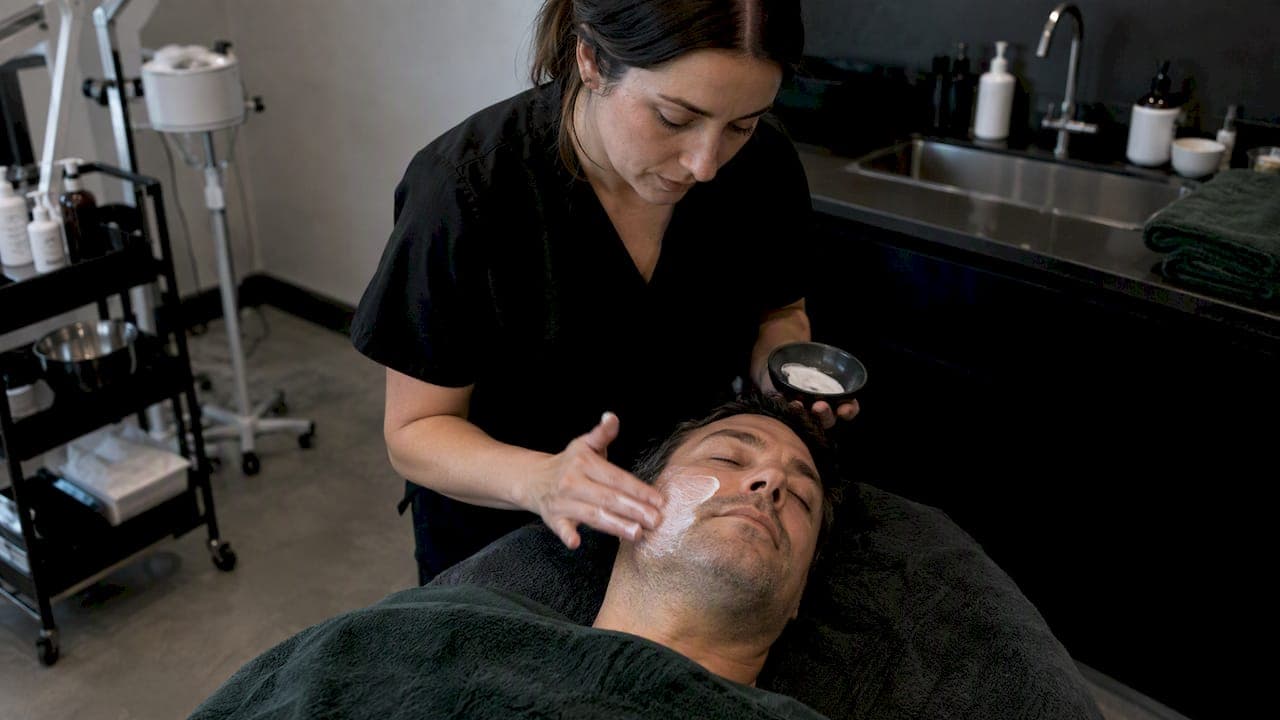
If you have sensitive or rosacea-prone skin, the right first step is a gentle, personalised facial booked through a clinic that runs a proper consultation before any treatment. Consultation and informed consent are not paperwork exercises. They are what keep a treatment safe for skin that flushes, stings or reacts easily, and they are exactly how we assess every man who visits Rivers Edge Skin Studio.
TL;DR:
- Barrier repair facials favor hydration over exfoliation; reserve low strength peels for assessed skin, and use microneedling only with planned aftercare.
- Before treatment, confirm the clinic records medications, including isotretinoin history, assesses rosacea triggers, documents consent, and refers medical concerns to a dermatologist.
- For peels or microneedling, your practitioner may advise stopping retinoids and strong exfoliants two to four weeks beforehand; wear SPF 30 or higher daily.
- Superficial peels may be repeated every two to five weeks, but persistent redness, swelling, weeping, or pain warrants contacting the clinic promptly.
- Facials cost £35 at Rivers Edge Skin Studio, while a single chemical peel costs £60; ask whether course pricing applies to repeated treatments before booking.
Table of Contents
- Clinic treatments that suit sensitive skin and why they are chosen
- What to expect in the consultation: safety checks, medical history and consent
- Preparing for treatment and aftercare: practical steps that reduce risk and improve results
- Checklist: how to choose a clinic and questions to ask at booking
- Common triggers and causes of sensitivity in men's skin
- Differences between men's and women's sensitive skin and implications for treatment
- Recommended daily skincare routines and product ingredients specifically suitable for men with sensitive skin
- How facial hair and shaving habits affect sensitive skin and recommendations to minimise irritation
- A clinician's note on treating men's sensitive skin
- Booking a consultation at Rivers Edge Skin Studio
- FAQ
- Sources
Clinic treatments that suit sensitive skin and why they are chosen
Not every facial is right for reactive skin, which is why the treatment choice matters as much as the clinic you pick. Skin that shows persistent redness, stinging or burning, the hallmarks of rosacea, needs a calmer approach than a standard deep-cleanse facial.
Barrier-repair facials sit at the gentler end. They focus on hydration and low-irritant serums rather than exfoliation, which settles inflammation instead of provoking it. A step up from these are HydraFacial-style treatments and low-intensity light therapies, which resurface skin gently and tend to carry a lower irritation risk than stronger actives.
Superficial chemical peels can still have a place, but only at very low strengths and after a strict assessment of how the skin reacts to acids. Chemical peel depth determines healing time and complication risk, so a practitioner needs to know the skin's history before choosing strength or frequency. Our chemical peel guide for men sets out how these are matched to different skin types.
Microneedling and deeper procedures are occasionally used on sensitive skin, but microneedling can cause temporary redness or swelling, so it is only offered once the clinician has planned specific pre- and post-treatment care around that reaction. A side-by-side look at the options helps here:
- Barrier-repair facials: calming, hydrating, suited to daily sensitivity.
- HydraFacial-style resurfacing: gentle exfoliation with low irritation risk.
- Superficial chemical peels: low strength only, after careful assessment.
- Microneedling: used cautiously, with a tailored aftercare plan.
Pro Tip: Ask your practitioner to explain why a specific treatment suits your skin rather than accepting a standard package built for general clientele.
What to expect in the consultation: safety checks, medical history and consent
A consultation worth paying for does more than check you are happy to proceed. It should build a full picture of your skin and medical background before anyone touches your face.
- Health and medication review: this covers current prescriptions and past use of isotretinoin, since this affects how skin tolerates resurfacing treatments.
- Skin assessment: a practitioner checks for rosacea, known triggers and signs of fragility, all of which change which treatment is appropriate.
- Risk and benefit discussion: you should be told what a treatment can realistically achieve and what could go wrong, in plain terms.
- Informed consent: this is documented, not assumed, and sits alongside your health history on file.
- Signposting when needed: a clinic should be willing to refer you to a dermatologist if your skin condition needs medical rather than aesthetic treatment.
CQC guidance on consultation and consent sets out that clinics should document health history, test results and medicines, obtain explicit informed consent for each procedure, and signpost to secondary care when a condition warrants it rather than an aesthetic intervention. Clinics that take this seriously tend to be the ones that get long-term results right, because every decision is based on your actual skin rather than a generic protocol.
Preparing for treatment and aftercare: practical steps that reduce risk and improve results
What you do in the weeks before and after a facial matters as much as the treatment itself, particularly for reactive skin.
In the run-up to certain treatments, your practitioner may ask you to stop retinoids and aggressive exfoliants for two to four weeks beforehand, since these can leave skin more reactive to peels or microneedling. Daily sun protection with a broad-spectrum SPF of 30 or above is non-negotiable during this period, and strong heat, saunas or very hot showers should be avoided while skin recovers.
Afterwards, stick to a gentle cleanser and an emollient moisturiser, and resist the urge to scrub or use abrasive products while skin settles.
- Avoid active ingredients for the period your practitioner specifies before treatment.
- Wear SPF 30 or higher every day, treatment or no treatment.
- Skip saunas, steam rooms and hot baths while skin is healing.
- Use fragrance-free, gentle products until redness has fully settled.
Recovery timelines vary with the treatment. Superficial peels can be repeated every two to five weeks with short healing times, while medium-depth procedures need longer and more careful aftercare. If redness persists well beyond what your clinic described, or you notice swelling, weeping or pain, that is a sign to contact them rather than wait it out.
Pro Tip: Keep a simple note of what you used on your skin in the week before treatment. It makes the aftercare conversation far more useful if something reacts unexpectedly.
Our guide on common microneedling mistakes covers more of these aftercare details if microneedling is on your list.
Checklist: how to choose a clinic and questions to ask at booking
A good clinic will answer these questions without hesitation, and a vague answer to any of them is worth noticing.
- Ask who will actually perform the treatment and how much experience they have with rosacea or sensitive male skin specifically.
- Confirm there is a proper consultation and consent process, and ask whether follow-up appointments are included or offered.
- Request before-and-after examples from similar skin presentations to yours, not a generic gallery.
- Ask how many sessions are typically needed and what downtime to expect for your chosen treatment.
- Check that pricing is stated clearly before you book, with no vague "from" figures that change on the day.
- Ask whether the clinic will refer you to a dermatologist if your skin turns out to need medical rather than aesthetic care.
Dermatologists recommend asking about a practitioner's experience with similar skin tones and pre- and post-care instructions before any peel, and the same logic applies to any in-clinic facial. A clinic that welcomes these questions is generally one that takes sensitive skin seriously rather than treating every client the same way.
Common triggers and causes of sensitivity in men's skin
Sensitivity in men's skin rarely has a single cause. Heat, sun exposure, alcohol, spicy food and certain medications are among the recognised triggers for rosacea flushing and persistent redness, and the same triggers often aggravate general skin sensitivity even without a rosacea diagnosis.
Shaving is a daily trigger specific to men, since repeated blade contact disrupts the skin barrier. Harsh soaps, over-exfoliation and fragranced products add to the problem, stripping natural oils that would otherwise protect against irritation. Weather extremes, central heating and air conditioning dry skin out further, leaving it more reactive to everything else.

Stress and poor sleep also play a part, though the mechanism is less direct than a product or a razor. Men who work outdoors or in physically demanding jobs often see more sun and wind exposure, which compounds sensitivity over time. Abrasive topical products marketed as "deep cleaning" frequently make things worse rather than better, since they strip the barrier that sensitive skin depends on. Recognising which of these apply to you is often the first real step towards a calmer, more predictable complexion.
Differences between men's and women's sensitive skin and implications for treatment
Men's skin is typically thicker and oilier than women's, with a higher density of hair follicles across the face. That changes how it responds to both irritation and treatment.
Daily shaving is the biggest practical difference. It creates micro-abrasions that a woman's skincare routine simply does not account for, which means irritation from shaving needs separate consideration from irritation caused by products or weather. Thicker skin can also tolerate slightly higher treatment intensities in some cases, but facial hair complicates procedures like peels and microneedling, since product penetration and needle depth are affected by hair coverage.
This is part of why we treat men's skin on its own terms rather than adapting routines designed for women. A facial built around male skin structure, shaving habits and oil production tends to produce more consistent results than a generic treatment plan, and it is also why a consultation matters more for men than a quick walk-in service would suggest.
Recommended daily skincare routines and product ingredients specifically suitable for men with sensitive skin
A simple routine tends to work better than a long one for reactive skin. Morning and evening, a gentle, fragrance-free cleanser removes the day's build-up without stripping natural oils, followed by a lightweight, non-comedogenic moisturiser to support the skin barrier.
Ceramides and niacinamide are both well tolerated by sensitive skin, helping to reinforce the barrier and calm redness without the sting that stronger actives can cause. Hyaluronic acid adds hydration without clogging pores, which matters for men with naturally oilier skin. Fragrance, alcohol-based toners and high concentrations of retinoids or acids are usually the first things worth removing from a routine that is causing irritation.
Daily SPF 30 or above is part of this routine, not an occasional extra, since UV exposure is one of the most consistent triggers for flare-ups in reactive skin. If you are building a routine around clinic treatments, keep products simple in the days around an appointment so your practitioner can see how your skin behaves without interference from multiple actives at once.
How facial hair and shaving habits affect sensitive skin and recommendations to minimise irritation
Shaving is one of the most common daily irritants for men with sensitive skin, and the technique matters more than the products. A dull blade drags rather than cuts cleanly, increasing the risk of nicks, ingrown hairs and post-shave redness.
Shaving with the grain rather than against it reduces the chance of ingrown hairs, and a sharp, clean blade cuts more cleanly with fewer passes. A fragrance-free shaving gel or cream softens hair and reduces friction, while a cool rinse afterwards helps calm the skin rather than a hot towel, which can aggravate redness in rosacea-prone skin.
Men who keep facial hair still need to manage the skin underneath it, since trapped oil and product residue can cause breakouts and irritation along the jawline. For men who want a facial but shave regularly, our Bearded Man Facial is built around exactly this combination of shaving irritation and skin beneath facial hair, rather than treating bearded and clean-shaven skin the same way.
A clinician's note on treating men's sensitive skin
Sensitive skin on a man's face rarely responds well to a one-size approach, and we built our practice around that fact. Every treatment plan at Rivers Edge Skin Studio starts with a consultation, not a menu, because what suits one man's rosacea-prone skin can aggravate another's.
Documented consent and a clear aftercare plan sit behind every facial, peel or microneedling session we carry out. That is not an administrative formality. It is how we catch the skin histories, medication details and sensitivities that decide whether a treatment helps or harms. We would rather ask more questions before you book than leave you guessing afterwards.
Booking a consultation at Rivers Edge Skin Studio
We specialise exclusively in men's skin, which means every consultation is built around how male skin behaves, from shaving irritation to rosacea triggers, rather than adapted from a routine designed for someone else.

Booking a consultation is straightforward: bring a list of current medications, details of any previous skin treatments, and photos of areas that concern you if you have them. From there, we will talk through your skin history and agree a personalised plan together, with informed consent documented before anything proceeds.
- Book directly through our consultation and appointment page.
- Browse the full range of facials and treatments on our services page, including the Bearded Man Facial, Deep Cleanse Facial, Black Tie Facial and Relaxation Facial, each priced at £60 per single chemical peel treatment or £35 per facial.
- Expect a clear plan and aftercare instructions by the end of your first visit.
If light-based treatments come up during your consultation, it is worth knowing that phototherapy sessions carry their own contraindications worth checking first, which your practitioner will factor into any plan involving light therapy.
This article is general information, not a substitute for advice from a qualified doctor. Consult a qualified healthcare professional about your own circumstances before acting on anything here.
FAQ
Is a facial safe for men with rosacea or very sensitive skin?
A facial can be safe for rosacea-prone skin when it is gentle, barrier-focused and chosen after a proper assessment of your triggers and history. Dermatological guidance stresses avoiding abrasive products and anything that provokes flushing, which is why consultation comes before any treatment decision.
How much does a facial for sensitive skin cost?
At Rivers Edge Skin Studio, facials such as the Bearded Man Facial, Deep Cleanse Facial, Black Tie Facial and Relaxation Facial are each priced at £35 per treatment. Chemical peels start at £60 for a single session, with course pricing available for men who need repeated treatments.
What should I avoid before a sensitive skin facial?
Stop retinoids and aggressive exfoliants for the period your practitioner recommends before treatments like peels or microneedling. Avoid excessive sun exposure beforehand too, since sun-damaged skin reacts less predictably to most clinic treatments.
Can microneedling be done on sensitive or rosacea-prone skin?
Microneedling is sometimes used on sensitive skin, but it can cause temporary redness or swelling, so it is only suitable with a tailored approach and a clear pre- and post-care plan. A consultation should confirm whether your skin can tolerate it before booking.
How do I know if a clinic takes consultation and consent seriously?
Look for a clinic that records your health and medication history, explains risks and benefits clearly, and documents your informed consent before any procedure. Regulatory guidance also expects clinics to signpost you to a dermatologist if your skin condition needs medical rather than aesthetic care.