
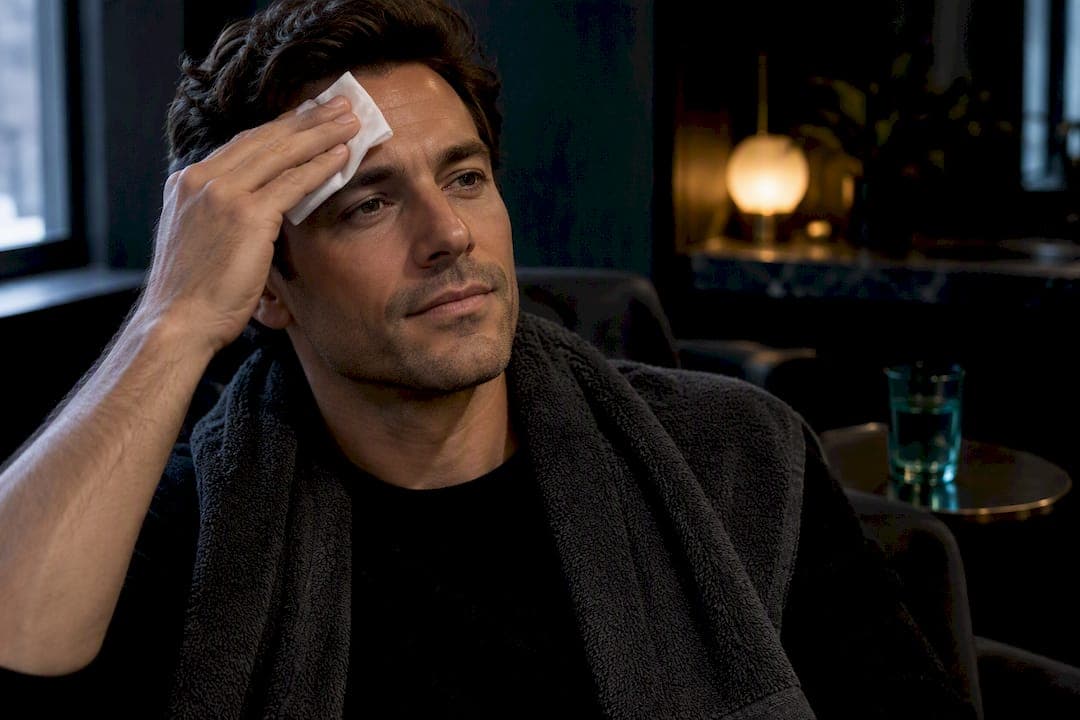
Light sweating after Botox is normal and will not undo the treatment once it has settled. The real risk window is the first few hours, when increased blood flow, movement and rubbing can shift the product before it locks into place. Clinicians, including the International Hyperhidrosis Society, advise simple precautions for the first 4 to 24 hours rather than any long-term change to your routine.
TL;DR:
- Sweating during the first four hours after Botox is normal and should be avoided through precautions like staying upright and avoiding facial pressure.
- Exercising or exposed to heat within the first 24 hours can indirectly increase the risk of the product spreading or bruising, though sweat itself does not speed up Botox wearing off.
- Most hyperhidrosis treatments reduce sweating by 80 to 90% within two weeks, with effects lasting around six months on average before a repeat is needed.
- Serious side effects, such as difficulty swallowing or breathing, require immediate medical attention and are rare but possible if the toxin spreads beyond the treatment area.
- Post-treatment care involves minimal restrictions: avoid strenuous activity for the first 8 hours, skip hot environments for a day, and return to normal routines afterward.
Table of Contents
- How Botox affects sweating and why patterns sometimes change
- Does sweat, heat or exercise make Botox wear off faster?
- When and how to avoid sweating after Botox
- What to expect when Botox treats excessive sweating
- Safety signs and when to seek urgent care
- Clinic evidence and the practitioner's view on sweat control
- The editorial take on aftercare advice for sweat and Botox
- Rivers Edge Skin Studio: how we treat excessive sweating
- Sources
- FAQ
How Botox affects sweating and why patterns sometimes change
Botox works differently depending on why it was injected. For cosmetic use on the forehead or frown lines, it relaxes the muscle beneath the skin. For excessive sweating, it is injected more shallowly, directly into the skin, where it interrupts the chemical signal that tells your eccrine sweat glands to activate.
That distinction matters for anyone confused about why their face sweats normally after Botox but their underarms stop almost completely after a hyperhidrosis treatment. The two are not the same injection, and the two effects are not meant to behave the same way.
Some patients treated for underarm or palm sweating notice sweating appears elsewhere instead, often called compensatory sweating. According to patient information from the NHS, this happens in a small proportion of patients and is not a sign that the product has moved or failed.
A few points worth keeping in mind before treatment:
- Botox for sweating targets the eccrine glands directly, not the muscle.
- Compensatory sweating in another area is recognised but affects only a small proportion of patients.
- Botulinum toxin products are prescription-only, and licensed uses vary by brand and formulation, according to UK drug safety guidance.
Does sweat, heat or exercise make Botox wear off faster?
Sweat itself probably does not speed up how quickly Botox wears off. The toxin works inside the muscle or at the nerve terminal, not on the surface of the skin, so perspiration running over treated skin has little to do with how long the effect lasts.
The bigger concern is indirect. Heat and exercise raise blood flow to the face, and in the first few hours that can theoretically encourage the product to spread beyond the intended muscle. Vigorous movement, bending over or rubbing the treated area carries a mechanical risk too: pressure can nudge the product before it has settled into place. Bruising is also more likely straight after injections, and hard exercise makes bruising worse regardless of Botox.
Dermatologists advise waiting several hours, often around six to eight, before exercising, and avoiding intense heat for the rest of the day. Sweat alone is unlikely to make Botox wear off faster, but the indirect risks from blood flow, wiping and bruising are real.
**A small cohort study cited in a 2026 review of post-Botox exercise advice found that higher activity levels were linked to faster fading in one group of patients, though the evidence base here is limited. Until larger studies settle the question, the sensible approach is caution rather than certainty: treat the first day as a settling-in period and resume full training after that.
When and how to avoid sweating after Botox
The so-called 4-hour rule is the minimum most clinics ask for. For at least four hours after injections, stay upright, avoid lying flat, and keep your hands off your face. Bending, facial massage and pressure during this window are what clinicians worry about most, according to Medical News Today's guidance on exercising after Botox.
Beyond the first four hours, most practitioners extend caution further. Here is a practical timeline:
- 0 to 4 hours: stay upright, avoid lying down, keep hands off the treated area.
- 4 to 8 hours: avoid strenuous exercise; a gentle walk is fine.
- 8 to 24 hours: skip saunas, hot yoga, heavy lifting and any activity involving inverted or head-down positions.
- After 24 hours: return to your normal training, including contact sports, once any bruising has settled.
Activities to avoid for the full 24-hour window include hot yoga, sauna sessions, heavy lifting and contact sports, since all combine heat, pressure or impact. Walking and light cycling are generally considered safe once the initial four hours have passed.
If you do sweat during this period, pat the area dry with a clean tissue rather than wiping or rubbing. A cool compress held nearby (not directly on the injection sites) and breathable, loose clothing both help you stay comfortable without touching the treated skin.

Pro Tip: Book appointments for a day you can keep relatively low-key. Trying to fit Botox around a gym session or a hot commute just adds unnecessary risk for no real benefit.
What to expect when Botox treats excessive sweating
Botox for hyperhidrosis does not work instantly, and it is not permanent. Most patients notice the first signs of reduced sweating within 2 to 4 days, with the fuller effect settling in by around two weeks, according to NHS patient information on intradermal botulinum toxin.
Duration varies by treatment area but commonly runs 4 to 12 months, with many patients landing around the six-month mark before sweating gradually returns and a repeat session is needed. The International Hyperhidrosis Society reports underarm sweating reductions of roughly 82 to 87% with onabotulinumtoxinA, figures that broadly match clinic-reported outcomes:
- Underarm treatments have shown 82 to 87% reductions in sweating, in line with clinic data on hyperhidrosis Botox.
- Palm treatments have shown 80 to 90% drier hands in clinic-reported palmar results.
- Palmar efficacy has been reported to hold for around six months in follow-up clinic testing.
Because the effect fades gradually rather than stopping abruptly, most clinics book a follow-up or touch-up visit around the four to six-month point, timed to the individual patient's response rather than a fixed calendar date.
Safety signs and when to seek urgent care
Most reactions after Botox are minor: some bruising at the injection site, mild swelling, or temporary weakness in a nearby muscle, according to practical advice on kozmetikai kezelések utáni teendők to help prevent complications after cosmetic procedures. These usually settle within days and respond to simple self-care such as a cold compress and avoiding pressure on the area.
A small number of symptoms are not routine and need urgent assessment:
- Difficulty swallowing or breathing.
- Noticeable change in speech or facial control.
- Generalised muscle weakness spreading beyond the treated area.
These can indicate the toxin has spread beyond its intended site, an event UK health authorities flag as rare but serious in their safety guidance on botulinum toxin products. If any of these appear, contact your clinician or seek emergency care immediately rather than waiting to see if symptoms pass. It is also worth knowing which product and dose you received, since units are not interchangeable between brands, and keeping your treating clinician's contact details on hand in case you need to reach them quickly.
Clinic evidence and the practitioner's view on sweat control
Clinic-reported figures give a useful, real-world complement to published research, even though they are not a substitute for randomised trials. Tracking of excessive sweating patients has shown outcomes consistent with the wider literature:
- Underarm patients reported 82 to 87% less sweat following treatment.
- Palm patients reported 80 to 90% drier hands.
- Palmar efficacy held for approximately six months before sweating gradually returned.
These figures line up closely with the ranges published by the International Hyperhidrosis Society, which is reassuring for anyone comparing a single clinic's results against the broader evidence base. Clinic data has limits: it reflects the patients who were treated and followed up at that clinic, not a controlled trial with a placebo group. What it does offer is a practical sense of what to expect from a similar patient population, and it is worth discussing your own suitability directly with a clinician rather than relying on averages alone.
The editorial take on aftercare advice for sweat and Botox
Most of the anxiety around sweating after Botox is misplaced. Readers tend to fixate on the wrong risk: worrying that a gym session three days later will undo the treatment, when the period that actually matters is the first few hours after the needle leaves the skin.
The conventional advice online often blurs two separate questions: whether sweat wears Botox off faster (it probably does not, directly) and whether heat, pressure and movement raise the odds of the product settling somewhere it should not (they can, especially early on). Treating both as the same risk leads to overcautious advice that lingers for weeks when the evidence only supports caution for a day.
If you take one thing from this, prioritise the first 24 hours and stop worrying after that. Keep your hands off your face for four hours, skip the sauna for a day, and then get back to your normal life. The idea that sweating "ruins" Botox weeks later is not supported by how the treatment actually behaves in the body.
— David
Rivers Edge Skin Studio: how we treat excessive sweating
Rivers Edge Skin Studio specialises in men's skin, and excessive sweating is one of the treatments we offer alongside anti-wrinkle injections, chemical peels and microneedling. Our approach is straightforward: assess the area, agree on a treatment plan, and give you clear aftercare guidance so you know exactly what to expect in the days that follow.

If you are dealing with sweaty underarms or palms and want a plan built around your own routine, including gym schedules and work demands, you can view our full range of services or read more in our complete guide to excessive sweat treatment. Book a consultation to discuss what a personalised treatment plan looks like for you.
Sources
- Can you exercise after Botox? (Medical News Today)
- Patient information leaflet — hyperhidrosis and intradermal botulinum toxin (SFH‑TR / NHS leaflet)
- Botox® — International Hyperhidrosis Society
- Gov
- Can you exercise after Botox? Here’s what experts say (NewBeauty)
FAQ
What is the 4-hour rule for Botox?
The 4-hour rule means staying upright and avoiding lying down, facial pressure or rubbing for at least four hours after injections. It exists to reduce the chance of the product spreading before it settles, as outlined in guidance on exercising after Botox.
Do you age faster after stopping Botox?
No, stopping Botox does not speed up ageing. Muscles simply return to moving as they did before treatment, and any lines that reappear were there previously rather than caused by the treatment ending.
What makes Botox kick in faster?
Nothing reliably speeds up onset, since the toxin needs time to bind to nerve terminals regardless of activity. For hyperhidrosis, early signs of improvement typically appear within 2 to 4 days, with fuller effect by around two weeks.
How long does Botox to stop sweating last?
Results commonly last 4 to 12 months, with many patients seeing effects fade around the six-month mark before sweating gradually returns. Clinic-reported outcomes, including 82 to 87% less underarm sweat and similar durations, are in line with figures from the International Hyperhidrosis Society.