
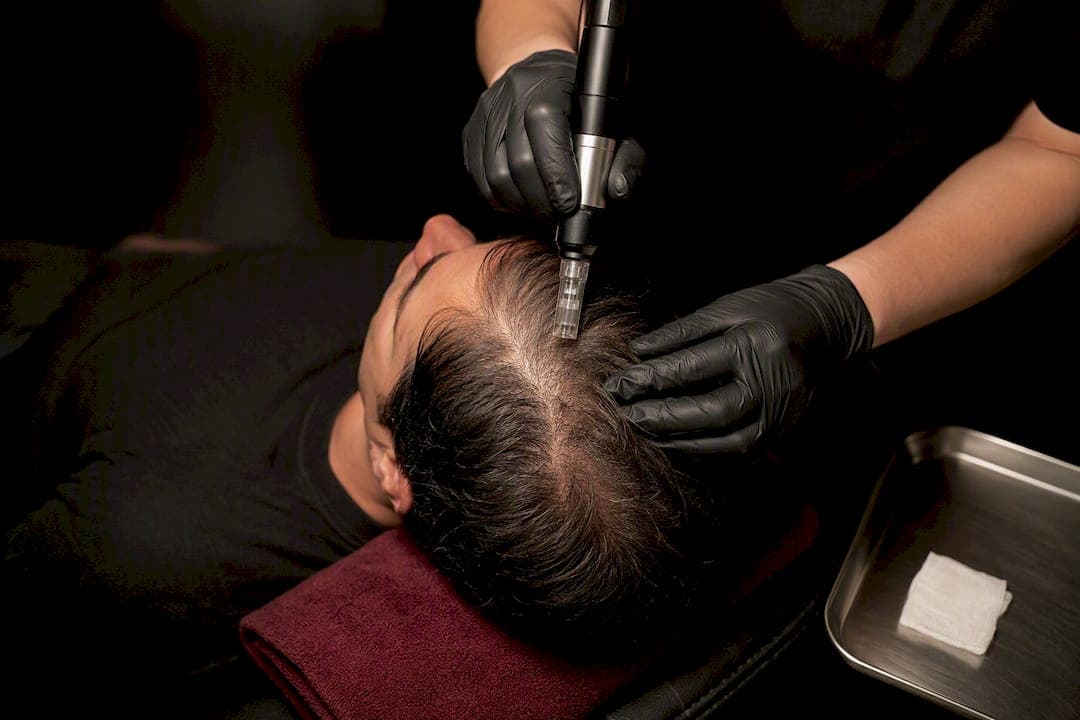
Scalp microneedling can produce measurable hair regrowth, especially when paired with minoxidil, though the evidence base is smaller and less consistent than most clinic marketing suggests. It works best on early to moderate pattern hair loss with follicles that are weakened rather than dead, and it is not a fix for scarring alopecia or untreated underlying conditions. The sections below cover the trial data, a realistic week-by-week timeline, safety, and how progress is actually measured.
TL;DR:
- Microneedling combined with minoxidil shows significantly better results than minoxidil alone, with notable hair count increases after 12 weeks.
- Most trials use different devices, needle depths, and session intervals, which impacts the consistency of outcomes and makes standalone effects unpredictable.
- Visible improvements such as new hair growth typically appear after 8 to 10 weeks, with density gains evident after 12 to 16 weeks, but results require ongoing maintenance.
- Candidates are mainly men with early to moderate follicle miniaturization, while those with scarred or inactive follicles are unlikely to benefit.
- Proper diagnosis and tailored treatment planning by a clinician are essential before starting microneedling, as it is most effective when paired with other therapies.
Table of Contents
- What the clinical evidence says about scalp microneedling results
- The realistic timeline: what happens week by week
- Who actually benefits, and when to get a diagnosis first
- How clinics and researchers actually measure progress
- Safety profile and common short-term side effects
- Combining microneedling with minoxidil, PRP or other therapies
- Inside the clinic: how Rivers Edge Skin Studio approaches scalp microneedling
- The gap between the marketing and the evidence
- Ready to see whether microneedling could work for your hairline?
- Sources
What the clinical evidence says about scalp microneedling results
The most cited trial on this subject is a randomised, evaluator-blinded study by Dhurat and colleagues, which compared microneedling plus 5% minoxidil against minoxidil alone in men with androgenetic alopecia. At 12 weeks, the combination group showed a significantly greater mean hair count increase than minoxidil alone.
In numbers: Most of the microneedling-plus-minoxidil group reported substantial improvement, compared with a small fraction of the minoxidil-only group.
That gap is large enough to explain why microneedling gets recommended so often as an add-on rather than a standalone treatment. The proposed mechanism is straightforward: controlled micro-injury from the needles triggers growth-factor release and mild angiogenesis, which appears to both wake up sluggish follicles and improve how well topical minoxidil penetrates the scalp.
A broader picture comes from a systematic review covering 22 clinical studies and 1,127 subjects, which found that microneedling generally improved hair parameters as an adjunct therapy across both androgenetic alopecia and alopecia areata. The catch: study quality across that pool was mostly low to moderate, and the trials used wildly different devices, needle depths, and session frequencies. That heterogeneity matters more than most summaries admit. A study using a 0.5mm dermaroller weekly is not really testing the same intervention as a clinic using a 1.5mm motorised pen monthly, yet both get filed under "microneedling" in the literature.
Not every trial has been positive. Some preliminary studies looking at microneedling as a standalone treatment found no consistent benefit when it was used alone, across a mix of alopecia types. That inconsistency reinforces a theme running through nearly every serious review: microneedling monotherapy is unpredictable, but microneedling as an adjunct has a stronger and more repeatable signal.
What tends to drive the differences between studies:
- Device type — automated pens versus manual rollers, which affects consistency of depth and pressure.
- Needle depth — protocols ranging from under 0.5mm to over 1.5mm, targeting different skin layers.
- Session frequency — anywhere from weekly to monthly, with no firm consensus on the ideal interval.
- Follow-up length — many trials stop measuring at 12 weeks, before density gains fully mature.
If you are searching for scalp microneedling before and after evidence online, treat single case photos with scepticism. The controlled trial data is more convincing than any individual result, precisely because it accounts for natural variation between patients.
The realistic timeline: what happens week by week
Hair follicles work on a biological clock, not a marketing calendar. Here is what tends to happen after starting a microneedling course, usually combined with a topical like minoxidil.
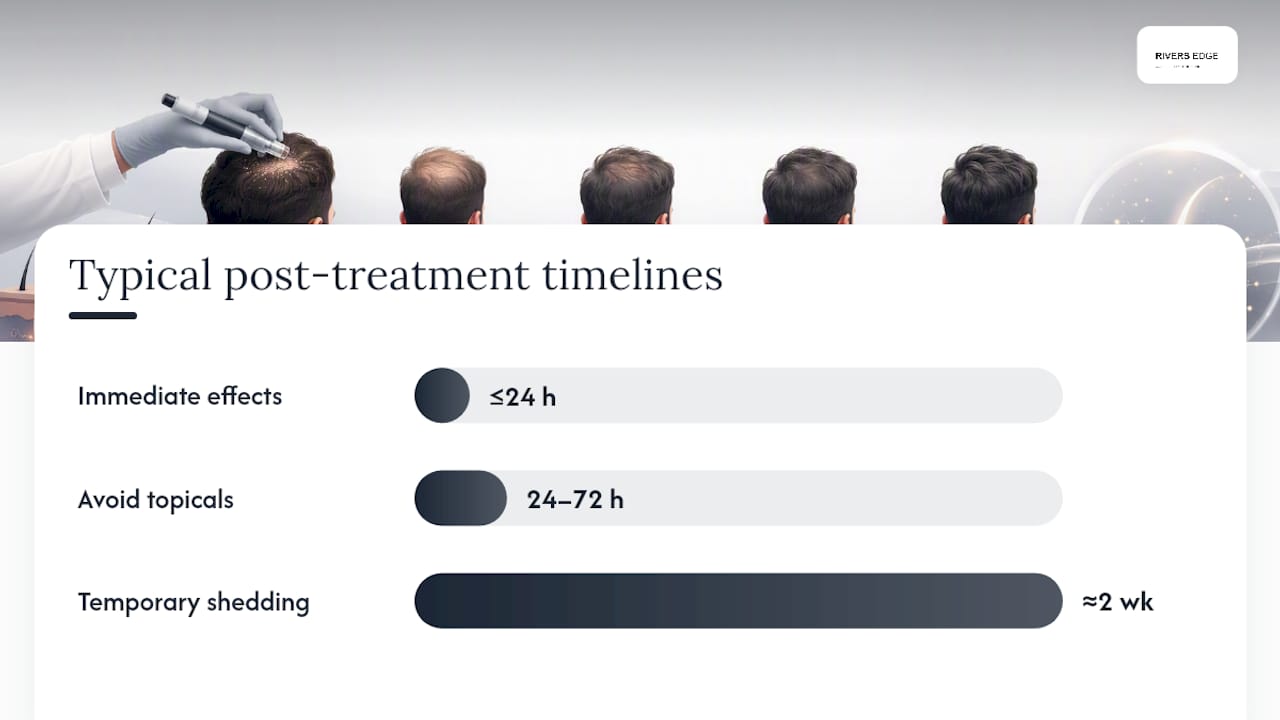
- Weeks 1 to 2: Expect scalp redness, mild tenderness, and sometimes pinpoint bleeding straight after treatment. Some men notice a temporary increase in daily shedding during this window, which unsettles people but is usually part of the follicle cycle resetting rather than a sign of failure.
- Weeks 4 to 6: Daily shedding typically starts to calm down, and the scalp often looks and feels healthier, less flaky, less tight, less irritated.
- Weeks 8 to 10: This is usually when the first genuinely encouraging sign appears: fine, short "baby hairs" in areas that were thinning. They are soft, often lighter in colour, and easy to miss if you are not looking closely under good light.
- Weeks 12 to 16 and beyond: If treatment and any adjunct therapy continue, density and thickness improvements become more visible, not just under close inspection but in normal daily comparison. Clinical summaries of typical patient timelines put early scalp changes around weeks 4 to 6, baby hairs around weeks 8 to 10, and clearer density gains around weeks 12 to 16, broadly matching what the trial data shows for combination therapy.
Results are not permanent without upkeep. Hair follicles that respond to microneedling and minoxidil generally need continued stimulation, so most men move onto a maintenance schedule once they hit their target density rather than stopping treatment altogether.
Pro Tip: Do not judge results at week 6. That is almost always the low point, right after any transient shedding but before baby hairs appear. Judging too early is the single most common reason people quit a treatment that was actually working.
Who actually benefits, and when to get a diagnosis first
Microneedling is not a universal fix for hair loss, and knowing where you sit on this spectrum matters more than the treatment itself.
- Best candidates: men with early to moderate androgenetic alopecia where follicles are miniaturised but not dead, typically visible as gradual thinning rather than smooth, shiny bald patches.
- Possible but variable benefit: some cases of alopecia areata or telogen effluvium, though results are inconsistent and usually depend on whether the underlying trigger has already been addressed.
- Unlikely to help: cicatricial (scarring) alopecias, or areas where follicles have been inactive for years. Needling cannot regenerate a follicle that no longer exists.
This is why clinical guidance consistently recommends confirming a diagnosis before starting, including basic blood tests to rule out iron deficiency or thyroid disease. Microneedling targets follicular dysfunction. It does nothing for hair loss caused by a systemic issue sitting underneath it, and treating the wrong cause wastes months. A proper scalp exam before treatment, covering hair density patterns, follicle miniaturisation, and any signs of scarring, tells you far more about likely outcomes than any generic before-and-after gallery.
How clinics and researchers actually measure progress
Trials rely on objective counts because self-perception is notoriously unreliable when it comes to your own hairline. The standard method is a hair count or phototrichogram, measuring the number and thickness of hairs within a fixed 1cm² area of scalp, repeated at set intervals so change can be tracked precisely rather than guessed at.
For anyone tracking their own results at home, a simpler version works reasonably well if done consistently:
- Use the same lighting, camera, and distance every time.
- Photograph the same angles, ideally with a fixed reference point like a specific part line or a small mark near the hairline.
- Take photos monthly rather than weekly, since week-to-week changes are too small to judge reliably.
Softer markers, like part width, ponytail thickness, or how a hairline looks in the mirror, are worth noting but far less reliable than counts or photos, mainly because lighting and mood distort perception more than people expect.
Safety profile and common short-term side effects
Reviews consistently report that serious adverse events are rare when microneedling is performed with proper technique and hygiene. Most side effects are short-lived and predictable rather than alarming.
- Scalp redness, tenderness, and pinpoint bleeding immediately after treatment, usually settling within a day.
- A temporary uptick in shedding in the first couple of weeks, which typically resolves as the follicle cycle stabilises.
- Rare risks include infection or scarring, almost always linked to poor technique, unclean equipment, or ignoring aftercare instructions.
Certain situations call for caution rather than proceeding straight into treatment: active scalp infection, recent isotretinoin use, or a personal history of keloid scarring. In any of these cases, speak to a clinician before booking, since the risk profile changes considerably.
Pro Tip: Avoid harsh topicals, active ingredients, and anything acidic on the scalp for 24 to 72 hours after treatment. The micro-channels created by the needles stay open briefly, and the wrong product during that window can cause more irritation than the treatment itself. For more on avoiding common errors, see this guide on microneedling mistakes to avoid.
Combining microneedling with minoxidil, PRP or other therapies
Combination therapy consistently outperforms microneedling alone in the trial data, which is the clearest practical takeaway from the research so far.
- Multiple studies show larger hair-count gains when microneedling is paired with 5% minoxidil, rather than minoxidil used on its own, echoed by the Dhurat trial's 91.4 versus 22.2 hair-count difference at 12 weeks.
- Some pilot and split-scalp studies report meaningful density increases when microneedling is combined with platelet-rich plasma (PRP) and minoxidil, though variation in how PRP is prepared and delivered makes it hard to compare results across clinics directly.
- Sequencing and timing matter. A clinician should decide how treatments are staged and how maintenance sessions are scheduled, rather than a patient combining approaches without guidance.
For men weighing up whether a receding hairline needs more than microneedling alone, this piece on what actually stops a receding hairline covers where combination approaches tend to make the biggest difference.
Inside the clinic: how Rivers Edge Skin Studio approaches scalp microneedling
Clinic protocols matter more than most people assume. Some clinics use automated microneedling pens rather than manual dermarollers, which allow tighter control over needle depth, typically between 1.0mm and 1.5mm for scalp work, calibrated to stimulate the follicle bulge without excessive trauma.
- Candidacy is assessed through a scalp exam and a discussion of hair loss pattern and history before any treatment plan is agreed.
- Progress is documented with consistent photography and patient-reported feedback at each session, not guesswork.
- A first appointment covers a review of scalp condition, discussion of realistic outcomes, and a plan for how microneedling might sit alongside minoxidil or other adjuncts. Details on what that process involves are covered in this step-by-step microneedling guide.
Anyone considering treatment should expect a proper conversation about candidacy first, not a same-day sales pitch.
The gap between the marketing and the evidence
Most content on scalp microneedling results either oversells it as a guaranteed fix or dismisses it entirely because a handful of small trials showed weak results. Both takes miss the point. The Dhurat trial's numbers, a near four-fold difference in hair count gains when minoxidil was paired with microneedling, are genuinely strong for a dermatology trial of this size. The problem is that the wider evidence base is thin and inconsistent, not that the core idea is flawed.
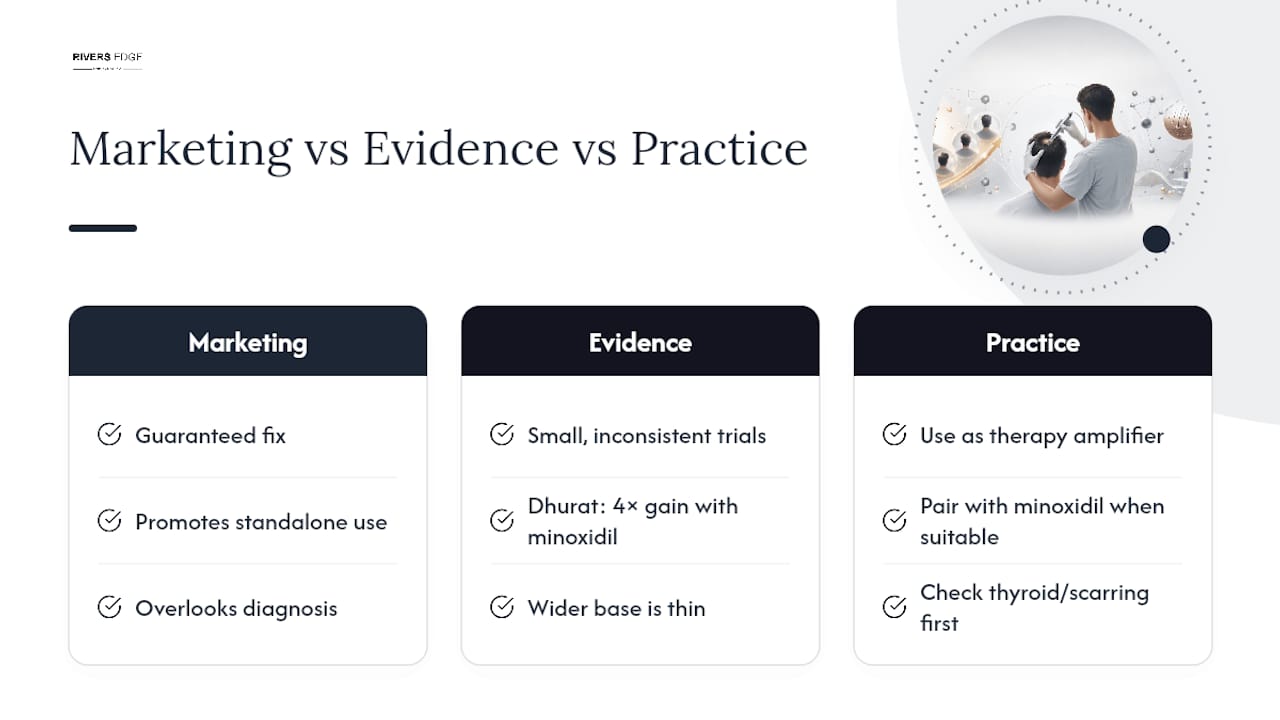
Where conventional advice falls short is the framing of microneedling as a standalone hair loss cure. It rarely works that way. Treat it as an amplifier for other therapies rather than a replacement for them, and the expectations gap mostly disappears.
The first priority for anyone starting out should not be the needling itself. It should be an honest diagnosis. Microneedling on the wrong cause of hair loss, an untreated thyroid issue or advanced scarring, wastes months chasing a result that was never coming.
— David
Ready to see whether microneedling could work for your hairline?
The trial data is encouraging, but it only translates into real results with the right depth, frequency, and diagnosis behind it, which is exactly where a clinic visit outperforms a dermaroller bought online. A clinic visit can assess your scalp and hair loss pattern first, then build a microneedling plan (often alongside minoxidil) suited to where your follicles actually are, not a generic protocol lifted from a trial designed for someone else's hairline.

If you are ready to find out whether you are a strong candidate, book a consultation through the men's skin treatments page and get a scalp assessment before committing to a course. For background on how the treatment itself works before you go in, read what microneedling actually involves for men.
This article is general information, not a substitute for advice from a qualified doctor. Consult a qualified healthcare professional about your own circumstances before acting on anything here.
Sources
- A Randomized Evaluator Blinded Study of Effect of Microneedling in Androgenetic Alopecia: A Pilot Study
- Microneedling for hair loss: what to know (Cleveland Clinic)