
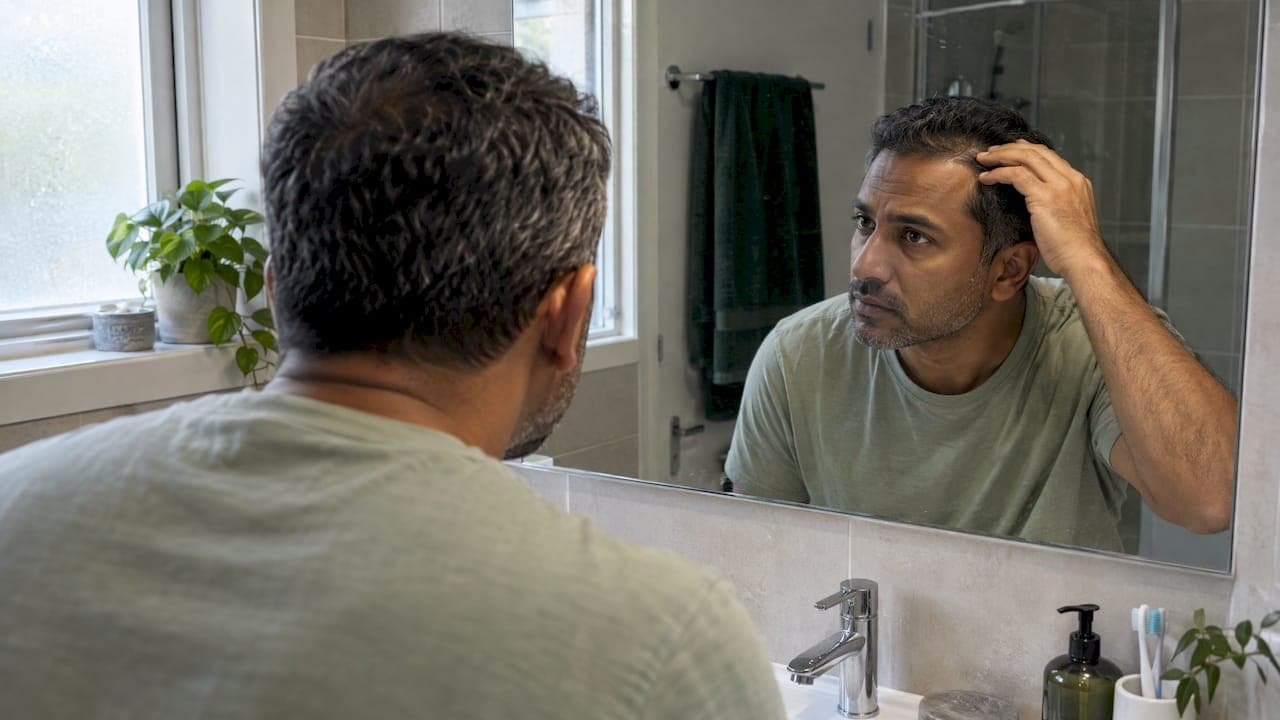
Thinning at the temples is usually the first visible sign of male pattern hair loss, a genetic and progressive condition. NICE guidance describes it as starting at the front and sides of the scalp before moving towards the back. It is common, it is not your fault, and there are sensible steps you can take early. This guide explains how to spot it, what causes it, which treatments are licensed in the UK and how we support men in Liverpool and across Merseyside.
TL;DR
- Temple thinning often begins as an "M" shape or deeper corners at the hairline. It is the typical opening pattern of male pattern hair loss.
- The cause is mostly genetic. The rate of progression is unpredictable and varies a lot from man to man.
- Licensed treatments are topical minoxidil 5% and oral finasteride 1 mg. Both need continued use to keep their effect.
- See a GP if hair loss is sudden, patchy, in clumps, or comes with an itchy or burning scalp.
- We offer head microneedling and scalp polynucleotides at our Merseyside studio, after a personal consultation.
Table of Contents
- What temple thinning looks like in men
- Maturing hairline or receding temples?
- Does a receding temple mean you will go bald?
- What causes temple hair loss in men
- When to see a GP
- Treatments that are licensed in the UK
- Can temple hair grow back?
- Our perspective
- Scalp treatments we offer in Merseyside
- What to expect from a first visit
- Everyday habits that support a healthy scalp
- Book a scalp consultation in Liverpool
- FAQ
- Sources
What temple thinning looks like in men
Most men notice it in the mirror or in photos rather than on the pillow. The corners of the hairline sit further back than they used to. Hair at the temples looks finer, shorter or sparser, and the front hairline starts to form an "M" with a peak of hair in the middle.
Common early signs:
- The gap between your eyebrow and the hairline at the temples looks bigger than it did a few years ago.
- Hair at the temples feels softer and finer than hair elsewhere.
- A side parting looks more exposed, or a haircut that used to cover the corners no longer does.
- Old photos show a clear difference in the temple corners.
Take a photo in the same light, with hair dry and combed back, once a month for three months. It gives you something objective to compare, rather than relying on how you feel on a given day.
Maturing hairline or receding temples?
A hairline naturally sits a little higher after adolescence. This is often called a maturing hairline. It usually settles in early adulthood and the hair keeps its thickness. Pattern hair loss is different: the hair at the temples gets thinner over time, and the hairline keeps moving.
| Sign | Maturing hairline | Pattern hair loss |
|---|---|---|
| Hair thickness at the corners | Same as the rest of the scalp | Finer, shorter, sparser |
| Change over time | Moves up a little, then stops | Continues to change over months and years |
| Shape | Even, straight or gently curved | Deepening "M" shape, pointed temples |
| Other areas | No thinning elsewhere | May thin at the crown or top as well |
This table is a guide only. Only a clinician looking at your scalp can tell you what is happening. If you are unsure, a consultation is the quickest way to find out. Our page on what an aesthetic clinic consultation involves for men explains what to expect.
Does a receding temple mean you will go bald?
Not necessarily, and nobody can promise either answer from a mirror. NICE states that in untreated men hair loss progresses over time, but that the rate of progression is unpredictable and extremely variable. Some men stay at a mild temple recession for decades. Others progress to the crown within a few years.
What that means in practice:
- Early temple recession is a reason to pay attention, not to panic.
- Tracking with photos shows you your own rate of change.
- Acting early gives you more options, because hair that is thinner but still growing is easier to support than an area that has been bare for years.
What causes temple hair loss in men
The main cause is genetic. NICE describes male pattern hair loss as genetically determined, patterned and progressive. In susceptible men, hair follicles at the front and sides of the scalp gradually shrink and produce finer hair. The hormone DHT is involved in this process, which is why one of the licensed medicines works on it.
Having a high DHT level is not something you can read from your hairline. The sensitivity of your follicles to the hormone is inherited, so two men with the same hormone levels can have very different results.
Other things can also thin hair and are worth ruling out:
- Significant stress, illness or sudden weight loss, which can cause shedding across the whole scalp.
- Tight hairstyles or constant tension on the hairline.
- Skin conditions of the scalp, such as dandruff or inflammation.
- Nutritional problems or thyroid conditions.
If your hair loss is widespread rather than at the temples, our guide to diffuse thinning in men covers causes and tests. If you are also seeing the crown thin, read crown thinning in men.
When to see a GP
See your GP if your hair loss is sudden, comes in patches or clumps, or if your scalp is itchy, sore or burning. Also go if you are simply worried about it. A GP can usually identify the likely cause by examining your hair and scalp and will talk through treatment options, as summarised by EM Doctors.
Tell the GP about any medicines you take, recent illness, family history and how quickly you have noticed the change. Gradual thinning at both temples in a man with a family history is the classic picture of pattern hair loss. Sudden or patchy loss needs a medical assessment first.
Treatments that are licensed in the UK
The British Association of Dermatologists sets out two licensed medicines for male pattern hair loss in its patient information leaflet.
Topical minoxidil 5%. A liquid or foam applied to the scalp. It can act as a growth stimulant and slow progression, but it has to be used indefinitely to maintain the effect. Scalp irritation can happen with any topical treatment, so follow the pack instructions and speak to a pharmacist or GP if your scalp becomes sore. For a wider view of prescription treatments and their side effects, see this overview of prescription treatment side effects.
Oral finasteride 1 mg. A tablet that lowers DHT in the scalp, which slows hair loss and may help some regrowth. The BAD notes it may need continuous use for up to 14 months before the full benefit shows. It is a prescription medicine, so discuss it with a GP or prescriber, who will explain the possible side effects for you.
Both work best when started early and used consistently. Neither is a one-off fix, and results differ between men. Our overview of what treatment actually stops a receding hairline in men goes through the options side by side.

Can temple hair grow back?
Where follicles have shrunk but are still alive, there is potential to thicken the hair that grows from them. Where an area has been completely bare for years, medicines and in-clinic treatments are far less likely to bring hair back. This is the main reason we encourage men to get a professional opinion early rather than wait.
How much you gain depends on your genetics, your age, how long the thinning has been present and how consistently you follow a plan.
Our perspective
Men rarely come to us the day they first notice their temples. Most have been checking the mirror for months. By the time they book, they want a straight answer and a plan that fits their life.
Our view is simple. Temple thinning is a skin and scalp matter, and it deserves the same care as any other skin concern. We look at your scalp, ask about your family history and how quickly things have changed, and then build a plan around you. We do not use a one-size-fits-all package.
For men who want to support the scalp in clinic, we offer head microneedling and scalp polynucleotides. We design these as part of a wider plan, alongside medical advice where it is needed. If anything you describe sounds like it needs a GP first, we will tell you.
Because we only treat men, the whole studio is set up around how men's skin, hair and scalp behave, and around keeping the experience relaxed and discreet. Our aim is natural-looking results, not a dramatic change that people notice for the wrong reasons.
David
Scalp treatments we offer in Merseyside
At Rivers Edge Skin Studio we offer treatments aimed at the scalp for men with thinning hair. We describe what each is designed to do. Your consultation will cover what is realistic for you.
| Treatment | Price |
|---|---|
| Head Microneedling | £70 |
| Scalp Polynucleotides | £240 |
| Biotin Injection | £30 |
Head microneedling. Tiny, controlled micro-channels are created in the scalp. It is designed to stimulate the skin and support the scalp environment. You can read more in our pieces on scalp microneedling and the 12 to 16 week timeframe and on microneedling alongside minoxidil.
Scalp polynucleotides. An injectable treatment designed to condition the scalp and support hair quality. It is part of our approach to hair thinning for men who want a clinic-based option.
Biotin injection. An intramuscular vitamin injection we offer as part of our wellness range for skin and hair.
We adapt the plan to the individual. Some men combine a clinic treatment with a GP-prescribed medicine. We are happy to work around that.

What to expect from a first visit
A first visit is a conversation and a close look at your scalp. It usually covers:
- When you first noticed the thinning and how fast it has changed.
- Family history, medicines and health conditions.
- An examination of the hairline, temples and crown.
- A plan with options, expected timeframes and costs, so you can decide at your own pace.
Hair treatments take time. Hair grows slowly, so we talk in months, not days, and we ask you to compare photos taken in the same light at regular intervals. If you are looking for a local clinic, our guide to finding a men's skin clinic in Merseyside lists what to look for.
Everyday habits that support a healthy scalp
None of these will change your genetics, but they keep the scalp in good condition while you decide on a plan:
- Wash your hair regularly with a gentle shampoo, and do not scrub the hairline hard.
- Avoid very tight hairstyles or hats that pull on the temples.
- Keep your scalp protected from the sun, particularly at a thinning hairline.
- Eat a varied diet, and ask your GP about a blood test if you suspect a deficiency.
- Choose a haircut that suits your hairline. A good barber can make early recession far less noticeable.
Book a scalp consultation in Liverpool
If you have noticed your temples changing, an early conversation gives you the most choice. We see men from Liverpool and across Merseyside, and every plan starts with a consultation. You can see our full treatment list and prices on our services page, or read about microneedling for men in Liverpool.

Book online and we will build a plan around your scalp, your schedule and your budget.
FAQ
Does temple hair loss always lead to baldness?
No. Progression is unpredictable and varies hugely between men, according to NICE. Some men stay at mild recession for years, while others progress further. Photos taken regularly show your own pattern.
Can receding temples grow back?
It depends on whether the follicles are still alive. Thinner hair from shrunken follicles can sometimes be thickened with treatment, but areas bare for years rarely respond. That is why early advice matters.
Which treatments are licensed for male pattern hair loss in the UK?
The British Association of Dermatologists names topical minoxidil 5% and oral finasteride 1 mg. Both need continued use to keep their effect, and finasteride is available on prescription.
When should I see a GP about thinning temples?
Go if the loss is sudden, patchy or in clumps, if your scalp is itchy or burning, or if you are simply concerned. A GP can examine your scalp and discuss options.
How much does head microneedling cost at your studio?
Head microneedling is £70 per treatment and scalp polynucleotides are £240 at our studio. Your consultation will cover which option suits you.
Sources
- NICE CKS: Male pattern hair loss
- NICE CKS: Male pattern hair loss, management
- British Association of Dermatologists: Hair loss, male pattern
- EM Doctors: Hair loss
- Prescription treatment side effects overview