
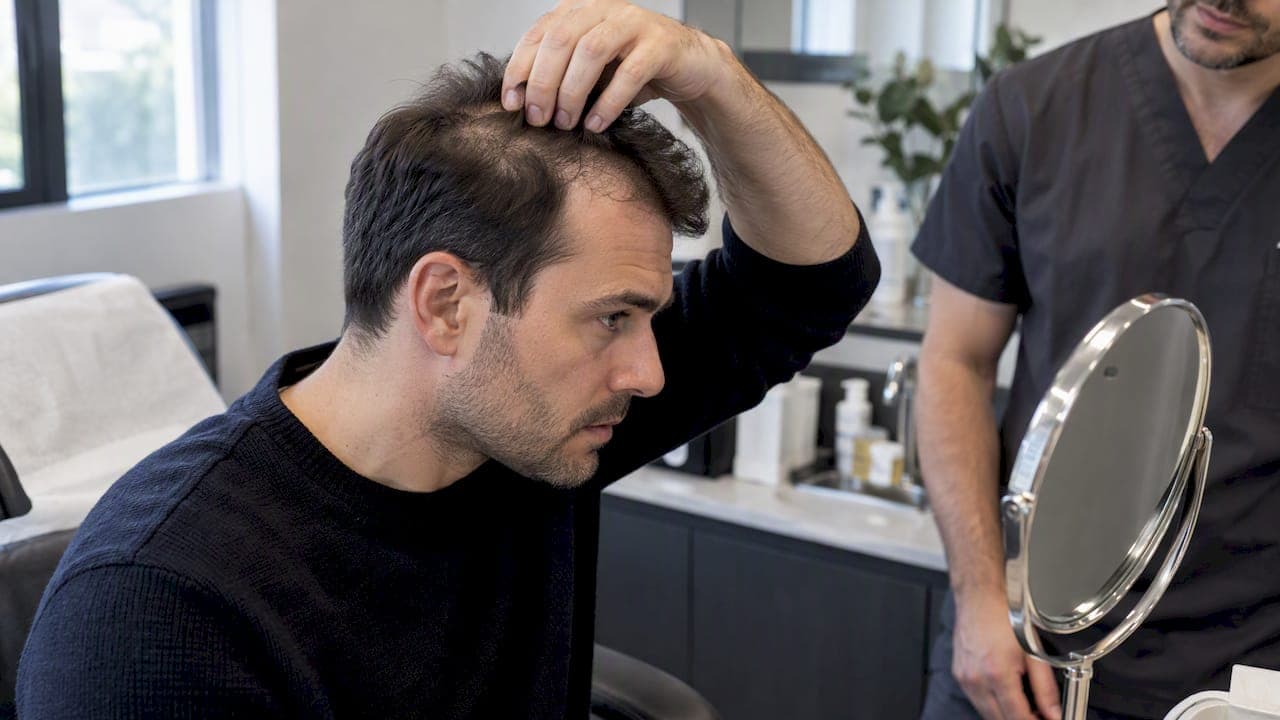
Diffuse thinning means your hair is losing density across the whole scalp, not receding at the temples or balding at the crown. It is a description, not a diagnosis. Behind it sits either male pattern hair loss or a temporary shedding condition called telogen effluvium, and the right treatment depends on which one you have. Get the cause confirmed first. Then choose a plan you can stick to for months, not weeks.
TL;DR
- Diffuse thinning is a pattern of hair loss, not a single condition. The two usual causes are genetic thinning and temporary shedding after a trigger such as illness, stress or low nutrient levels.
- See your GP first. Thyroid problems, iron deficiency and other medical causes can look like male pattern thinning, and treating the wrong thing wastes time and money.
- Minoxidil and finasteride are the main evidence-based treatments in the UK. Both need many months of daily use before you can judge them.
- Microneedling is best seen as a way of supporting other treatments, not a stand-alone fix. Done too hard or too often, it can make hair more fragile.
- We offer scalp microneedling and scalp polynucleotides for men in Merseyside, as part of a plan built around your diagnosis.
Table of Contents
- What diffuse thinning looks like in men
- What causes diffuse thinning in men
- Is it genetic or temporary? A quick self-check
- Step one: get the diagnosis right
- Treatments that have evidence behind them
- Where microneedling fits, and where it does not
- Our perspective: a plan, not a gadget
- Building a routine you can keep
- Hair treatments at Rivers Edge Skin Studio
- When to see a doctor sooner
- FAQ
- Sources
What diffuse thinning looks like in men
Male pattern hair loss usually follows a map: a receding hairline, a thinning crown, or both. Diffuse thinning does not. The hair gets finer and sparser over the whole top of the head. Your parting looks wider, the scalp shows through under bright light, and a ponytail or a short cut feels less full than it did.
Because nothing is dramatic at first, it is easy to miss. Many men notice it in photos, in changing-room lighting, or when wet hair clumps and shows scalp. Some men develop more diffuse thinning that is less obvious early on, which is why it often gets noticed late.
It is also common. DermNet reports that diffuse alopecia affects up to 50% of men and women, although women present with it more often than men. If you are searching for answers at 26 or 35, you are not unusual.
What causes diffuse thinning in men
There are two main routes, and they behave very differently.
Genetic thinning (androgenetic alopecia)
This is the most common cause of hair loss in men. The British Association of Dermatologists explains that it comes from a mix of genetic and hormonal factors, with the hormone DHT shrinking susceptible follicles over time. The hair grows back finer and shorter each cycle. This is called miniaturisation.
It is progressive. Without treatment it tends to continue.
Temporary shedding (telogen effluvium)
Here, a large share of follicles shifts into the resting phase at once and the hair sheds. DermNet describes triggers such as major stress, illness, surgery, nutritional deficiencies and hormonal shifts, with shedding usually starting two to three months after the event. The same page notes that it can involve losing more than 200 scalp hairs a day and typically settles within 6 to 9 months of the trigger.
So if you had flu, a stressful period or a crash diet this spring and your hair is thinner now, that timing matters.
Medical causes that mimic both
Thyroid disease, iron-deficiency anaemia and endocrine problems can all produce diffuse thinning. Clinical guidance stresses getting a definitive diagnosis first, because correcting an underlying deficit can do more than any growth product applied to the scalp.
Diffuse unpatterned alopecia
A less common form, diffuse unpatterned alopecia, thins the sides and back too, the areas usually treated as a safe donor zone. The American Hair Loss Association notes that men with it are often poor candidates for transplant surgery because they lack a stable donor supply. If a surgeon recommends a transplant, ask whether this has been ruled out.
Is it genetic or temporary? A quick self-check
No checklist replaces an examination, but these clues help you describe things to a doctor.
| Clue | Points towards genetic thinning | Points towards temporary shedding |
|---|---|---|
| Onset | Gradual over years | Within a few months of a trigger |
| Shedding | Little noticeable shedding, hair gets finer | Lots of hair in the shower, on the pillow, on the brush |
| Family history | Often present | Not needed |
| Recent events | None in particular | Illness, surgery, big stress, weight loss, new medication |
| Course | Continues without treatment | Usually settles once the cause is fixed |
You can have both at the same time. A shedding episode can reveal underlying genetic thinning that was previously hidden.
Step one: get the diagnosis right
Book a GP appointment before you spend money on products or procedures. Take photos of your scalp taken in the same light every month, a list of recent illnesses, medication and big life events, and any family history of thinning.
Ask whether blood tests are appropriate for you. Iron levels, thyroid function and vitamin D are common things to check, though your GP decides what is relevant. Hair thinning from a medical cause needs medical treatment, and no cosmetic procedure fixes it.
If your GP suspects patterned loss, you can move on to a treatment plan with a clear head. The NHS treats male pattern hair loss as a cosmetic concern, so most men get treatment through private consultations and pharmacy prescriptions.
Treatments that have evidence behind them
Minoxidil
Topical minoxidil is available over the counter as a 5% solution or foam. The British Association of Dermatologists advises using it for at least six months before judging the result. A temporary increase in shedding in the first weeks is common and is not a reason to stop.
Finasteride
Finasteride 1mg is a prescription tablet that lowers DHT. The same BAD leaflet reports that it slows hair loss in roughly 80 to 90% of men, with sexual side effects in around 2%. Talk through mood and libido concerns with the prescriber, as they will want to monitor for them. Some men prefer to discuss lower-exposure approaches, which your prescriber can explain.
Consistency matters more than the product
The most common reason treatment fails is stopping too early. Visible stabilisation or improvement can take 6 to 14 months of daily use, and gains fade again within about three months of stopping, according to the BAD guidance. Choose something you can realistically keep up.
Regenerative options
Platelet-rich plasma and intradermal polynucleotides are increasingly used for men who do not respond to medication or want alternatives. A 2026 preprint review found PRP had the most consistent evidence among regenerative therapies. This is a preprint, so it has not yet been through full peer review, and results vary between men. Treat these as add-ons to a proper diagnosis, not replacements for it.
Covering density cosmetically
Some men prefer to camouflage thinning instead of treating it. Scalp micropigmentation, a tattoo-style technique that adds the look of density, is one option. This explainer on SMP for male pattern baldness from a Toronto clinic shows what the approach involves. It does not regrow hair, so it suits men who want a cropped, denser look.
Where microneedling fits, and where it does not
Microneedling gets oversold online. Here is the honest version.
On its own, evidence for density gain is limited. A published study of isolated scalp microneedling in male pattern hair loss notes that most earlier reports combined needling with other agents. Where it appears to help is as a delivery method. It is used to support the absorption of topical treatments such as minoxidil, rather than as a lone therapy.
Technique matters too. A 2026 report, When Microneedling Backfires, describes hair-shaft fragility and breakage in men with androgenetic alopecia when depth or frequency is wrong. The lesson is that more is not better. Aggressive home rolling, copied from forum routines, can leave hair looking thinner.

If you want to read more on how we approach it, our guides cover scalp microneedling results, microneedling frequency by depth and 72-hour scalp aftercare. For the combination with minoxidil, see our clinic evidence article.
Our perspective: a plan, not a gadget
Most men who come to us about thinning have already tried something. A supplement, a shampoo, a roller from the internet. Usually nobody has told them that the cause needs to be established first.
We work only with men's skin and hair concerns, and we keep thinning advice simple. Get checked by your GP. If the picture points to patterned loss, use a proven medication consistently. Then ask what a clinic treatment can add on top.
For some men, that means scalp microneedling at a conservative depth, spaced properly so the hair shafts are not stressed. For others it means scalp polynucleotides. We would rather talk you out of a treatment you do not need than sell you a course that cannot fix a systemic problem. If your thinning looks like it has a medical cause, we will say so and send you back to your doctor.
What we want you to leave with is a realistic timeline. Treatments for hair take months. Anyone promising weeks is selling you something.
— David
Building a routine you can keep
A practical way to approach the first year:
- Weeks 1 to 2: see your GP, discuss blood tests and take baseline photos.
- Month 1: if patterned loss is confirmed, start your medication of choice. Expect possible early shedding.
- Months 2 to 6: keep going daily. Photograph monthly, same light, same angle.
- Month 6: review with your prescriber. This is the first sensible point to judge minoxidil.
- Months 6 to 14: add clinic treatments if you and your clinician agree they fit.
Nutrition is worth a look too, but only where a deficiency is shown. Vitamin D is one of the levels often discussed with hair shedding. Do not start high-dose supplements on a guess.
Hair treatments at Rivers Edge Skin Studio
We treat men in Liverpool and across Merseyside. For thinning, our relevant treatments are:
- Head Microneedling: £70
- Scalp Polynucleotides: £240
- Biotin Injection: £30
- Vitamin D Injection: £45
Each is planned around the individual, and we will tell you honestly whether it suits your type of thinning. You can see everything on our services page, read about our microneedling for men in Liverpool, or book an appointment directly. If you are weighing up options for a receding line instead, start with our guide on what stops a receding hairline, or browse hair regeneration treatments for men.
When to see a doctor sooner
Do not wait and watch if any of these apply:
- Hair is coming out in clumps or you are losing it very quickly.
- You have patchy bald spots, a sore or scaly scalp, or scarring.
- You also have unexplained tiredness, weight change, feeling cold, or other new symptoms. Thyroid disease is a common cause of hair loss and needs a GP.
- You started a new medication around the time the thinning began.
These are reasons for a GP or a dermatologist, not a cosmetic clinic.
FAQ
Can diffuse thinning go away?
If it is telogen effluvium, often yes. It typically settles within 6 to 9 months of the trigger once the cause is dealt with. Genetic diffuse thinning does not go away by itself, but it can be slowed or stabilised with consistent treatment.
Is it normal for a man in his twenties to be thinning?
It is common. Male pattern hair loss can affect men of any age after puberty, and temporary shedding from stress or illness can happen at any time. A GP can tell you which applies, so it is worth getting checked early rather than waiting.
Is blocking DHT bad for men?
Licensed 1mg finasteride is well studied, and the BAD reports sexual side effects in about 2% of men. Some men are still understandably wary. Raise your concerns in a formal consultation so the prescriber can monitor you and discuss alternatives.
Does microneedling help diffuse thinning?
It can help as a supporting treatment, mainly by improving how well topical products like minoxidil are absorbed. Evidence for it as a stand-alone treatment is weak, and wrong depth or frequency can damage hair shafts. Have it done by a trained practitioner at a sensible interval.
Sources
- DermNet: Diffuse alopecia
- British Association of Dermatologists: Male pattern hair loss
- American Hair Loss Association: Men's hair loss
- AAFP: Hair loss
- Preprints.org: Regenerative therapies review (2026)
- PubMed: Scalp microneedling in male pattern hair loss
- Journal of Cosmetic Dermatology: When Microneedling Backfires
- Bolt Pharmacy: Hair and eyebrow loss