

Men's skin thins because collagen loss, declining androgens and cumulative external damage work together over decades. UV radiation accounts for up to 80% of visible skin ageing, making daily sun protection the single highest-impact step you can take right now. Start here:
- Apply a broad-spectrum SPF 30+ every morning, without exception
- Stop smoking — tobacco breaks down elastic fibres and accelerates thinning
- Review any long-term topical corticosteroid use with your GP or dermatologist
- Book a clinical assessment if you notice rapid or sudden change
Men begin with an advantage: skin that is roughly 20–25% thicker than female skin, thanks to higher androgen-driven collagen content. That structural head start does not last indefinitely, and understanding why it erodes is the first step to protecting it.
Table of Contents
- Why does men's skin thin with age? The biology explained
- What accelerates thinning? The main causes to know
- How to recognise thinning skin and when to get help
- Everyday steps that genuinely slow skin thinning
- Which clinical treatments can restore skin thickness?
- How to choose a UK clinic for skin thinning treatment
- Key takeaways
- The case for acting earlier than you think you need to
- Skin thinning treatment for men at Riversedgeskinstudio
- Useful sources and further reading
Why does men's skin thin with age? The biology explained
Skin thickness is largely a function of the dermis, the middle layer sitting beneath the epidermis. The dermis is built from collagen and elastin fibres; collagen provides structural density, elastin provides recoil. In men, androgens such as testosterone stimulate higher collagen density and larger fibril size, which is why male skin starts thicker. That same testosterone-collagen relationship is what makes the male ageing pattern distinct.
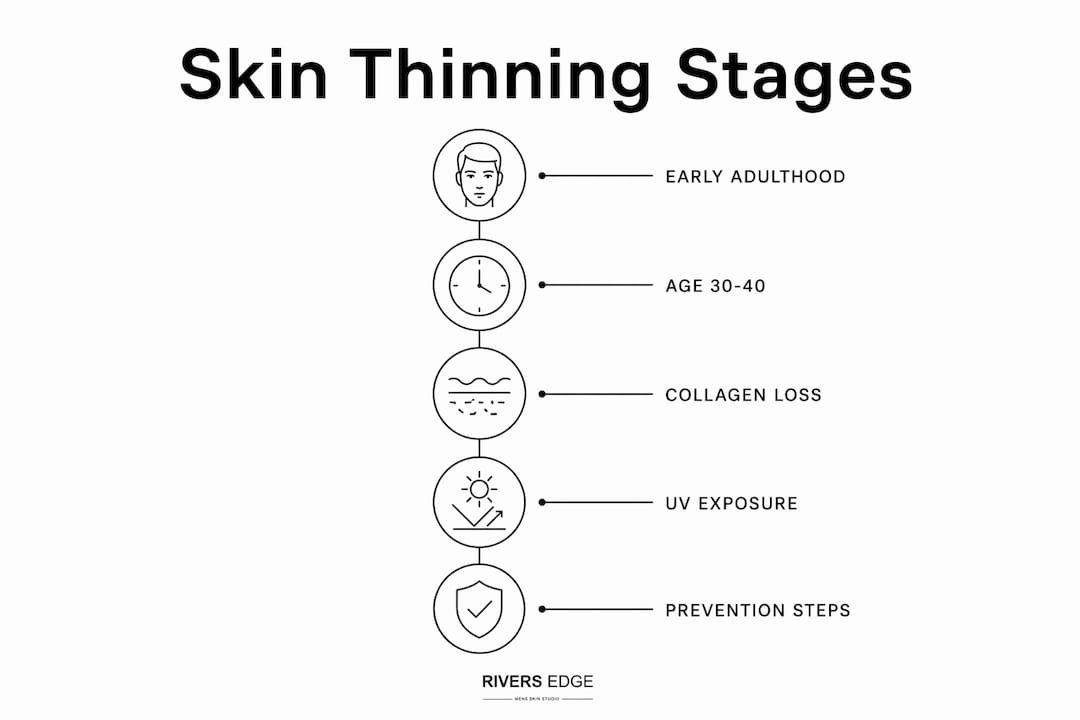
The critical difference from female skin is timing. Men's skin thickness decreases linearly from a relatively early age, whereas women's thickness tends to remain more stable until menopause triggers a sharper hormonal shift. In practical terms, men are losing structural density steadily through their 30s and 40s, often without noticing, because the change is gradual rather than sudden.
That 1% annual figure is what clinicians use to explain why a man who looked broadly the same at 35 and 40 can appear noticeably different by 48. The losses compound quietly.
What accelerates thinning? The main causes to know
Several factors speed up what would otherwise be a slow, manageable process. Some are intrinsic; others are entirely modifiable.
Intrinsic factors:
- Steady collagen loss of around 1% per year after the 30s, tied to gradual testosterone decline
- Reduced dermal vasculature, meaning less blood supply to support skin repair and renewal
- Slower cellular turnover, leaving the epidermis thinner and less resilient
Extrinsic and lifestyle factors:
- Cumulative UV exposure is the dominant driver, responsible for up to 80% of visible ageing changes
- Smoking degrades elastic fibres and restricts blood flow to the skin
- Air pollution generates oxidative stress that damages collagen at the cellular level
- Daily shaving acts as constant mechanical exfoliation, increasing skin sensitivity and UV vulnerability
Iatrogenic (medication-related) causes:
- Prolonged use of topical corticosteroids is a well-recognised pharmaceutical cause of skin thinning. If you have used a potent topical steroid for months or years, discuss a review with your GP before the thinning becomes significant.
Pro Tip: The earlier you address modifiable factors, the more structural resilience you preserve. Collagen lost to a decade of unprotected sun exposure cannot be fully replaced; collagen protected by consistent SPF use stays intact.
How to recognise thinning skin and when to get help
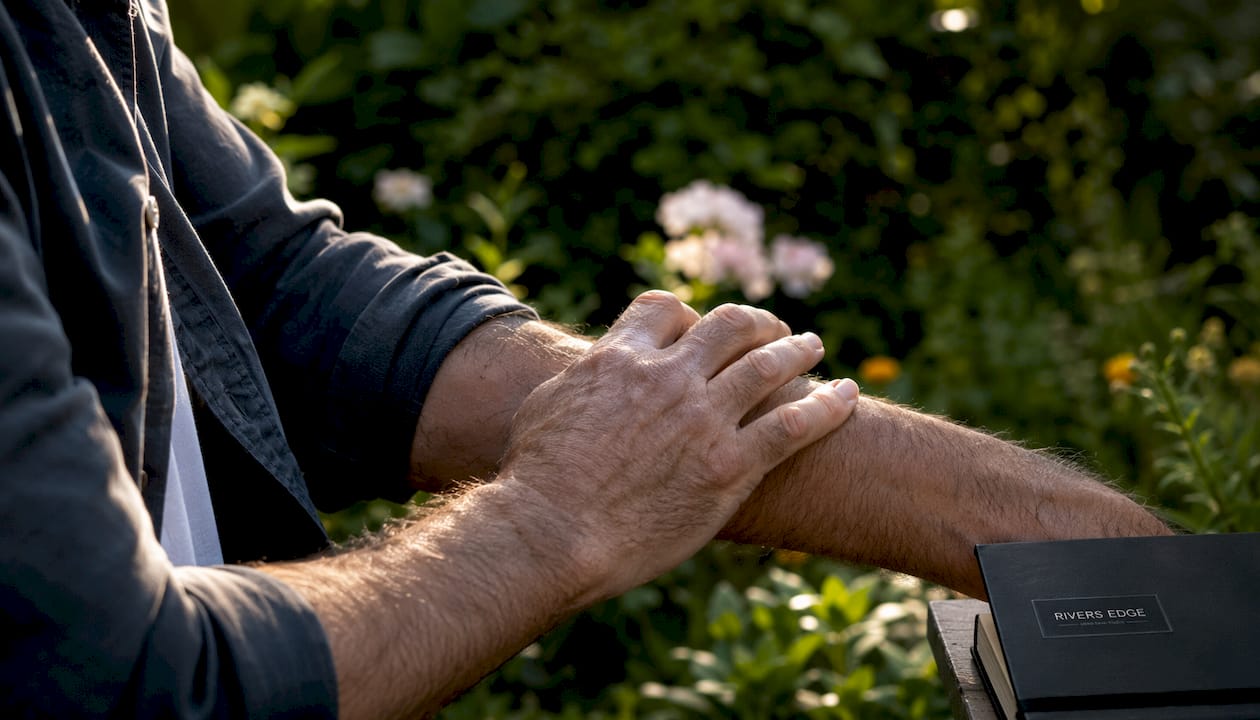
Most men notice thinning gradually. The early signs are subtle: skin that looks slightly more translucent on the backs of the hands or forearms, fine surface wrinkling that was not there before, and a tendency to bruise more easily than you used to. Visible blood vessels close to the surface and slower healing after minor cuts or nicks are also common indicators.
Red flags that need prompt medical review:
- Rapid or sudden thinning over weeks rather than months
- Persistent lesions that do not heal within two to three weeks
- New or rapidly changing spots, moles or areas of bleeding under the skin
- Skin changes appearing alongside other systemic symptoms
For gradual, age-related thinning, a professional skin assessment is the sensible next step. For any of the red flags above, see your GP first.
Everyday steps that genuinely slow skin thinning
The most effective daily routine for men is not complicated. Consistency matters far more than complexity.
Morning routine:
- Cleanse with a gentle, non-stripping face wash
- Apply a vitamin C or antioxidant serum to counter UV-induced oxidative damage
- Follow with a lightweight moisturiser suited to your skin type
- Finish with a broad-spectrum SPF 30+ — this step is non-negotiable
Evening routine:
- Double-cleanse if you have been outdoors or worn SPF all day
- Apply a retinoid (if your clinician has recommended one) or a peptide-based serum to support collagen synthesis
- Use a richer moisturiser or barrier cream to support overnight repair
Beyond the routine, nutrient-dense skincare ingredients such as vitamin C, niacinamide and peptides support the skin's structural repair processes from the outside. From the inside, a diet rich in collagen-supporting nutrients (vitamin C, zinc, protein) and adequate hydration both contribute to dermal health.
Lifestyle changes carry equal weight. Stopping smoking is the single most impactful lifestyle decision for skin structure. Improving sleep quality, managing chronic stress and limiting occupational sun exposure where feasible all reduce the rate of collagen breakdown. For a practical men's daily care checklist, the essentials are well-established and straightforward to follow.
Which clinical treatments can restore skin thickness?
At-home care slows the process; clinical treatments can actively stimulate new collagen and improve dermal density. The evidence base varies by modality, so knowing what each approach targets is useful before booking.
Microneedling creates controlled micro-injuries that trigger the skin's repair response, stimulating collagen and elastin production in the dermis. A course of three to six sessions, spaced four to six weeks apart, is typical. Results build over months as new collagen matures.
Chemical peels work primarily on the epidermis and upper dermis, improving texture, tone and surface quality. They are often combined with collagen-stimulating treatments for a more complete result.
Collagen-stimulating injectables (such as polynucleotides or biostimulators) are placed directly into the dermis to trigger fibroblast activity. These are particularly relevant for men with more advanced thinning, where surface treatments alone are insufficient.
Energy-based devices (radiofrequency, ultrasound-based platforms) heat the deeper dermis to stimulate collagen remodelling without breaking the skin surface. Downtime is minimal, making them practical for men with busy schedules.
One important caution: if you have used potent topical corticosteroids long-term, tell your clinician before any treatment. Thinned skin from steroid use requires a modified approach and careful assessment before needling or resurfacing. For a detailed overview of men's facial rejuvenation options, the range of available approaches is broader than most men realise.
How to choose a UK clinic for skin thinning treatment
The quality of your outcome depends heavily on who assesses and treats you. A few direct questions will tell you most of what you need to know.
Questions to ask before booking:
- What are your practitioner's qualifications and regulatory registration?
- Do you have before-and-after evidence specifically for male clients with skin thinning?
- What does the treatment plan include, and how many sessions are realistic for my skin?
- How do you manage complications, and what aftercare is provided?
- What results should I realistically expect, and over what timeframe?
Red flags to walk away from:
- Pressure to book on the day without a full consultation
- Vague or absent qualifications
- Guarantees of dramatic results
- No aftercare plan or follow-up protocol
For a structured approach to clinic best practices, the standards are clear. A reputable UK clinic will welcome your questions and give you honest, specific answers.
Key takeaways
Men's skin thins because collagen loss, hormonal decline and extrinsic damage (particularly UV exposure) compound steadily from the 30s onward, making early, consistent protection the most effective strategy.
| Point | Details |
|---|---|
| Baseline advantage | Men's skin starts approximately 20–25% thicker than female skin, but linear collagen loss begins earlier. |
| UV is the dominant driver | Up to 80% of visible skin ageing is attributable to cumulative UV exposure — daily SPF is the priority. |
| Medications matter | Prolonged topical corticosteroid use causes thinning; review long-term use with your GP. |
| Clinical treatments work | Microneedling, collagen-stimulating injectables and energy devices actively restore dermal density. |
| Riversedgeskinstudio | Offers personalised clinical assessment and treatment plans for men, including microneedling, chemical peels and collagen-stimulating approaches. |
The case for acting earlier than you think you need to
Most men who come to a clinic with significant skin thinning share one thing: they waited. Not out of vanity, but because the changes were gradual enough to dismiss. By the time thinning is obvious to others, years of collagen loss have already accumulated.
The conventional wisdom says treat the problem when it appears. The more useful approach is to protect what you have before the deficit becomes visible. Men start with higher collagen density than women, which is genuinely protective, but it also creates a false sense of security. The linear, steady nature of male skin thinning means there is no dramatic hormonal event to prompt action. The motivation has to come from understanding the biology, not from a sudden visible change.
Retinoids, consistent SPF use and a basic antioxidant routine in your 30s will preserve more structural integrity than any clinical treatment in your 50s can restore. That is not a criticism of clinical treatment — it is a statement about what prevention actually achieves versus what correction can realistically deliver. Both have a place. The timing of each is what most men get wrong.
Skin thinning treatment for men at Riversedgeskinstudio
Riversedgeskinstudio is a specialist men's skin clinic built around one straightforward premise: men's skin ages differently, and treatment plans should reflect that.

For men concerned about thinning, the starting point is a thorough clinical assessment — not a generic consultation, but a structured review of your skin's current condition, your history (including any corticosteroid use), and your realistic goals. From there, a personalised plan might include microneedling to stimulate collagen, a course of chemical peels to improve surface quality, collagen-stimulating injectables for deeper dermal support, or a combination approach where the evidence is strongest.
Every treatment at Riversedgeskinstudio includes a clear aftercare protocol and honest guidance on what to expect and when. To review the full range of men's skin treatments available, or to book a consultation, visit the services page.
Useful sources and further reading
- Male versus female skin: What dermatologists and cosmeticians should know (PMC) — peer-reviewed overview of biological differences including thickness, collagen density and the male ageing timeline.
- PubMed: comparative skin thickness study — clinical data supporting the 20–25% baseline thickness difference between male and female skin.
- PubMed: UV and visible skin ageing — evidence base for UV radiation as the dominant extrinsic ageing driver, accounting for up to 80% of visible changes.
- Mayo Clinic: thin skin Q&A — clinical guidance on causes including prolonged topical corticosteroid use.
- Dermatologic Surgery: ageing in the male face — peer-reviewed analysis of intrinsic and extrinsic factors in male facial ageing, including sex-steroid effects on collagen.
- The International Dermal Institute: is a man's skin really different? — professional education resource covering antioxidant capacity, UV immunosuppression risk and male skin biology.