
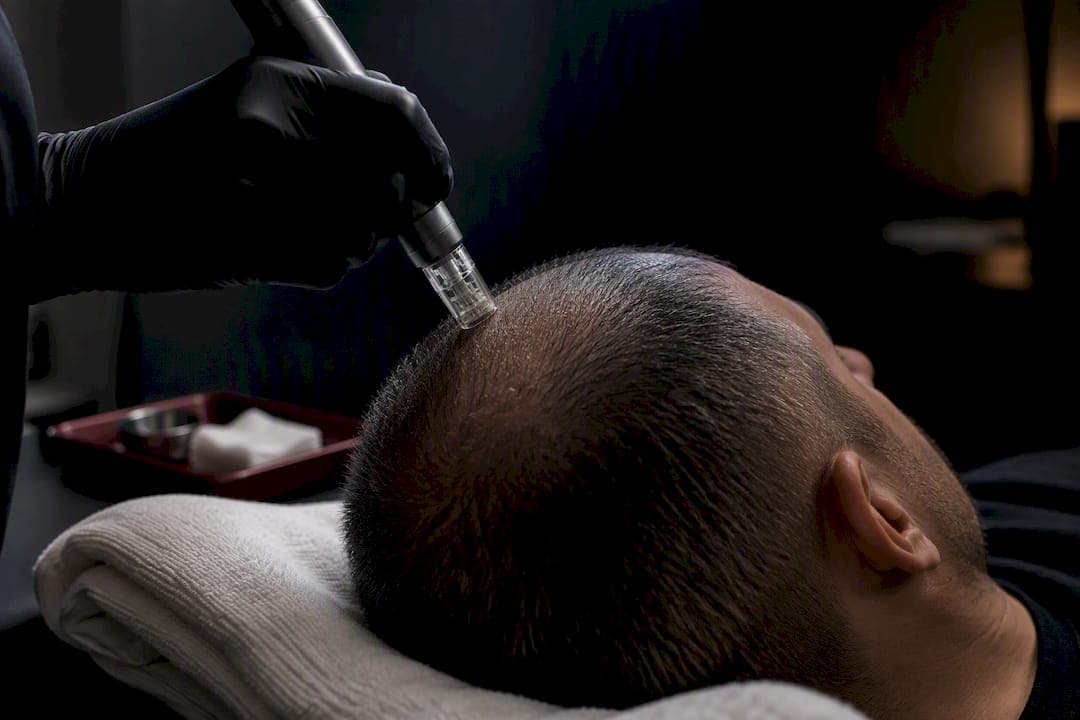
Typical microneedling frequency ranges from once weekly for very shallow home devices to once monthly for deeper clinical sessions, with spacing set by needle depth rather than a fixed calendar rule. Deeper professional treatments need longer recovery, so stretch the interval as depth increases. Pair sessions with 5% topical minoxidil where appropriate, wait roughly 24 hours before applying it after needling, and give any routine 12 to 16 weeks before judging whether it's working.
TL;DR:
- Frequency should be based on needle depth, with shallow treatments every 7 to 14 days and deeper sessions spaced 4 to 6 weeks apart to allow proper healing.
- Deep microneedling requires longer intervals due to increased tissue trauma, and signs like persistent redness, crusting, or soreness indicate the need to extend recovery time.
- Home devices are limited to shallow depths and should be used more frequently with lower risk, while clinic treatments are deeper, less frequent, and under professional supervision to ensure safety.
- Combining microneedling with topical minoxidil significantly improves hair growth, but application and session timing must be carefully coordinated, especially after needling.
- A staged treatment approach—starting shallow, monitoring scalp response, then gradually increasing depth and interval—maximizes results and minimizes irritation risks.
Table of Contents
- What is the recommended hair microneedling frequency by device and depth?
- How does needle depth change recommended spacing?
- Home microneedling versus clinic sessions: how does frequency differ?
- What does the research say about frequency and outcomes?
- How should you schedule sessions and time topical treatments safely?
- When should you see a clinician instead of self-treating?
- Rivers Edge's approach to setting the right frequency for you
- Book a personalised scalp microneedling assessment
- Sources
- FAQ
What is the recommended hair microneedling frequency by device and depth?
Frequency is dictated by how deep the needles go, not by habit or convenience. A 0.3mm home roller and a 1.5mm clinic device are doing fundamentally different jobs to the scalp, and treating them with the same schedule is the single most common mistake in DIY routines.
Here's a working breakdown based on needle depth:
- Shallow (0.3mm to 0.5mm): Every 7 to 14 days. This depth barely breaches the epidermis, so recovery is fast and frequent stimulation is generally well tolerated.
- Moderate (0.5mm to 1.0mm): Every 2 to 4 weeks. This range reaches into the upper dermis, where more inflammation occurs and healing takes longer.
- Deep (1.0mm to 1.5mm or more): Every 4 to 6 weeks, sometimes longer. Professional-grade depths trigger a stronger wound-healing response and are almost always delivered in a clinical setting.
Clinical trials tend to measure outcomes at the 12-week mark, with some extending to 24 weeks to track whether early gains hold up. That timeline matters more than most people realise: judging a scalp microneedling routine after two or three sessions is like judging a garden a week after planting seeds.
If you're starting from scratch, resist the urge to go deep and frequent from day one. Begin with a shallow depth and a longer interval, such as every two weeks, and only tighten the schedule once your scalp shows it can handle it without excessive irritation. Think of the first month as a calibration period rather than a treatment phase.
Watch for signals that tell you to pause or stretch your intervals further apart:
- Redness lasting beyond 72 hours
- Visible crusting or scabbing at needle points
- Scalp that feels tender or hot days after treatment
- Slower-than-expected fading of the initial post-session flush
None of these signs mean you've caused lasting damage, but they do mean your current schedule is outpacing your scalp's ability to recover. Widening the gap between sessions, rather than pushing through, is the safer default whenever you're unsure.
How does needle depth change recommended spacing?
The relationship between depth and interval isn't arbitrary. Needling triggers a controlled wound-healing cascade, and the deeper the puncture, the more tissue is involved in that response. A murine study on repeated microneedle stimulation found that specific shallow depth and cycle combinations, namely 0.25mm and 0.5mm delivered across 10 cycles, upregulated Wnt/β-catenin and VEGF signalling, two pathways strongly linked to hair follicle activation. That's a mechanistic clue rather than a human dosing chart, but it explains why even very shallow depths can produce a biological signal when repeated with the right rhythm.
Move into deeper territory and the picture changes. Once needles pass roughly 1mm, they're no longer just nudging surface signalling. They're causing measurable micro-trauma that needs proper time to resolve before the next round of stimulation. This is why electrodynamic devices and fractional radiofrequency tools, which reach greater effective depths than a manual roller, are almost always spaced a month or longer apart in clinical protocols. Layering that intensity every week, the way you might with a shallow home roller, would leave the scalp in a near-constant state of inflammation rather than allowing the repair and regrowth signalling to actually take hold.
Practitioners don't rely purely on a depth chart to decide spacing, though. They watch how the scalp responds after each session, which is a more reliable guide than any fixed number on a page. Three signs matter most:
Residual erythema. How long the redness lingers after treatment tells you how much your scalp needed to recover. Redness clearing within a day suggests you could tolerate a shorter interval; redness still visible after three days suggests the opposite.
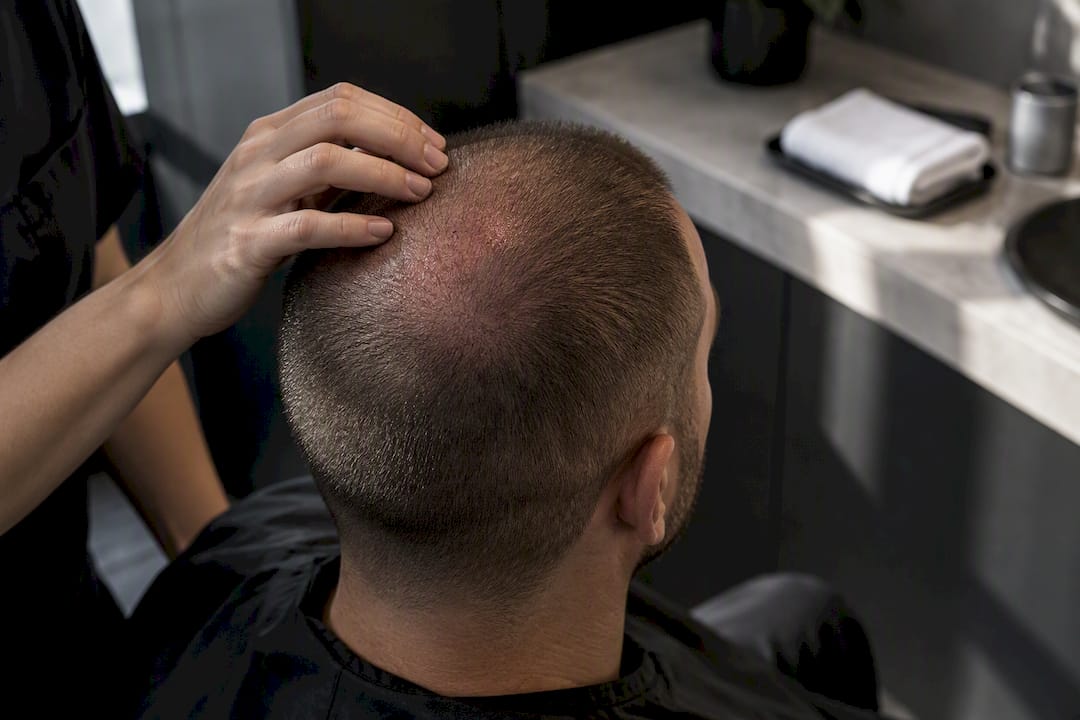
Crusting. Fine crusting at needle points, especially with deeper depths, signals that the skin barrier took a real hit and needs full closure before the next pass. Needling over unhealed crusting is one of the fastest routes to irritation and, in rare cases, infection.
Subjective soreness. Tenderness that persists for several days is the scalp's own feedback loop, and it's worth listening to. Clinicians treat ongoing soreness as a reason to lengthen the interval, even if the calendar says it's time for another session.
Pro Tip: Keep your depth setting fixed for at least three sessions before increasing it. Escalating depth and frequency at the same time makes it impossible to tell which change caused any irritation, and you'll end up guessing your way through a routine that should be evidence led.
This staged approach, shallow and frequent to start, deeper and less frequent as tolerance builds, mirrors how most published protocols are structured. It also protects against the most common self-inflicted setback: enthusiasm outpacing healing.
Home microneedling versus clinic sessions: how does frequency differ?
The device in your hand is not the device on a clinic tray, and that gap explains most of the confusion around scheduling. Home rollers and pens typically top out around 0.5mm to 1.0mm, are used without medical-grade sterilisation protocols, and rely on the user's own judgment for depth and pressure consistency. Clinic devices reach further into the dermis, are operated under controlled sterile conditions, and are assessed by a clinician using visible healing markers rather than guesswork. That difference is exactly why clinic sessions happen less often but do more per visit.
A hybrid model has become common in practice: a monthly, deeper clinic session paired with shallow, low-intensity home maintenance in between. The clinic visit drives the more substantial biological response, while the home sessions keep stimulation going without demanding the same recovery window. Several clinics recommend this combination specifically because it front-loads the more effective, professionally supervised depth while still giving the scalp regular, gentler engagement.
The risk worth flagging clearly: home-device instructions and clinic protocols are not interchangeable, and reading a clinic's monthly schedule as permission to needle deeply at home every month, without professional supervision or sterile technique, is a genuine hazard. The interval numbers only make sense alongside the depth and hygiene standards they were designed for.
If you're weighing which route suits you, work through this in order:
- Assess your hair loss pattern and stage. Early, diffuse thinning often responds well to consistent home maintenance; more advanced or patterned loss usually benefits from a clinician's assessment first.
- Be honest about your consistency. A hybrid schedule only works if the home sessions actually happen; if you know you'll skip them, a purely clinic-led plan may serve you better.
- Consider whether you're combining treatments. If you're already using topical minoxidil or considering platelet-rich plasma, clinician oversight helps coordinate timing rather than layering treatments blindly. A detailed guide to what microneedling treatment actually involves is worth reading before deciding.
- Factor in your tolerance for downtime. Deeper clinic sessions mean more visible redness for longer; shallow home sessions are easier to fit around daily life.
Neither route is automatically the right answer. The decision comes down to how much control, supervision, and intensity you actually want.
What does the research say about frequency and outcomes?
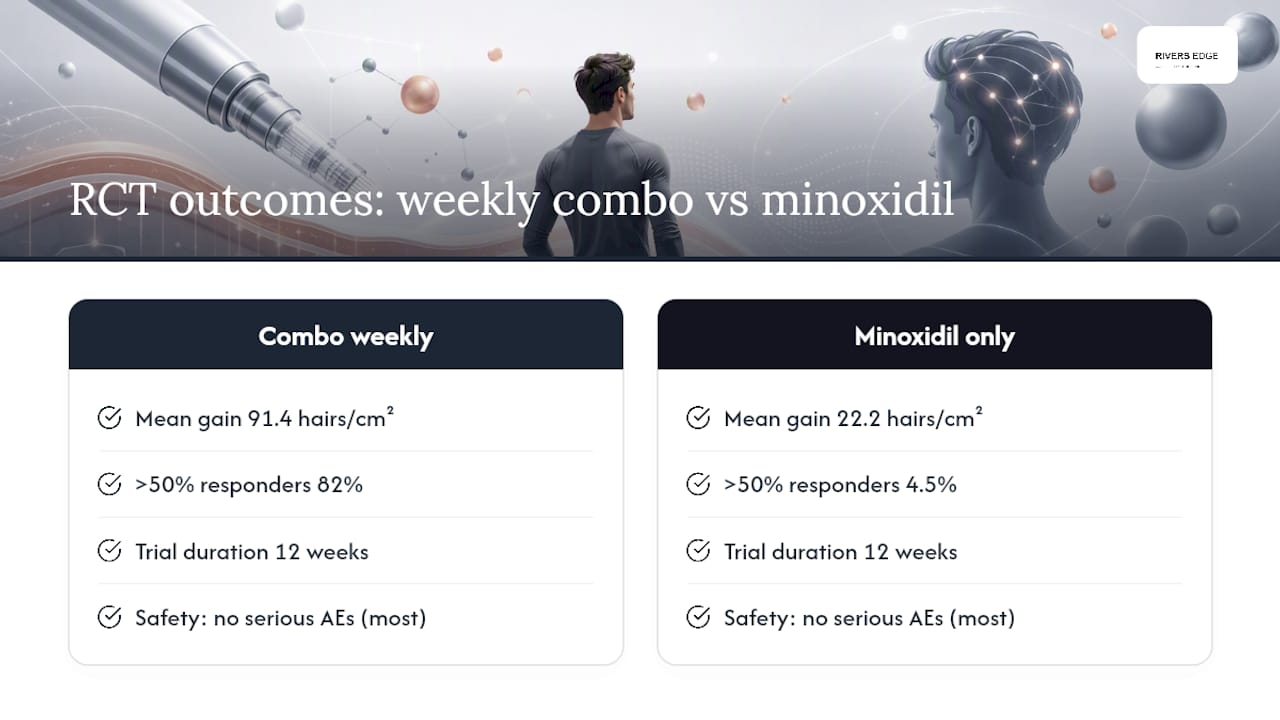
The clearest human data comes from a randomised controlled trial that put weekly microneedling head to head against topical minoxidil alone. Over 12 weeks, the group combining weekly microneedling with twice-daily 5% minoxidil saw a mean hair count increase of 91.4 hairs per square centimetre, compared with just 22.2 in the minoxidil-only group. Perhaps more strikingly, 82% of the combination group reported more than 50% improvement in hair growth, against only 4.5% of those using minoxidil alone.
That single trial has done more to shape modern microneedling protocols than almost any other piece of research, and it's why "weekly" shows up so often in clinical guidance for shallow, minoxidil-paired routines.
The mechanistic backing for why this works comes from animal research rather than human trials. A murine model testing repeated microneedle stimulation found that specific shallow depth and repetition combinations produced the strongest activation of Wnt/β-catenin and VEGF pathways linked to hair growth, both of which are central to follicle cycling and vascular support for new growth. It's a mouse study, not a human one, so treat it as biological explanation rather than direct dosing instruction. But it does help explain why frequency and depth interact the way they do, and why more isn't automatically better.
Zooming out to the broader evidence base changes the picture slightly. A 2025 systematic review and meta-analysis concluded that combining microneedling with treatments such as 5% minoxidil significantly improves hair count and hair diameter compared with minoxidil alone. That headline finding is consistent and encouraging. The same review flagged substantial heterogeneity across the included trials, meaning the studies varied widely in device type, needle depth, and treatment interval, from weekly sessions to spacing every four weeks. In plain terms: combination therapy works, but there's no single interval that every study agrees is the best one.
A separate synthesis covering 22 clinical studies and over 1,100 participants reinforces that spread. It found reported session frequencies ranging from twice weekly to once monthly, with average course lengths commonly falling somewhere between 14 and 20 weeks, and importantly, no serious adverse events reported across most of the included series. That last point matters as much as the frequency data itself: even at the higher end of session frequency, the safety profile across published trials has held up well.
Across published trials, session frequency has ranged from twice weekly to once monthly, with most studies assessing outcomes around the 12-week mark and no consistent single interval outperforming the rest.
What this body of evidence tells you, taken together, is that the "best" frequency isn't a fixed number waiting to be discovered. It's a range shaped by depth, device, and combination therapy, with weekly shallow protocols showing the strongest single-trial results and monthly deeper protocols dominating clinical practice for more intensive treatment.
How should you schedule sessions and time topical treatments safely?
Build your schedule around three checkpoints: a ramp-up phase, a minimum evaluation window, and a clear rule for widening intervals when your scalp asks for it.
Start with a ramp-up of two to four weeks at a shallow depth before you even think about increasing frequency or intensity. Then commit to a genuine 12 to 16 week evaluation window before drawing any conclusions. This mirrors the endpoint most clinical trials use, and it's long enough to reflect an actual hair growth cycle rather than short-term scalp response. If redness, crusting, or soreness are lingering longer than they did in earlier sessions, that's your cue to extend the interval rather than push through on schedule.
Topical minoxidil timing deserves particular care. Many clinicians recommend delaying minoxidil application for about 24 hours after a microneedling session, since freshly needled skin absorbs topical products more readily, and minoxidil applied too soon risks greater systemic absorption than intended. This isn't a reason to avoid combining the two treatments; the evidence above shows combination therapy outperforms minoxidil alone. It simply means sequencing matters, and the NHS Tayside formulary guidance on minoxidil is a useful reference point for how topical and oral minoxidil are handled within NHS prescribing practice in the UK.
Low-dose oral minoxidil requires medical supervision: it can cause fluid retention, a faster heart rate, and lowered blood pressure, so clinicians typically monitor blood pressure and ask about heart conditions before prescribing. It is not recommended during pregnancy or breastfeeding. Discuss these risks with a physician before starting.
Beyond the 24-hour rule, a short aftercare checklist keeps most routines on track:
- Cleanse the scalp gently before treatment; avoid needling over unwashed or product-heavy hair
- Skip direct sun exposure and hot showers for at least 24 to 48 hours afterwards
- Expect visible redness for 24 to 72 hours; this is normal and not a sign something's gone wrong
- Seek medical advice promptly if you notice spreading redness, pus, or increasing pain rather than gradual improvement
Pro Tip: Keep a simple log of each session, noting the date, depth, and how your scalp looked and felt over the following three days. Patterns emerge quickly, and that record becomes the most useful tool you have for deciding whether to tighten or widen your schedule, far more useful than guessing from memory. A partner guide on scalp exfoliation and how often to do it is worth a look too, since keeping the scalp surface properly prepared between sessions supports everything else in the routine.
When should you see a clinician instead of self-treating?
Some situations call for clinical judgment before you touch a device to your scalp at all. Active scalp infection, recent use of isotretinoin, known bleeding disorders, and certain inflammatory skin conditions are all reasons to get assessed first rather than proceed on a home schedule. None of these are automatic disqualifications from microneedling altogether, but they change how, or whether, treatment should be approached.
After treatment, a short list of warning signs should prompt a same-day call to a clinician rather than a wait-and-see approach: pain that's increasing rather than settling, visible pus, redness that's spreading outward rather than fading, or fever. These are not part of the normal 24 to 72 hour redness window, and they warrant proper evaluation.
Clinicians also play a coordinating role when microneedling is combined with other treatments, such as platelet-rich plasma or systemic medication. Layering multiple interventions without oversight risks scheduling conflicts, unclear cause and effect if something goes wrong, and missed opportunities to time treatments for maximum benefit.
There's no strict upper age limit on microneedling. What changes with age, and with any underlying health conditions, is how carefully healing capacity and comorbidities need to be assessed beforehand, which is exactly the judgment a proper consultation is designed to make.
Rivers Edge's approach to setting the right frequency for you
Every scalp responds differently, which is why a fixed schedule handed out to every man who walks through the door never sits right with me. The approach at Rivers Edge starts with an honest look at your hair loss pattern, scalp sensitivity, and history before any depth or interval gets decided.
From there, treatment is staged deliberately. Depth and frequency are tailored to what your scalp shows it can tolerate, not to a generic protocol lifted from a leaflet. Clinic evidence on combining microneedling with minoxidil consistently points to the same window the research supports: meaningful density gains tend to show up between 12 and 16 weeks, not sooner.
What I'd push back on is the idea that faster or more frequent automatically means better. Good scalp treatment is paced treatment, measured against how you're actually healing, not against a calendar.
— David
Book a personalised scalp microneedling assessment
You've read what the trials show, but the honest next step for a man with real thinning is a proper assessment rather than another home device gamble. Rivers Edge Skin Studio specialises exclusively in men's skin and hair concerns, which means your treatment plan is built around your scalp, not a generic protocol borrowed from a skincare influencer.

Head Microneedling is offered with your depth and interval set after a proper consultation rather than guessed at home. If you're already exploring options and want to understand where you might be going wrong with a current routine, our guide to common microneedling mistakes worth avoiding is worth a read first. For hair loss specifically, we also offer Scalp Polynucleotides at £240 as a complementary option some men combine with microneedling for a broader approach to density.
Expect any plan we set to be measured properly, with a genuine 12 to 16 week evaluation window before we adjust course. View the full services list and book a consultation to get a schedule built around your scalp rather than a generic one pulled from a box.
This article is general information, not a substitute for advice from a qualified doctor. Consult a qualified healthcare professional about your own circumstances before acting on anything here.
Sources
- Microneedling study combined with minoxidil (PubMed 23960389)
- Evaluating the efficacy and safety of combined microneedling therapy versus topical Minoxidil in androgenetic alopecia (PubMed 40056230)
- Tayside area formulary: hair conditions and minoxidil guidance
FAQ
Is microneedling three times a year enough for hair growth?
Three sessions a year falls well below every frequency range used in published trials, which span twice weekly to once monthly. Occasional treatment at that scale is unlikely to produce the density changes seen in studies using weekly protocols over 12 weeks, so it's better suited to general scalp maintenance than active hair loss treatment.
Is 40 too old for microneedling?
No, there's no strict upper age limit on scalp microneedling. What matters more at any age is an honest assessment of scalp healing capacity and any underlying health conditions, which is exactly what a proper consultation is designed to check before treatment begins.
What did Elon Musk and Jennifer Lopez reportedly use for hair concerns?
Public reporting has linked both figures to a range of hair treatments, including topical minoxidil and hair transplant procedures, though neither has publicly confirmed a specific clinical protocol. The stronger, evidence backed takeaway is that combining microneedling with 5% minoxidil produces measurably better results than minoxidil alone, regardless of which public figure has tried which approach.
How long before I see results from scalp microneedling?
Most clinical trials assess outcomes at a 12-week minimum, with some extending to 24 weeks to confirm gains hold. Give any routine at least 12 to 16 weeks of consistent, correctly spaced sessions before deciding whether it's working for you.
Can I microneedle every day if I use a very shallow device?
No. Even at shallow depths of 0.3mm to 0.5mm, daily use doesn't allow the scalp's healing response enough time to complete before the next session, and every published protocol works with intervals of at least several days between treatments. Stick to a 7 to 14 day spacing at shallow depths and adjust based on how your scalp recovers.