
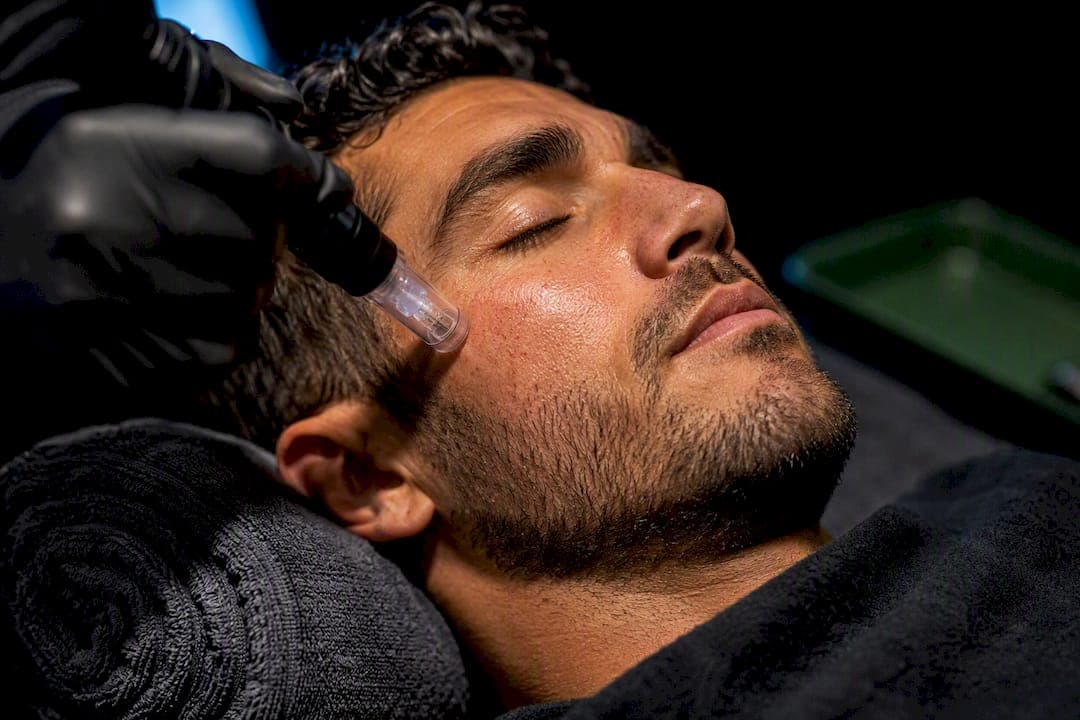
Yes, microneedling typically reduces the appearance of enlarged pores, though results vary between men and rarely happen overnight. Most studies show visible improvement building over several weeks to a few months, usually across multiple sessions rather than one visit. Expect the skin around treated pores to look tighter and more even as collagen rebuilds, but don't be alarmed if pores look temporarily larger or redder in the first day or two after treatment.
TL;DR:
- Multiple microneedling sessions spaced 3 to 6 weeks apart are necessary to see significant pore size reduction, with most improvements appearing around 12 weeks.
- RF microneedling can enhance results for skin with more laxity or scarring by delivering thermal energy that denatures collagen and stimulates stronger rebuilding.
- Short-term inflammation, redness, and swelling post-treatment often make pores appear larger temporarily, but these effects subside within a few days as healing progresses.
- Combining microneedling with biostimulators like PDLLA or with intradermal botulinum toxin (microbotox) can lead to more durable and faster pore size improvements.
- Proper needle depth, treatment spacing, and practitioner skill are critical for achieving optimal, long-lasting results, with consistency outweighing intensity in treatment protocols.
Table of Contents
- What causes enlarged pores in the first place?
- How does microneedling work to improve the appearance of pores?
- What does the clinical evidence say about pore reduction?
- What treatment protocol and factors affect your results?
- Are you a good candidate for microneedling?
- Why do pores look worse right after treatment?
- Which combination treatments boost pore-reduction results?
- How should you look after your skin afterwards?
- What happens during a consultation?
- What actually determines whether this works for you
- Ready to book a microneedling consultation?
- Sources
- FAQ
What causes enlarged pores in the first place?
A pore itself doesn't change size much in the way people assume. What changes is the visibility of it, and that comes down to a handful of physical factors working together rather than one single cause.
Sebaceous glands attached to each follicle produce oil. When that oil production runs high, the follicle opening stretches slightly to accommodate it, and the pore looks wider from the surface. This is why pores across the nose and central cheeks, areas dense with oil glands, tend to look more obvious than pores on the jawline or temples.
Collagen and elastin loss plays an equally large role. Skin around a pore acts like a supportive collar. Once that collagen scaffold thins with age or sun damage, the collar sags, the pore rim droops, and the opening appears stretched even if its actual diameter hasn't changed much at all.
A few other contributors worth knowing:
- Photoageing thickens the outer skin layer around the follicle while breaking down the collagen beneath it, producing a raised, shadowed rim.
- Acne and scarring can physically widen follicle openings and leave behind shallow depressions that catch light.
- Skin laxity casts shadows into and around the pore, which makes it read as darker and larger under normal lighting, even from a short distance.
That shadowing effect matters more than most men realise. Two pores of an identical physical width can look completely different depending on how much surrounding skin sags around them. That is the exact mechanism microneedling targets, not the follicle opening itself, but the structural support around it.
How does microneedling work to improve the appearance of pores?
Microneedling improves pore appearance by triggering a controlled wound response in the dermis, not by physically shrinking the follicle. Fine needles create thousands of microscopic punctures, and the skin responds to that as controlled injury: it ramps up collagen and elastin production over the following weeks to repair itself.
That healing cascade unfolds in three overlapping phases. The inflammatory phase kicks in within hours, bringing immune cells to the area. The proliferative phase follows over the next one to three weeks, laying down new collagen fibres. The remodelling phase then runs for months afterwards, gradually organising that collagen into a firmer, more supportive structure. This is the phase responsible for the lasting tightening effect around pores.
Two secondary mechanisms add to the result:
- Epidermal tightening. As new collagen accumulates beneath the surface, the skin sitting above pores draws taut, reducing the shadowed rim that makes a pore look bigger than it is.
- Enhanced topical delivery. The microchannels created during treatment stay open for a short window afterwards, letting active ingredients penetrate far deeper than they would on intact skin. Clinics use this window to apply serums or biostimulators directly into the dermis rather than relying on surface absorption.
Standard mechanical microneedling relies entirely on that wound response. Radiofrequency (RF) microneedling adds a second mechanism on top: insulated or non-insulated needles deliver thermal energy directly into the dermis alongside the puncture, which denatures a portion of existing collagen and triggers an even stronger rebuilding response. A preliminary study of 19 patients using non-insulated fractional RF microneedling found moderate to excellent improvement in pore size and skin texture across most participants, with no severe adverse events across two to six treatments.
Statistic to note: RF adds heat, which is why practitioners often reserve it for skin with more pronounced laxity or acne scarring, where standard needling alone produces a slower or more modest change. Device parameters, including pulse width and needle depth, materially affect the outcome, so the same treatment name can deliver noticeably different results depending on the machine and the clinician's settings.
What does the clinical evidence say about pore reduction?
The strongest data on microneedling for pores comes from small but well-documented studies, and the direction of the evidence is consistent: pore-size scores and patient satisfaction both improve, though sample sizes remain modest across the board.
A 2025 case series of 15 patients combining microneedling with topical poly-D,L-lactic acid (PDLLA), a biostimulator sold under the brand Juvelook, recorded average pore-size scores dropping from 6 to 3 on a standardised grading scale by 12 weeks. Twelve weeks is a meaningful marker here: it reflects the remodelling phase of collagen production reaching a visible plateau, not an immediate post-treatment snapshot.
RF microneedling has its own supporting data. The preliminary study of 19 patients mentioned earlier reported the same pattern: pore size and skin texture improved in most participants using non-insulated fractional RF, with subjective satisfaction running high and no severe complications recorded.
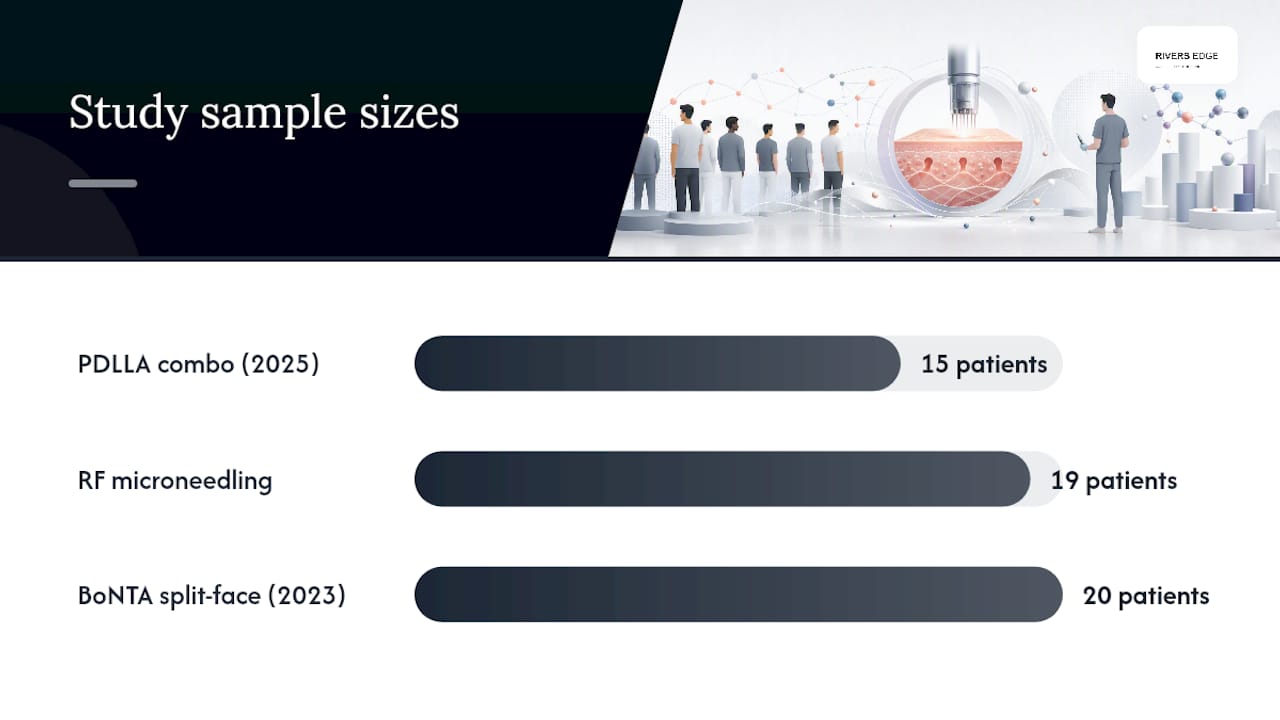
Combination approaches involving neuromodulators show a different mechanism entirely. A 2023 split-face trial of 20 patients compared intradermal botulinum toxin (BoNTA) injections against topical BoNTA applied through the microchannels created by microneedling. Both approaches reduced pore and sebum scores, but the intradermal injection produced greater and longer-lasting improvement; the topical application's benefit had noticeably faded by month four.
A few limitations deserve honest mention:
- Every study cited here involves fewer than 25 patients, which limits how confidently the results generalise across skin types and ages.
- Follow-up periods rarely extend beyond six months, so long-term durability data is still thin.
- None of these trials used a placebo-controlled design, meaning some of the improvement could reflect natural expectation bias or seasonal skin changes.
None of that undermines the direction of the findings. It does mean "pore reduction" claims should be read as consistently positive but not yet backed by large-scale, long-term randomised evidence.
What treatment protocol and factors affect your results?
Most microneedling courses for pore reduction run 3 to 6 sessions, spaced 3 to 6 weeks apart. That spacing isn't arbitrary: it matches the timeline of the remodelling phase, giving the skin enough time to lay down new collagen before the next round of controlled injury begins. Skipping sessions too close together interrupts that cycle without adding benefit.
Needle depth is adjusted by facial zone and by what's actually being targeted:
- Cheeks and forehead typically use depths around 1.0 to 1.5mm, deep enough to reach the dermis where collagen remodelling happens.
- Nose and central face, where pores are usually most prominent, often use slightly shallower or more controlled depths to manage discomfort over thinner skin and denser oil glands.
- Acne-scarred areas may need deeper passes, sometimes up to 2.0 to 2.5mm, since scar tissue sits lower in the dermis than normal pore-related laxity.
RF microneedling introduces another layer of variables. Needle insulation, pulse width, and energy delivered per shot all change the clinical effect, and the same nominal treatment can produce meaningfully different results depending on which machine a clinic uses and how the practitioner sets it. This is one reason results vary so widely between clinics offering what sounds like an identical service.
Technique matters as much as the hardware. Whether a practitioner uses a single pass or multiple passes, how much pressure they apply, and whether they work to a pinpoint-bleeding endpoint or a no-bleeding endpoint all shift the outcome and the downtime that follows. Experienced practitioners choose these variables per facial zone rather than applying one setting across the whole face, and this kind of judgement is exactly what separates a well-run session from a common microneedling mistake.
Sterile, single-use needle cartridges and proper practitioner training aren't optional extras. They're the baseline that determines whether the treatment is safe at all, let alone effective.
Pro Tip: Ask your practitioner what needle depth they plan to use on your nose specifically. If they give you one blanket answer for the whole face, that's worth a second question.
Are you a good candidate for microneedling?
The ideal candidate has visibly enlarged pores linked to oil production, mild collagen loss, or acne-related texture, and realistic expectations about a gradual result rather than an instant fix. Men in their late twenties through fifties, particularly those noticing pore visibility increase alongside early skin laxity, tend to see the clearest benefit.
Certain conditions mean microneedling should be delayed or avoided altogether:
- Active skin infections, including active acne breakouts or cold sores in the treatment area, since needling can spread infection deeper into the skin.
- Recent isotretinoin use, typically within the past six to twelve months, due to impaired wound healing and scarring risk.
- Clotting disorders or blood-thinning medication, which increase bruising and bleeding risk during treatment.
- Uncontrolled diabetes or autoimmune conditions affecting skin healing, where the wound response microneedling relies on may not function normally.
Skin type introduces another consideration. Men with darker skin tones face a higher risk of post-inflammatory hyperpigmentation from aggressive needling or RF settings, so a cautious depth and lower energy setting, combined with strict sun protection afterwards, reduces that risk considerably.
If any of the above applies, or if pores are driven mainly by deep acne scarring rather than laxity, alternative or combined approaches, such as a series of HydraFacial treatments or a chemical peel first, may serve better than jumping straight to needling.
Why do pores look worse right after treatment?
Redness, mild swelling, and pinpoint bleeding are all expected in the first 24 to 72 hours after a session, and this is precisely the window in which pores can look temporarily larger, not smaller. Inflammation causes localised swelling around each puncture site, and that swelling briefly widens the visible follicle opening before the healing response kicks in.
Common short-term reactions include:
- Erythema (redness) across the treated area, usually settling within two to three days.
- Swelling, most noticeable around the eyes and cheeks if those areas were treated.
- Microbleeding, particularly at deeper needle depths, which resolves quickly with proper aftercare.
- Acneiform eruptions, a minority reaction where small breakouts appear a few days after treatment as pores temporarily react to the trauma and any product applied during the session.
These effects follow a predictable curve rather than a linear improvement, so seeing pores look more prominent on day two doesn't mean the treatment failed. It typically means the skin is still in the inflammatory phase of healing.
Certain signs, however, warrant a call to your clinician rather than patience: persistent pain beyond a few days, redness spreading well outside the treated area, visible pus, or unexpected pigment changes. None of these are part of a normal healing pattern, and catching them early matters. Guidance on what to expect in the 24 to 72 hours after treatment covers this timeline in more detail for men planning their first session.
Which combination treatments boost pore-reduction results?
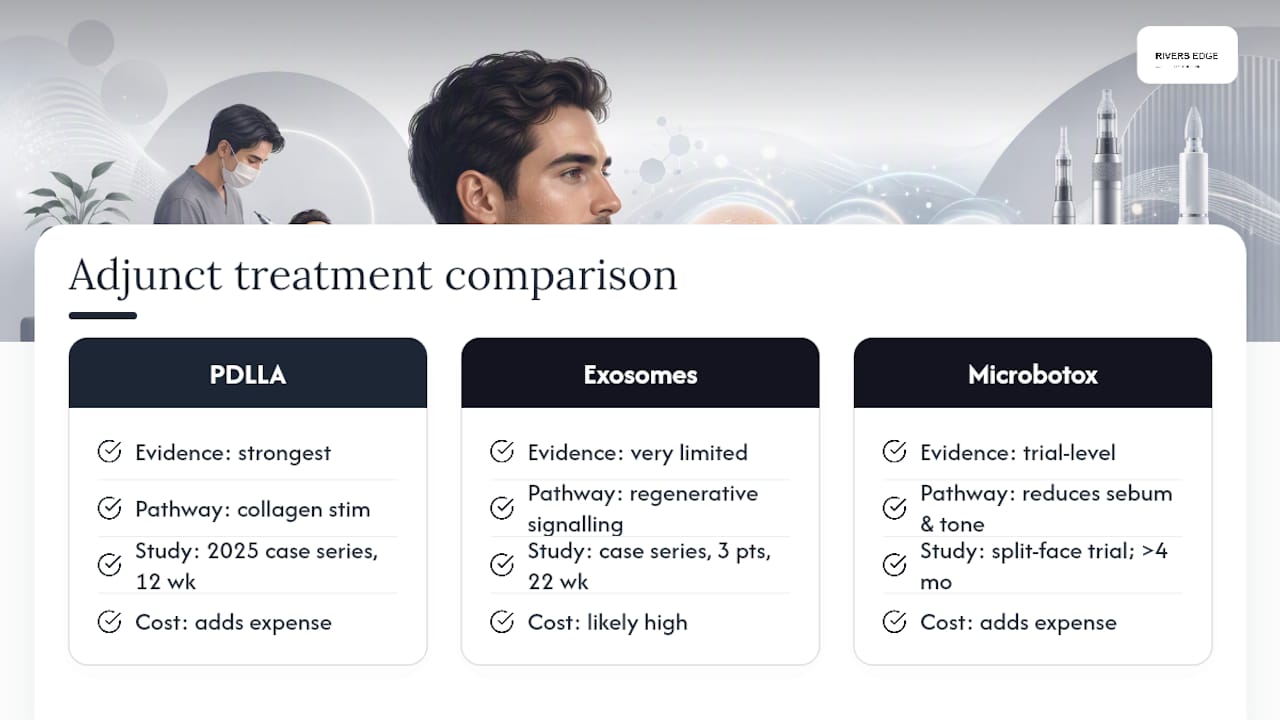
Pairing microneedling with a biostimulator or complementary treatment tends to produce faster or more durable pore improvement than needling alone, though the evidence base for some combinations is still thin. Three approaches currently stand out.
PDLLA (poly-D,L-lactic acid) applied topically through the microchannels created during needling showed the strongest documented result of any combination reviewed here. The 2025 case series recorded pore scores falling from 6 to 3 over 12 weeks with 80% patient satisfaction, and this pairing works because PDLLA itself stimulates collagen production, reinforcing the same mechanism microneedling already triggers rather than competing with it.
Stem-cell-derived exosomes represent a newer, more experimental route. A case series of just three patients found visible pore-size reduction sustained out to 22 weeks when exosomes were applied alongside microneedling, with no severe adverse events. Genuinely promising, but three patients is far too small a sample to draw firm conclusions, and this remains one to watch rather than one to expect widely.
Microbotox, or intradermal BoNTA, works through an entirely different pathway: reducing sebum gland activity and follicle muscle tone rather than stimulating collagen. The split-face trial covered earlier found intradermal injection outperformed topical application delivered via microneedling, with the topical route's benefits fading by month four while the injected version held up longer.
Deciding whether an adjunct is worth adding usually comes down to three factors: cost, since biostimulators and neuromodulators add to the price of a standard session; discomfort, as injections carry more sensation than topical application; and evidence strength, where PDLLA currently has the most robust backing and exosome therapy the least. A tailored consultation is the only reliable way to weigh those trade-offs against your own skin and budget.
How should you look after your skin afterwards?
Getting aftercare right protects the results you're paying for, and the first 48 to 72 hours matter most. Follow a simple, consistent routine rather than experimenting with new products during this window.
- Cleanse gently with a fragrance-free cleanser, avoiding any exfoliating or acid-based washes for at least the first few days.
- Moisturise with a barrier-focused product. Ingredients like hyaluronic acid help retain moisture and support skin hydration while the surface heals; a dedicated post-procedure regenerative cream can also help calm and support the skin barrier during this window.
- Apply SPF daily once the skin can tolerate it, since newly treated skin is more sensitive to UV damage and pigment changes.
- Hold off on retinoids and acids for the period your practitioner recommends, usually around a week, then reintroduce them gradually rather than resuming your full routine at once.
Beyond the immediate window, maintenance is about spacing and consistency rather than intensity. Most men benefit from a booster session every few months once the initial course finishes, alongside daily sunscreen and sebum-regulating ingredients like niacinamide to keep oil production in check between visits. A guide on maintaining results after a facial treatment sets out a fuller maintenance schedule worth following alongside your clinic's specific advice.
What happens during a consultation?
Specialist aesthetic and skincare consultations built specifically around men's skin often include pore-focused microneedling. Every consultation typically starts with an honest assessment: skin type, the underlying cause of enlarged pores, and whether standard microneedling, RF microneedling, or a combination approach fits the client's goals best.
Realistic expectations matter more here than anywhere else in the process. Before-and-after photography and standardised grading are often used to track genuine change session to session rather than relying on memory or guesswork, and the practitioner will walk clients through what a typical timeline looks like for their specific skin, not a generic average.
Aftercare is documented and explained clearly, so clients leave knowing exactly what their skin needs over the following days and weeks. For those weighing up whether microneedling is the right first step, the guide on what a skin consultation for men actually involves is a useful starting point before booking.
What actually determines whether this works for you
The research here supports a fairly narrow but genuinely useful conclusion: microneedling reliably improves pore appearance when it's given enough sessions, spaced correctly, and matched to the right depth or device for your skin. Where the conventional advice falls short is in treating microneedling as a single-visit fix. Every study worth citing shows change building over weeks or months, not days, and the men who feel disappointed after one session are usually judging the treatment against a timeline it was never designed to meet.
What's underrated is technique. Two clinics offering "the same" RF microneedling can produce different results because pulse width, needle depth, and practitioner judgement vary enormously between them. Chasing the cheapest session rarely serves your skin as well as chasing the most experienced hands.
Prioritise consistency over intensity: a properly spaced course with realistic aftercare will outperform an aggressive one-off session almost every time.
— David
Ready to book a microneedling consultation?
Riversedgeskinstudio treats microneedling as a course built around your skin, not a one-size-fits-all script, which is the difference that actually shows up in the mirror weeks later. Where many clinics run a single generic protocol regardless of skin type, your session here is planned around your pore pattern, depth requirements, and whether a biostimulator or adjunct genuinely earns its place in your plan.

A consultation includes a full skin assessment, a discussion of realistic timelines based on what your skin actually shows, and a treatment plan that accounts for depth, session spacing, and any adjuncts worth considering. Standard microneedling, RF microneedling, and complementary treatments like HydraFacials or chemical peels are all part of the range of men's skin treatments on offer, so you're matched to what fits rather than pushed toward one default option. Book your consultation through the services page and get a straight answer on what your pores need before committing to a course.
This article is general information, not a substitute for advice from a qualified doctor. Consult a qualified healthcare professional about your own circumstances before acting on anything here.
Sources
- The efficacy of combined microneedling and topical poly-d,l-lactic acid (Juvelook) application for facial pore reduction and skin texture improvement
- Microbotox injection versus its topical application following microneedling in the treatment of wide facial pores: a split-face comparative study
FAQ
Will microneedling help with big pores?
Yes, for most men microneedling reduces the visible size of enlarged pores by rebuilding collagen support around the follicle, with studies showing measurable improvement by around 12 weeks.
What's the best treatment for large pores?
There's no single best option: standard microneedling suits mild to moderate laxity, RF microneedling adds thermal tightening for more pronounced cases, and combining either with PDLLA or, in select cases, microbotox tends to produce stronger results than any single treatment alone.
Does microneedling close your pores?
Microneedling doesn't physically close pores; it tightens the skin and collagen support around each follicle, which makes the opening look smaller and less shadowed rather than sealing it shut.
Why do my pores look so big after microneedling?
Temporary swelling and inflammation from the treatment itself widen the visible follicle opening for roughly 24 to 72 hours, and this settles as the skin moves through its normal healing phases.