
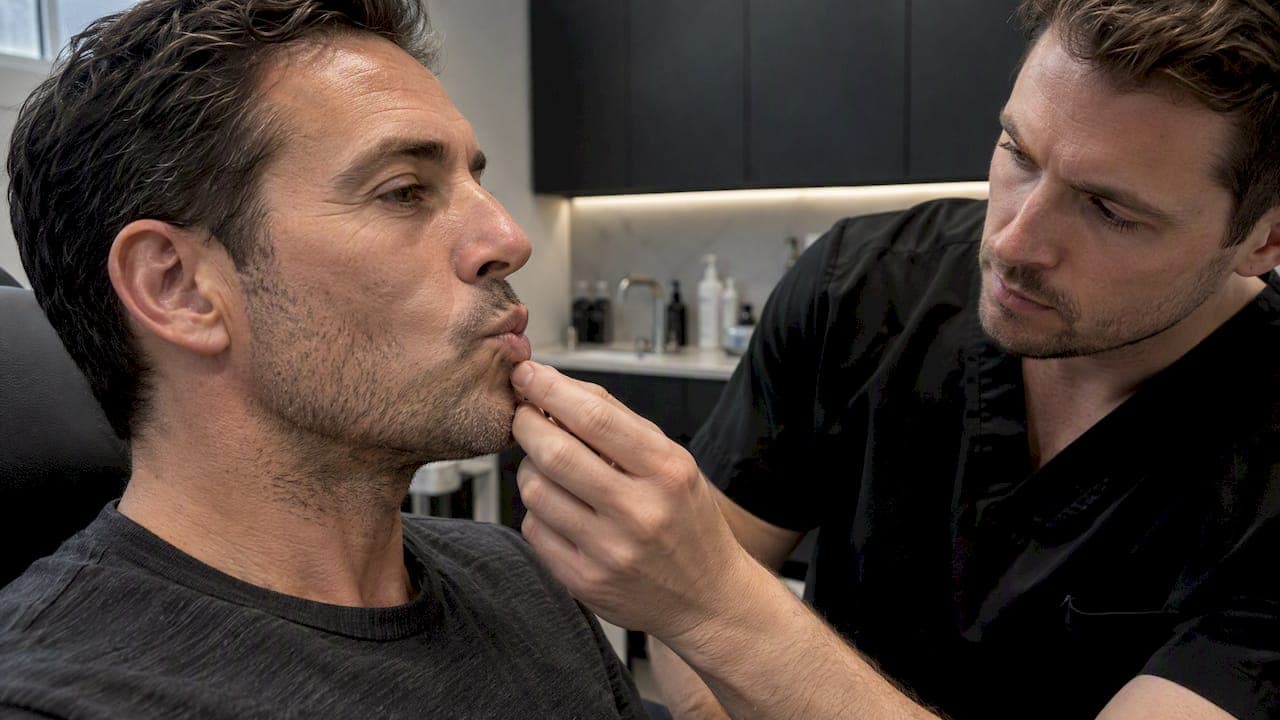
Dermal fillers, conservative botulinum toxin, laser resurfacing or peels, and microneedling with skin boosters each address a different cause of smoker's lines, and the right choice depends on whether movement, lost volume or skin texture is driving the lines on your face. The practical next step is a face-to-face assessment with a qualified practitioner who can identify which of these is dominant in your case before recommending a plan.
TL;DR:
- Botulinum toxin typically fades after three to six months, and perioral dosing must stay conservative to protect speech, drinking, and natural expression.
- Fillers can improve etched lines immediately for several months, but vascular blockage is a recognized risk, so ask about anatomy training and emergency procedures.
- Ablative lasers offer stronger resurfacing but can require a week or more of healing and months of sun avoidance; gentler fractional options need repeat sessions.
- Combination plans may pair toxin with laser, but evidence remains limited, and clinics vary in sequencing; movement or volume is usually addressed before resurfacing.
- Avoid clinics that recommend treatment without assessing you face to face, rush consent, or lack a clear plan for complications.
Table of Contents
- What are smoker's lines, and why dynamic and static lines matter
- Causes and modifiable factors behind lip lines
- Professional treatments that address smoker's lines
- How to choose the right treatment and clinic
- How a men's specialist clinic approaches smoker's lines
- Our honest take on treating smoker's lines
- Ready to book your assessment at Rivers Edge Skin Studio
- FAQ
- Sources
What are smoker's lines, and why dynamic and static lines matter
"Smoker's lines" is a descriptive term for the vertical grooves around the mouth. It isn't proof that someone smokes: these lines also appear in men who have never smoked, as a result of ageing, sun exposure and repeated lip movement, as NHS guidance on smoking and skin ageing makes clear.
Clinically, the useful distinction is between dynamic and static lines. Dynamic lines appear only when you move your mouth, such as pursing your lips to drink or smoke. Static lines are etched into the skin and visible at rest.
- Dynamic lines respond well to treatments that reduce muscle movement.
- Static lines usually need volume replacement or skin resurfacing instead.
- Men's thicker skin and facial hair can change how a product settles and how visible early ageing changes are, which affects technique and timing.
Our guide to dynamic wrinkles goes into more detail on how this split shapes treatment choice.
Causes and modifiable factors behind lip lines
Several things combine to create perioral lines over time: natural ageing and collagen loss, repeated pursing and sucking movements, UV exposure, and smoking. Each accelerates the skin changes that make lines more visible and permanent.
- Ageing reduces collagen and elastin, so skin loses the structure that once resisted creasing.
- Repeated lip movement, from talking, drinking through a straw or smoking, deepens the grooves mechanically over years.
- UV exposure breaks down collagen faster and thins the skin around the mouth.
- Smoking narrows blood vessels and starves skin of oxygen and nutrients, compounding the other factors.
Stopping smoking improves circulation to the skin fairly quickly, according to NHS guidance on smoking's effects, though this mainly supports skin health going forward rather than reversing lines that are already established. Daily sun protection, quitting smoking and a consistent topical routine are the three most useful habits for slowing further creasing.
Professional treatments that address smoker's lines
Each treatment class targets a different mechanism, so matching the option to your dominant cause matters more than picking whatever is most talked about.
- Dermal fillers (hyaluronic acid) fill in etched static lines and restore lost volume along the lip border, giving an immediate result that typically lasts several months. Vascular occlusion is a recognised risk in this area, so the dermal filler standards set by the CPSA call for practitioners to understand facial anatomy, keep logbooks and use cannulae in higher-risk zones. Our dermal filler explainer covers technique and aftercare in more depth.
- Conservative botulinum toxin softens dynamic lines by reducing the muscle movement that deepens them. The effect is temporary, usually fading over three to six months, and the peri-oral area needs careful, conservative dosing so speech, drinking and natural expression aren't affected. See our guide to anti-wrinkle treatment for men for how this plays out around the mouth specifically.
- Laser resurfacing works on static lines and overall skin quality. Ablative lasers remove the outer skin layers for stronger results but involve longer healing and a higher risk of pigment changes, while non-ablative or fractional lasers are milder and usually need several staged sessions. Our laser resurfacing guide breaks down which type suits which skin type.
- Chemical peels and microneedling are lower-intensity resurfacing options suited to fine lines and rough texture. The CPSA skin rejuvenation standards describe a progression from superficial to deeper peels, with improvement building across a course rather than from one session, and note post-inflammatory hyperpigmentation and scarring as risks that increase with depth.
- Skin boosters (polynucleotides) are injectable treatments aimed at improving hydration and overall skin quality over a course of sessions, rather than filling a specific line.
Combination treatment is common because each class covers a gap the others leave. A 2023 review of combined botulinum toxin and laser therapy found some randomised studies showing better outcomes when toxin is used before ablative laser than with laser alone, although the evidence base is still limited and sequencing varies between clinics. The usual logic is to address movement or volume first, then layer resurfacing once the underlying structure is settled. A small 2024 review of intradermal, microdroplet botulinum toxin technique also reported promising improvements in skin texture, though sample sizes were small and the authors called for further trials.
Recovery varies by intensity: toxin and filler involve little to no downtime, superficial peels and microneedling need a few days, and ablative laser can mean a week or more of visible healing plus months of sun avoidance. Our guide to men's facial rejuvenation options compares timelines across these in more detail.
Pro Tip: Ask your practitioner to show you, on your own face at rest and in motion, which lines move and which don't. That single check often decides whether you need toxin, filler, resurfacing or a mix of the three.
How to choose the right treatment and clinic
Start by identifying your dominant driver: movement, lost volume or surface texture. Movement-led lines point towards conservative toxin, volume loss points towards filler, and texture points towards peels, microneedling or laser.
At consultation, it's worth asking about the practitioner's qualifications and how many similar cases they've treated, which specific products or devices they use, and what a realistic before-and-after result looks like for your skin type. The JCCP and CPSA code of practice.pdf) requires practitioners to work within their competence, take valid consent and set out risks and complication pathways clearly before treatment.
- Confirm who performs the procedure and their relevant case experience.
- Ask about total cost, number of sessions and expected downtime before committing.
- Check there's a clear aftercare plan and a route to raise complications afterwards.
Red flags include being offered treatment without a face-to-face assessment, vague or rushed consent, or no clear plan if something goes wrong. Men on certain medications, or with a history of pigmentation changes, should flag this at consultation, since it may steer the choice away from deeper resurfacing and towards a GP referral first.
| Driver | Typical first-line treatment | Usual downtime |
|---|---|---|
| Movement (dynamic lines) | Conservative botulinum toxin | None to minimal |
| Lost volume (static lines) | Dermal filler | Minimal, some swelling |
| Surface texture | Peel or microneedling course | A few days per session |
Our consultation checklist for men and questions to ask before treatment both expand on what a thorough first visit should cover. Diet and lifestyle also play a supporting role in skin resilience; nutrition guidance for healthy ageing is a useful starting point alongside professional treatment.
How a men's specialist clinic approaches smoker's lines
We work exclusively with men, which shapes how we assess perioral lines, including thicker skin and facial hair patterns that can affect both diagnosis and injection technique. Our services cover anti-wrinkle injections, chemical peels, microneedling and skin boosters, alongside facials suited to bearded and non-bearded clients.
A typical first visit involves checking your skin at rest and during movement, discussing your history and goals, and building a treatment plan around whichever driver, movement, volume or texture, is doing most of the work on your face. We stage plans where a combination approach makes sense, rather than defaulting to one treatment for every patient.
Our honest take on treating smoker's lines
The biggest mistake men make with smoker's lines is treating them as one problem with one fix. A line that only shows up when you purse your lips needs a different answer from a line that's visible when your face is completely still, and no single product solves both.

Conventional advice tends to oversell filler as the default answer, probably because it gives an immediate, visible change. In practice, filler alone can leave a movement-led line barely improved, because the muscle behind it is still doing the same work. The more useful starting point is the assessment itself: watching your face move before deciding anything.
If you take one thing from this guide, prioritise finding a practitioner willing to examine your face at rest and in motion before recommending a product, rather than one who leads with a price list. The technique matters more than the brand name on the syringe or the laser.
— David
Ready to book your assessment at Rivers Edge Skin Studio
We specialise exclusively in men's skin, which means every assessment accounts for thicker skin, facial hair and the specific way perioral lines show up on a male face. Before your visit, jot down any relevant medical history, bring a recent photo if your lines have changed noticeably, and list the skincare products you currently use.

Your first appointment includes a visual and physical assessment of your lines at rest and in motion, a discussion of realistic outcomes, and a tailored plan rather than a generic package. Browse our full range of treatments or book your consultation directly to get started.
This article is general information, not a substitute for advice from a qualified doctor. Consult a qualified healthcare professional about your own circumstances before acting on anything here.

FAQ
How do you get rid of smoker's lines around your mouth?
The main professional routes are dermal fillers for etched static lines, conservative botulinum toxin for movement-led lines, and resurfacing treatments such as laser, peels or microneedling for overall texture. Many men combine two of these, staged over separate appointments, for a more complete result.
How much does Botox for smoker's lines cost?
Pricing depends on the clinic and the number of areas treated rather than a single fixed figure industry-wide. At Rivers Edge Skin Studio, anti-wrinkle injections for two areas are priced at £200 and three areas at £240, with cost confirmed at consultation based on your specific plan.
How can men reduce facial wrinkles generally?
Daily sun protection, not smoking and a consistent skincare routine are the main preventative steps, alongside professional treatments such as peels, microneedling or toxin where lines are already established. NHS guidance notes that quitting smoking improves circulation to the skin, which supports these other measures rather than replacing them.
Does lip filler help with smoker's lines?
Filler can soften static lines that are visible at rest by restoring lost volume and filling the groove directly. It has less effect on dynamic lines that only appear during movement, which usually respond better to conservative botulinum toxin instead.
Sources
- Understanding the true impact of smoking — NHS
- Botulinum toxin and laser therapy: evidence and recommendations (PMC, 2023)
- Intradermal botulinum toxin A for facial rejuvenation — systematic review (2024)