
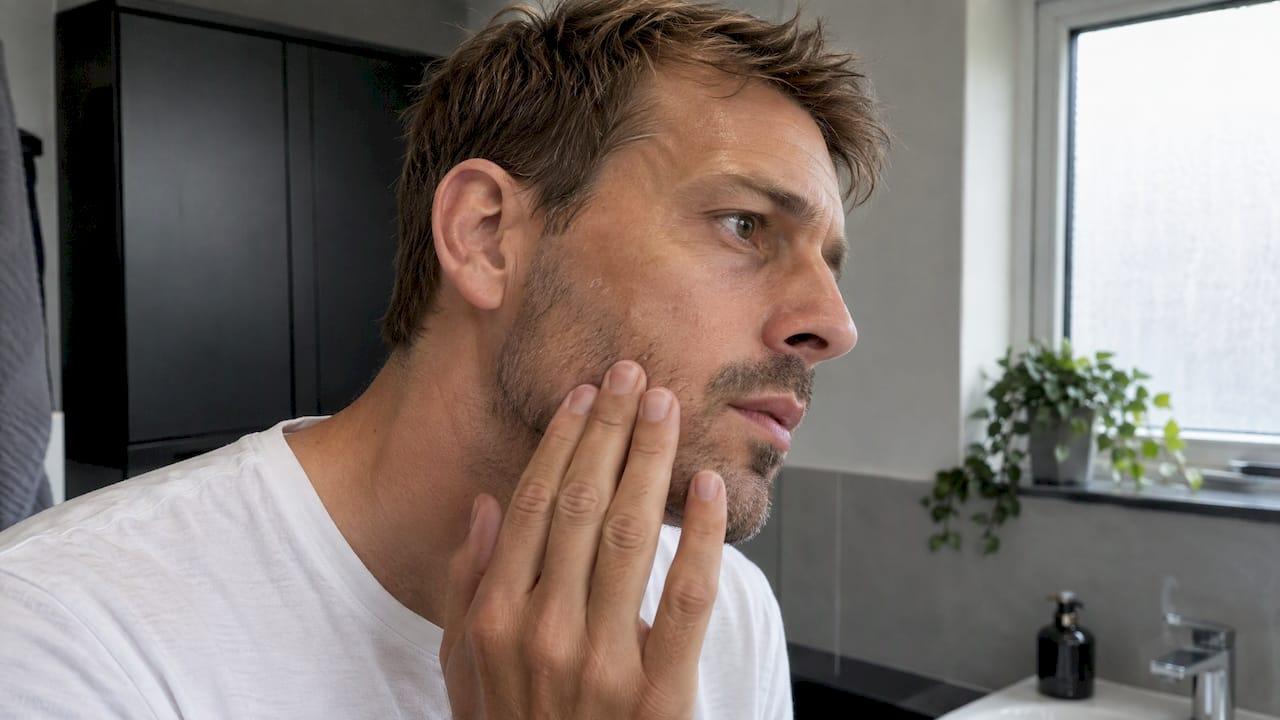
Dehydrated skin is skin that lacks water, not oil, and it can affect any man, including those who think their skin is oily. The fix is a gentler wash, a moisturiser applied while the skin is still damp, a calmer shaving routine and a few daily habits. If the basics are in place and your skin still looks dull or tired, a men's skin clinic such as ours can look at your skin in person and plan treatment around it.
TL;DR
- Dry skin lacks oil. Dehydrated skin lacks water. Dehydrated skin can show up on oily and combination skin too.
- Typical signs are dullness, tightness after cleansing, more visible fine lines and shadowed under-eyes.
- Hot showers, harsh cleansers, central heating, shaving and cold weather are the usual triggers.
- Moisturise straight after washing and after every shave, and choose a gentle, alcohol-free aftershave balm.
- Widespread dry, cracked or itchy skin lasting more than two weeks needs a GP, not another product.
Table of Contents
- Dry skin and dehydrated skin are not the same thing
- How to tell which one you have
- What causes dehydrated skin in men
- A simple rehydrating routine
- Shaving and dehydrated skin
- Diet, water and lifestyle
- What about vitamins?
- When a clinic can help
- When to see your GP instead
- FAQ
- Sources
Dry skin and dehydrated skin are not the same thing
The two get mixed up constantly, and the difference decides what you buy. Dry skin is a skin type: the skin does not make enough oil (sebum). Dehydrated skin is a temporary state: the outer layer of the skin does not hold enough water. Dr Granite, a dermatologist quoted in Men's Health UK, explains that all skin types can become dehydrated, and that dehydration is about water rather than oil.
| Dry skin | Dehydrated skin | |
|---|---|---|
| What is missing | Oil | Water |
| Skin types affected | A skin type you tend to have long term | Any type, including oily and combination |
| How it looks | Flaking, rough patches, redness | Dull, tired, fine lines more obvious, under-eye shadows |
| How it feels | Tight and rough | Tight or uncomfortable, especially after washing |
| Duration | Ongoing | Comes and goes with conditions and habits |
The source of the signs in the table is the same Men's Health UK piece: flaking and redness point to dry skin, while dullness and more pronounced under-eye circles and fine lines point to dehydration.
How to tell which one you have
Start with how your skin behaves, not what it looks like in the bathroom mirror at 7am.
- Cleanse with something mild. Use a gentle, alcohol-free cleanser and pat dry.
- Wait around half an hour without applying anything.
- Notice how it feels. If your cheeks feel tight and the skin looks dull, dehydration is likely. If you also see flaking or rough patches, you may have dry skin as well.
- Try a gentle pinch on the cheek. As a rough at-home guide, skin that stays creased for a few seconds suggests dehydration, while skin that springs back but feels tight leans towards dry. It is a rough guide, not a diagnosis.
A clue many men miss: oiliness and breakouts do not rule dehydration out. Skin that is short of water can compensate by making more oil, so you can have a shiny T-zone and a tight, dull face at once. Our guide to an oily skin routine for men covers that overlap in more detail.
What causes dehydrated skin in men
Most causes are everyday habits and conditions rather than anything wrong with your skin.
- Hot showers and long baths. The NHS advice on dry skin is to limit bathing time and use warm rather than hot water (NHS Shropshire, Telford and Wrekin).
- Harsh soaps and cleansers. The same NHS page notes that harsh soaps strip the protective oil layer of the skin.
- Weather and heating. Very hot or dry weather, central heating, wind and sun all draw moisture out of the skin, according to that NHS page. Winter in the UK combines several of these at once. See our winter skincare routine for men for a seasonal version.
- Shaving. Each shave removes a layer of surface cells and the skin is more exposed afterwards. We come back to this below.
- Lifestyle. Smoking, alcohol, poor sleep and a thin diet all play a part, as the dermatologist in Men's Health UK points out when he describes a skincare routine as one part of a bigger picture.
The NHS page also suggests increasing humidity at home, for example with a damp towel placed on a warm radiator, and stopping smoking.
A simple rehydrating routine
Looking after your skin should not be complicated. Three steps, morning and evening, cover most men. If you are starting from nothing, our guide on how to start a men's skincare routine goes through the basics.

Step 1: Cleanse gently
Use lukewarm water and a mild cleanser. Avoid bar soap on the face, and avoid products that leave the skin squeaky. NHS guidance on mild dry skin is consistent: avoid harsh, drying soaps, and an emollient (a medical-grade moisturiser) can also be used as a soap substitute.
Step 2: Moisturise while the skin is still damp
Gently pat your skin so it stays slightly damp, then apply moisturiser straight away. NHS guidance on emollients says to apply them immediately after a bath or shower while the skin is still moist.
A moisturiser does not put water into your skin. It helps to keep the water you already have from escaping. Products that help generally combine three jobs:
- Humectants such as hyaluronic acid and glycerin, which attract water.
- Emollients such as ceramides and squalane, which smooth and fill gaps in the skin surface.
- Occlusives such as shea butter, which seal the surface.
A lightweight cream or gel suits most men with dehydrated skin. The NHS explains that ointments contain the most oil and keep moisture in best, while lotions contain the least, and creams and lotions are better suited to inflamed areas (NHS). Price is not the guide either: the British Association of Dermatologists says a more expensive cream is not necessarily better than a cheaper one, as quoted on the NHS Shropshire, Telford and Wrekin page.
Step 3: Protect in the day
Finish the morning routine with sun protection. Sun exposure is one of the recognised contributors to dehydrated skin, and it also drives premature ageing. Our men's guide to preventing premature skin ageing explains why daily SPF is the habit with the biggest long-term payoff.
How often to moisturise
For mildly dry skin, NHS guidance for clinicians says to apply emollients liberally and to moisturise several times a day if needed (Self Care Briefing for Clinicians: Mild Dry Skin). For very dry skin, NHS advice is to reapply every two to three hours if needed. For a typical man with dehydrated facial skin, morning and evening plus after every shave is a sensible starting point.

Exfoliate lightly
Dead skin on the surface can leave the face looking dull and stop moisturiser doing its job. Men's Health UK recommends a gentle exfoliating cleanser one to two times a week, not daily. More is not better on skin that is already short of water.
Shaving and dehydrated skin
Freshly shaved skin loses water easily, so the minutes after a shave matter most. The Men's Health UK shaving guide gives a clear order of play:
- Cleanse with warm water and a gentle cleanser before you shave.
- Use a proper shaving cream or gel rather than canned foam, which gives a weaker protective layer.
- Rinse, then pat your face dry.
- Apply moisturiser or a hydrating, anti-inflammatory aftershave balm straight away.
- Skip alcohol-based aftershaves. A cold compress or ice cube can help to calm redness.
If you wear a beard, the skin underneath still needs the same attention. Dehydration under a beard shows up as itch and flaking at the edges, and it is easy to miss. Redness and bumps after shaving are a separate problem with its own fixes, covered in our guide to stopping post-shave irritation.
Diet, water and lifestyle
Drinking water is good advice, and the NHS includes it among its lifestyle suggestions for dry skin. Moisturiser and gentle habits still do the heavy lifting on the surface, so treat water as support, not as the whole answer.
Food has better evidence than most men expect. A 2025 systematic review of 61 studies on dietary interventions found significant positive effects on skin hydration from collagen, lipids and fatty acids, polyphenols, and prebiotics and probiotics. That is a case for oily fish, nuts, olive oil, fruit, vegetables and fermented foods in a normal week, not for a single magic supplement.
Sleep, alcohol and smoking matter too. The Men's Health UK dermatologist lists sun protection, a balanced diet, limiting alcohol, quitting smoking, good sleep and staying active as the wider habits that keep skin from becoming dehydrated.
What about vitamins?
The research is thinner here than the marketing suggests. The same 2025 review could not pool results for vitamins, because only one study was available for that category. A 2025 review in PMC on nutrition and skin lists vitamins A, C and E, among other nutrients, as substances that help protect skin from oxidative and UV damage, dehydration and loss of elasticity.
Vitamin D deserves a mention in the UK. Winter sunlight is weak, and about 1 in 6 UK adults have low vitamin D levels, with official guidance suggesting a daily 10 microgram supplement between October and March. The same report links a lack of vitamin D with dry, itchy skin. If you take a supplement, stay within the 10 microgram guidance unless a doctor tells you otherwise, and speak to your GP or pharmacist first if you take other medicines or have a medical condition.
We offer intramuscular vitamin injections at the studio: Vitamin C at £30, Vitamin B Complex at £30, Biotin at £30 and Vitamin D at £45. They are a wellness option for men who want to look after their skin and general vitality from the inside as well as the outside.
Our view: start with the basics, then get the skin looked at
Most of the men who come to us do not have a complicated problem. They have skin that is dull, tight and tired, and a routine made up of whatever was in the bathroom cabinet. Men's skin is thicker, oilier in places and shaved almost daily, so a routine built for it should be simple and consistent.
We only treat men, so every plan is built around male skin, whether that is a bearded jaw, a shaved face or a scalp. We tailor treatment plans to the individual because two men with the same complaint rarely have the same skin.
Our approach is to get the basics right first: a gentle cleanse, moisturiser, sun protection and a calmer shave. Once those are in place, professional treatments such as facials, peels and microneedling can build on them with natural-looking results, in a comfortable setting that suits men who have never had a skin treatment before.
David
When a clinic can help
A good home routine gets you a long way. If your skin still looks flat and tired after several weeks of steady care, a skin treatment can take you further, and a specialist can look at your skin and tell you which one suits it.
At Rivers Edge Skin Studio in Merseyside, we treat men only. Our facials are £35 each and include the Bearded Man Facial, Deep Cleanse Facial, Black Tie Facial and Relaxation Facial. For a more active treatment, a single chemical peel is £60, or £100 for a course of 2 and £200 for a course of 4. A microneedling facial is £70 for a single treatment, £100 for a course of 2 and £200 for a course of 4. Skin Boosters with polynucleotides are £240. You can see everything, and book online, on our services page.

If you have a treatment, follow the aftercare closely. Our guide to post-treatment skincare steps explains what to do in the days afterwards, and if you plan to book several treatments, how to combine skincare treatments shows how they fit together.
When to see your GP instead
Dehydrated skin is a cosmetic and comfort issue for most men. Persistent or severe dryness can point to something else, such as eczema, and that is a job for a doctor. See your GP if:
- widespread dry, cracked, itchy skin lasts longer than two weeks (NHS Shropshire, Telford and Wrekin);
- redness, dryness and itching stop you sleeping, there are open sores or signs of infection from scratching, or large areas of skin are scaling or peeling (NHS self care briefing for clinicians);
- itchy skin affects daily life, keeps coming back, follows a new rash, lump or swelling, or is all over the body (NHS itchy skin guidance).
FAQ
Can men with oily skin have dehydrated skin?
Yes. Oiliness describes how much sebum your skin makes, while dehydration describes how much water it holds. Skin that is short of water can make extra oil to compensate, so a shiny face can still feel tight and look dull. A lightweight, gentle moisturiser is usually the right step.
How can I tell if my face is dehydrated or just dry?
Cleanse gently, wait about half an hour and see how the skin feels. Dullness, tightness and more visible fine lines point to dehydration. Flaking, rough patches and redness point to dry skin. Many men have a bit of both, which is why a gentle cleanse and regular moisturiser suit either.
Should I moisturise after shaving?
Yes. Shaving removes a layer of surface cells and leaves skin more vulnerable to water loss. Pat the face dry and apply a hydrating, alcohol-free balm or moisturiser straight away. Cold water or a cold compress afterwards can help with redness.
Which vitamin is best for dry or dehydrated skin?
No single vitamin has strong evidence on its own. Vitamins A, C and E are linked with skin protection in research reviews, and low vitamin D is associated with dry, itchy skin. Official UK guidance suggests a 10 microgram vitamin D supplement between October and March. Check with your GP or pharmacist if you take medication.
How long does it take to fix dehydrated skin?
Many men notice skin feeling more comfortable within days of gentler washing and regular moisturising. Skin that was producing extra oil to compensate can take around four to six weeks to settle. If nothing improves after several weeks, or the skin is cracked and itchy beyond two weeks, see your GP.
Sources
- Men's Health UK: How to tackle dry skin, according to a dermatologist
- Men's Health UK: Should you moisturise after shaving?
- NHS Shropshire, Telford and Wrekin: Mild dry skin
- NHS: Discoid eczema treatment and emollients
- NHS: Itchy skin
- Self Care Briefing for Clinicians: Mild Dry Skin
- Dietary interventions in skin ageing: a systematic review
- Role of nutritional elements in skin homeostasis: a review
- Vitamin D deficiency skin signs (Mirror)